
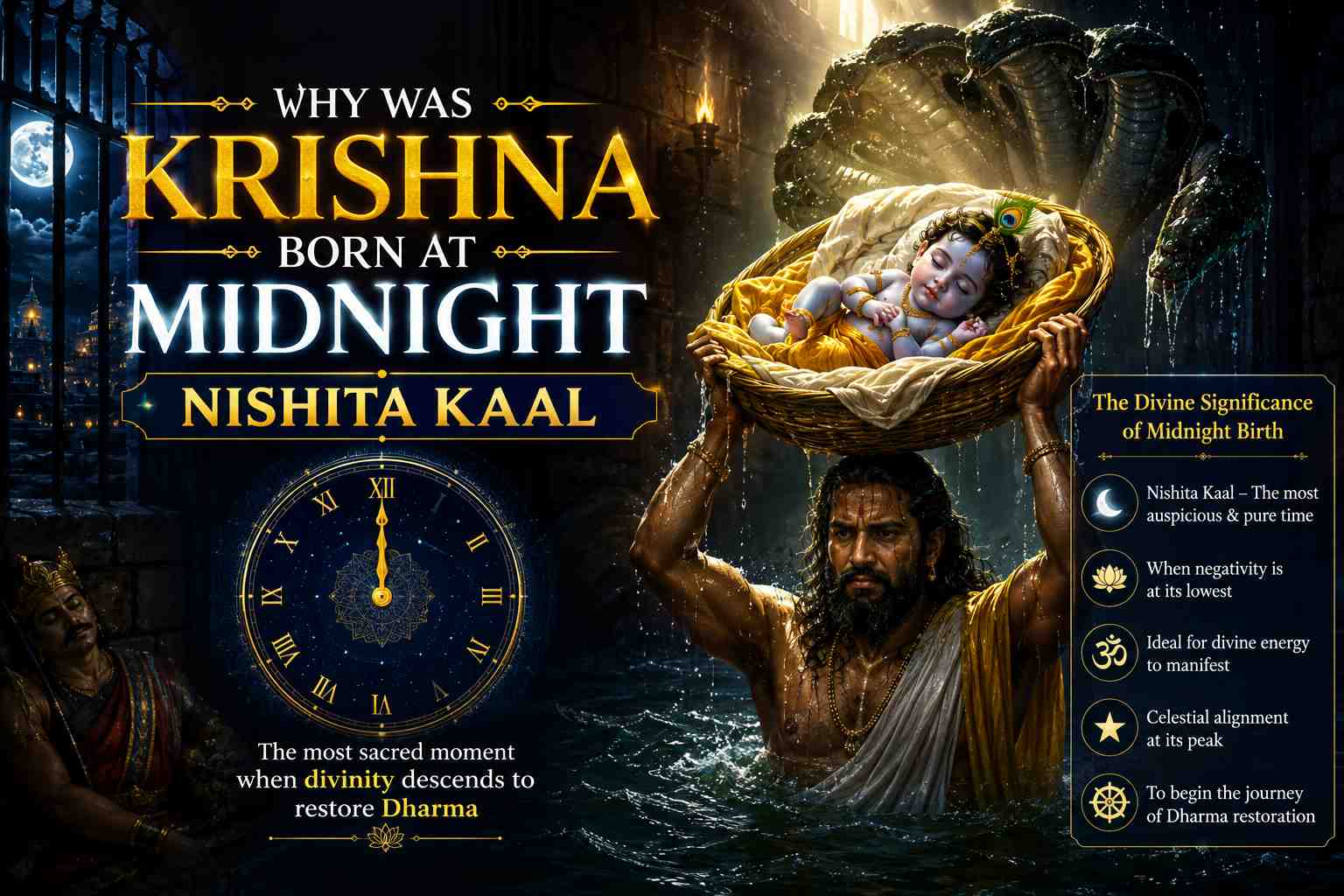
Why Was Krishna Born at Midnight? The Spiritual Meaning Behind Krishna’s Birth at Nishita Kaal
Unveil the mystery of Nishita Kaal and why Lord Krishna chose the darkest hour of midnight to illuminate the world with His divine presence.
BBhakti Voice
Explore timeless wisdom, divine stories, and practical insights to enrich your spiritual journey.

Unveil the mystery of Nishita Kaal and why Lord Krishna chose the darkest hour of midnight to illuminate the world with His divine presence.
BBhakti Voice

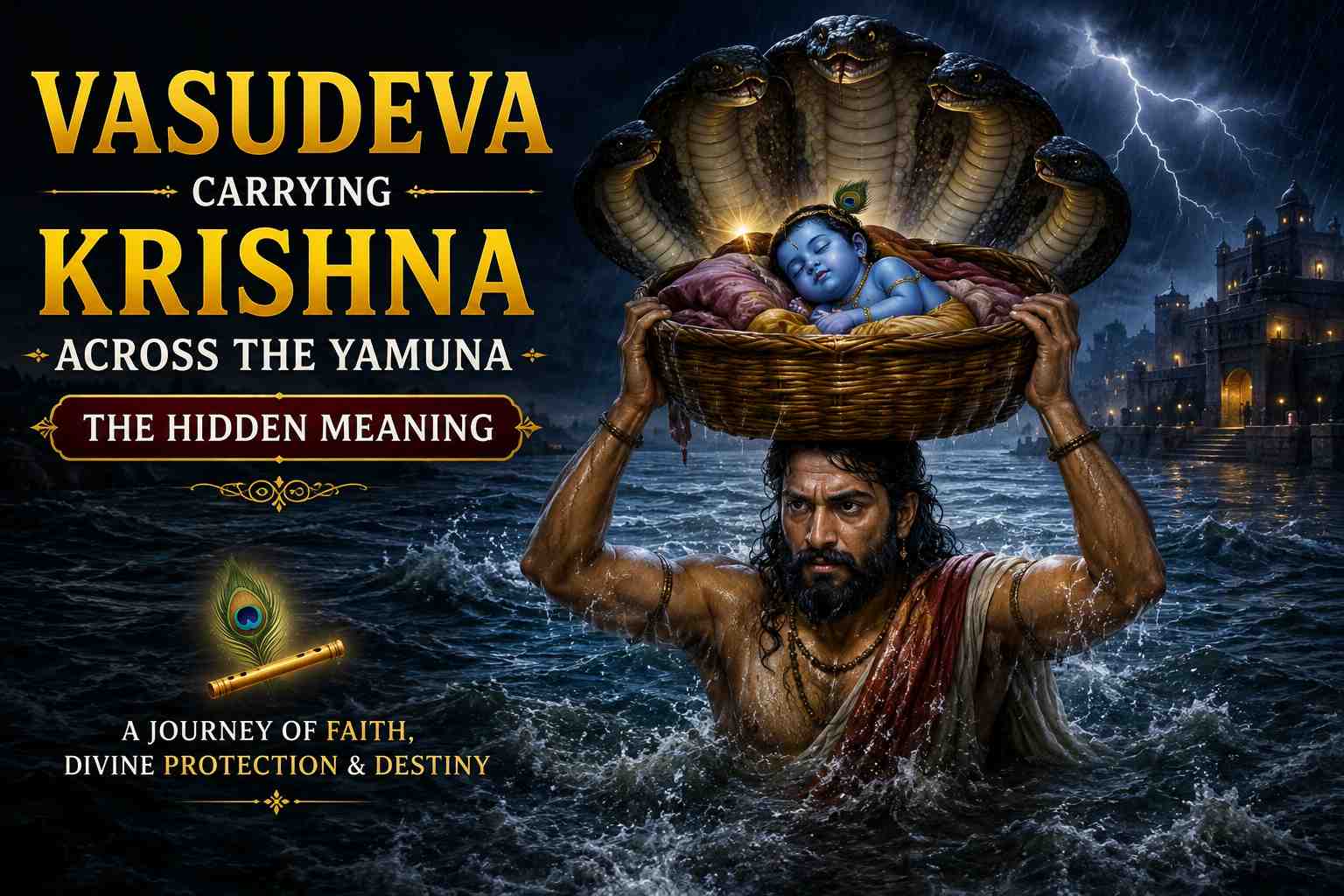
The legendary story of Vasudeva crossing the raging Yamuna is a masterclass in ultimate surrender. Discover the beautiful Bhakti symbolism behind this night.
BBhakti Voice

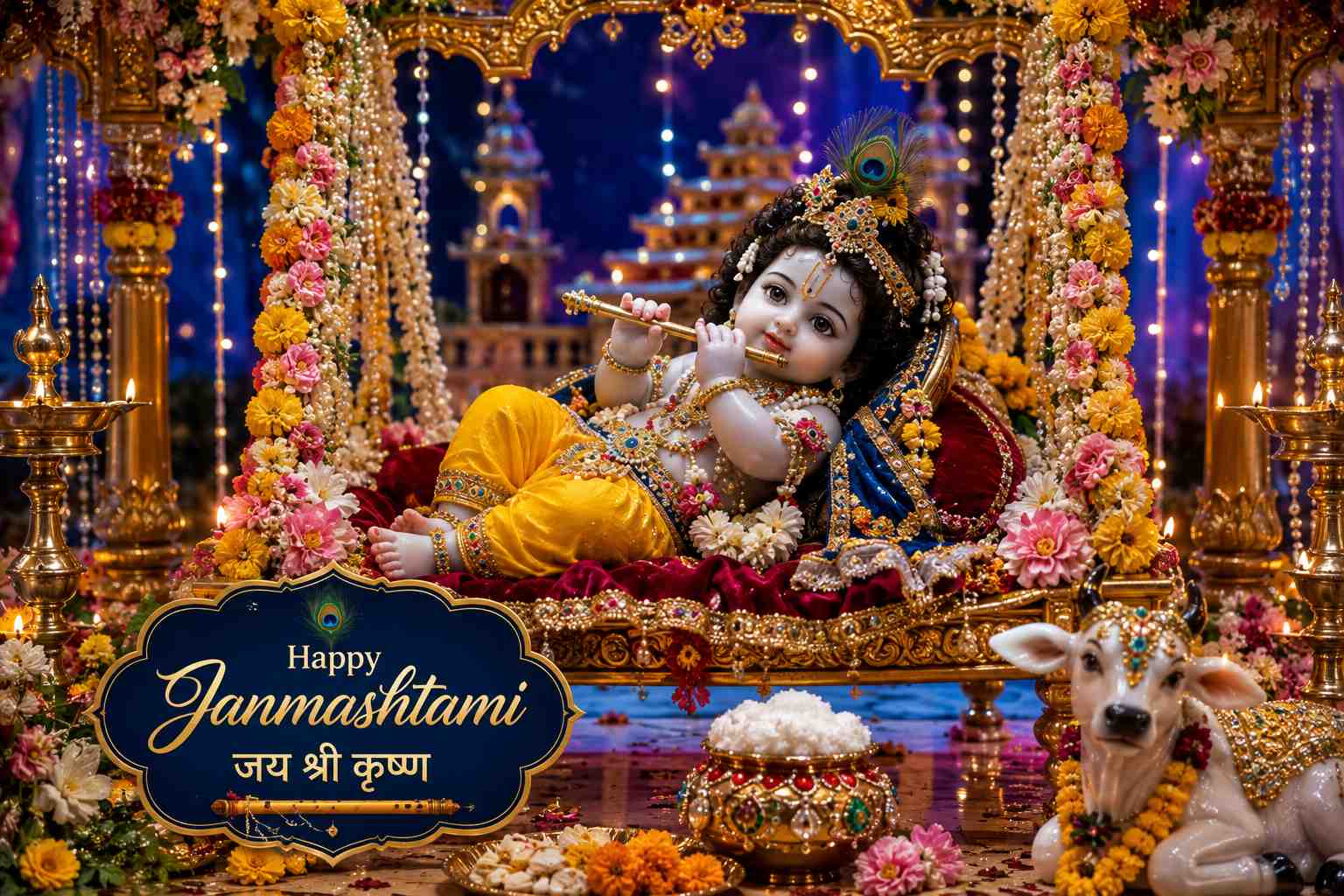
Learn why gently swinging Ladoo Gopal is considered one of the highest and sweetest forms of devotion during the magical night of Janmashtami.
BBhakti Voice

Learn simple yet powerful astrological remedies to reduce the malefic impacts of Shani Sade Sati and Dhaiyya and invite peace.
BBhakti Voice Editorial Team

Why do some people wake up as millionaires while others lose empires in a flash? Unpack the cosmic mechanics of Rahu's explosive windfalls and Ketu's sudden karmic liquidations.
AAstro Insights

An exhaustive investigation into Sree Padmanabhaswamy Temple's Vault B, decoding the multi-trillion dollar treasure inventory, the occult Naga Bandham acoustic lock, and the royal guardian lore.
TTravancore Sacred Archives

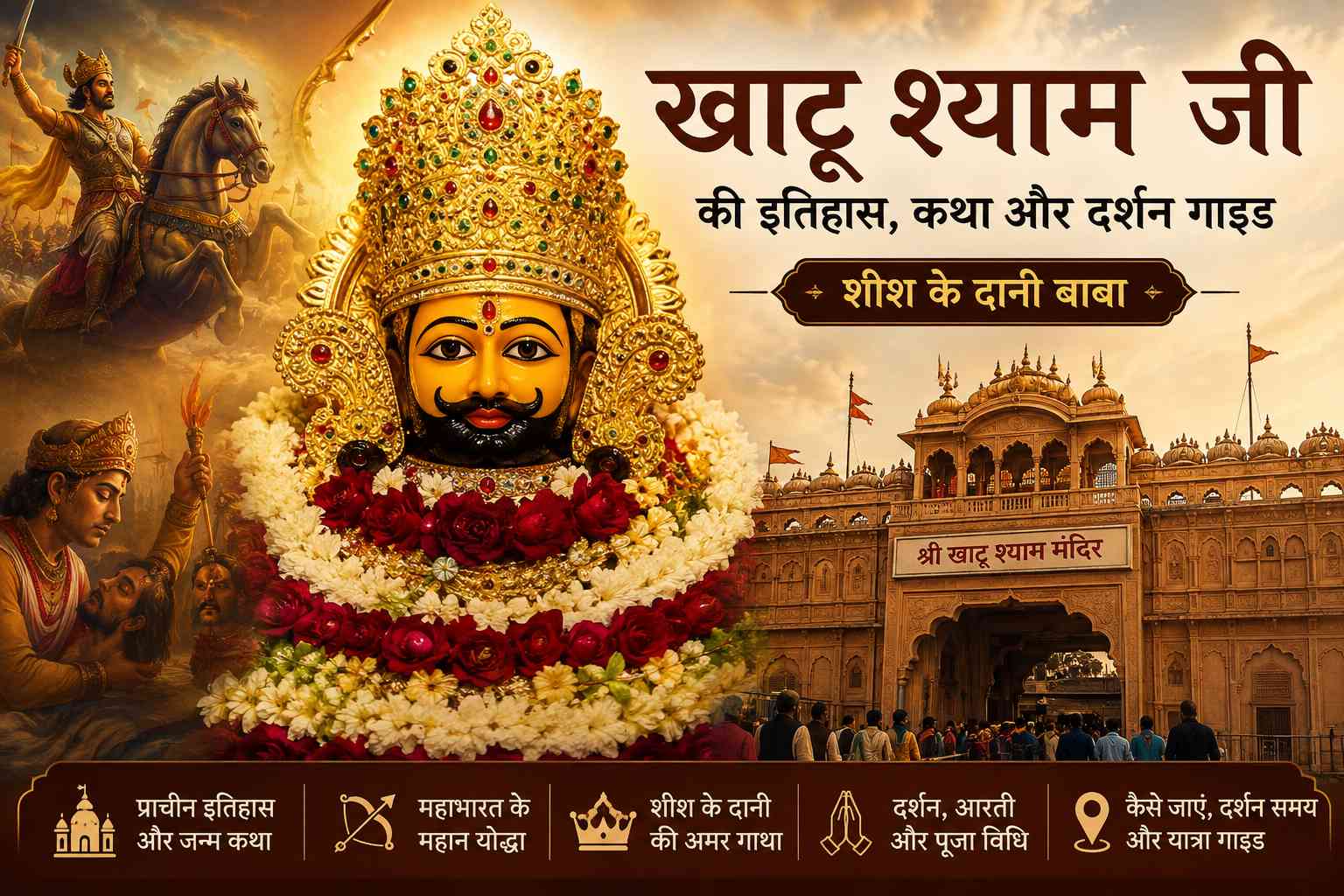
A comprehensive spiritual guide on the legend of Prince Barbarik, his supreme sacrifice of 'Sheesh Daan', Lord Krishna's boon, and complete pilgrimage rules for visiting Khatu Shyam Ji in Sikar.
SShyam Bhakti Seva

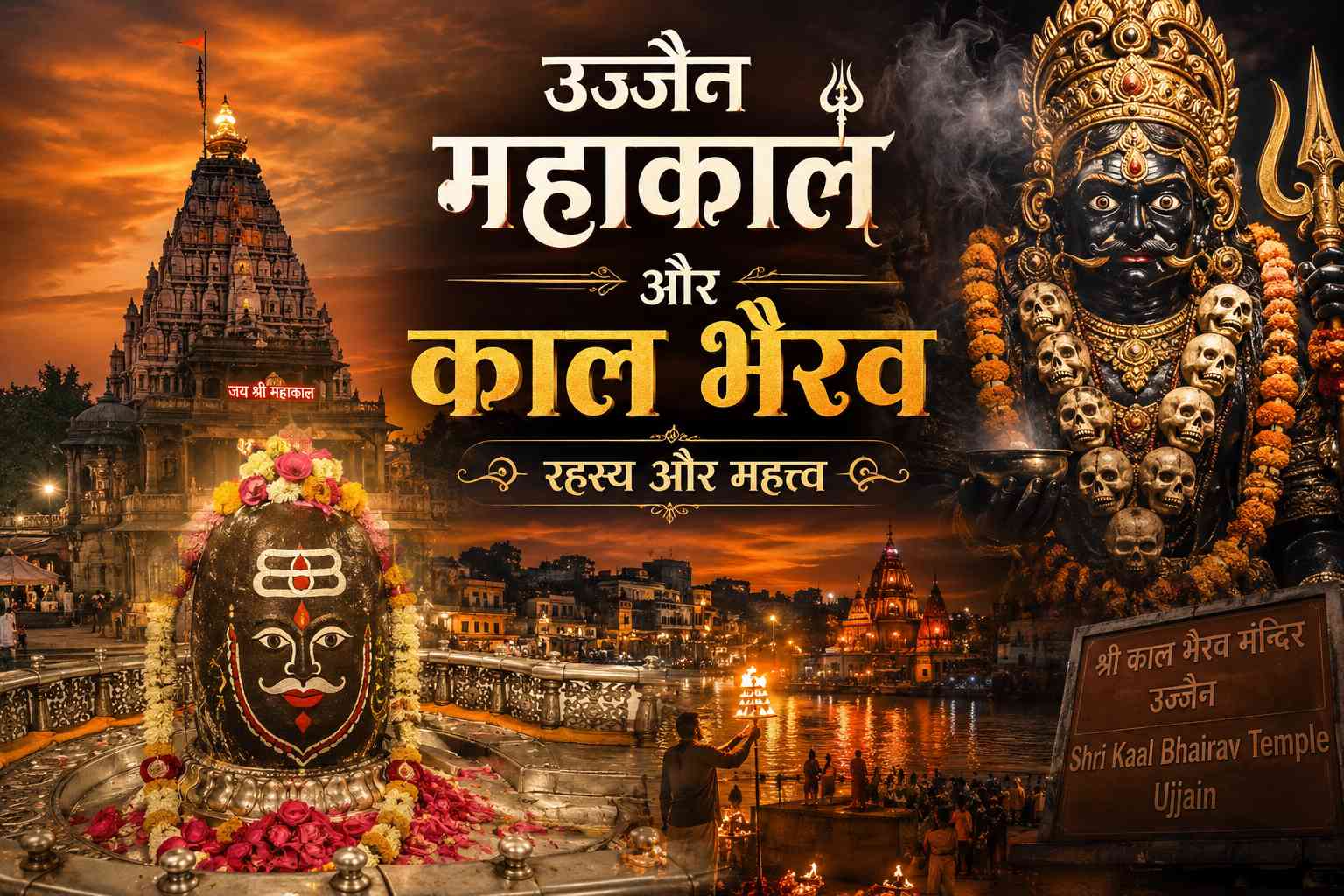
A deep dive into the spiritual partnership between Lord Mahakaleshwar and Kaal Bhairav in Ujjain, exploring the Kotwal role, the unsolved liquor miracle, tantric significance, and the proper darshan order.
MMahakal Sadhana Kendra

Goddess Rukmini's love does not make noise; it is silent, deep, and the greatest example of devotion. Let's dive into her untold story.
BBhakti Voice

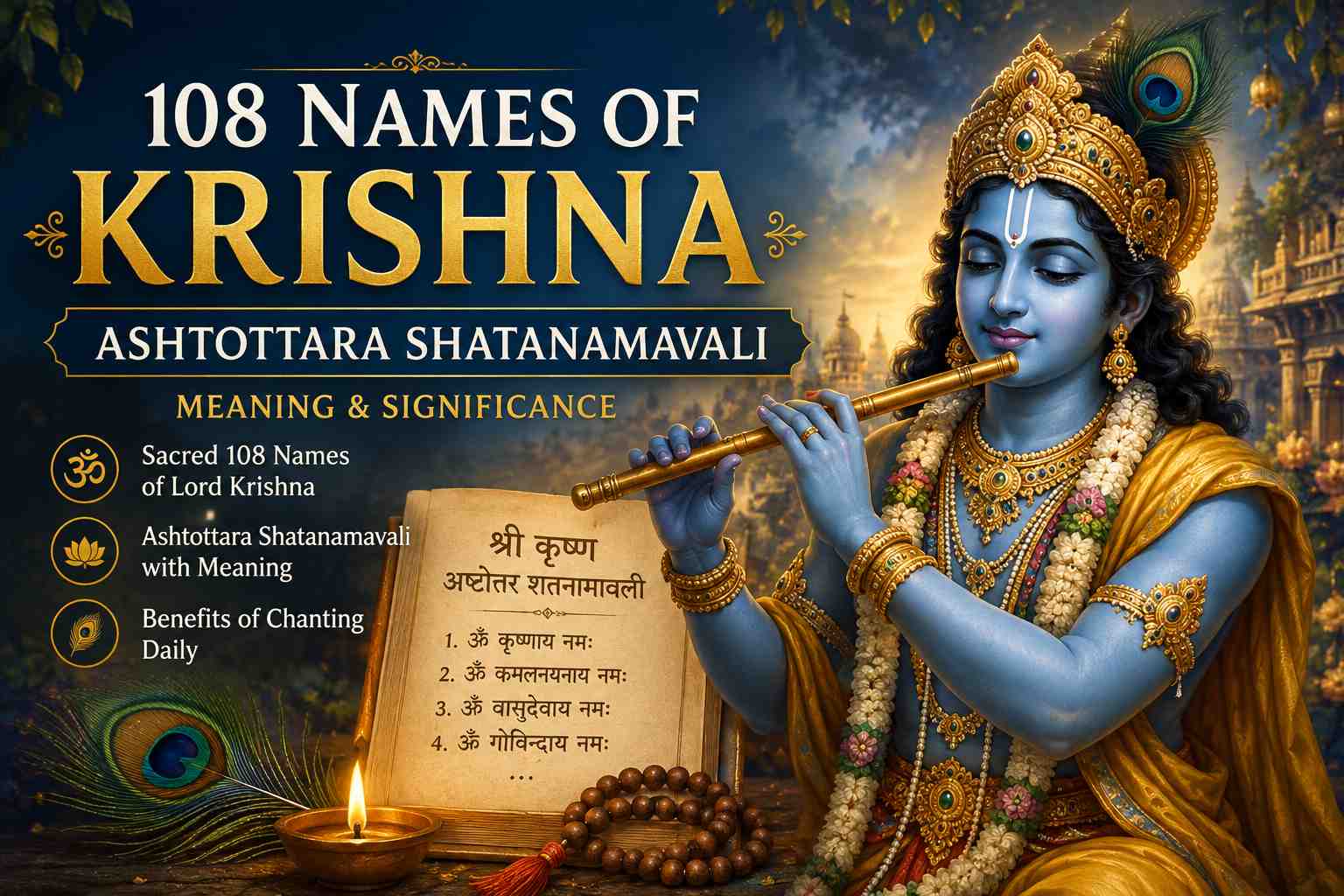
Explore the complete Ashtottara Shatanamavali — the 108 divine names of Lord Krishna, their beautiful meanings, and the spiritual benefits of daily chanting.
BBhakti Voice

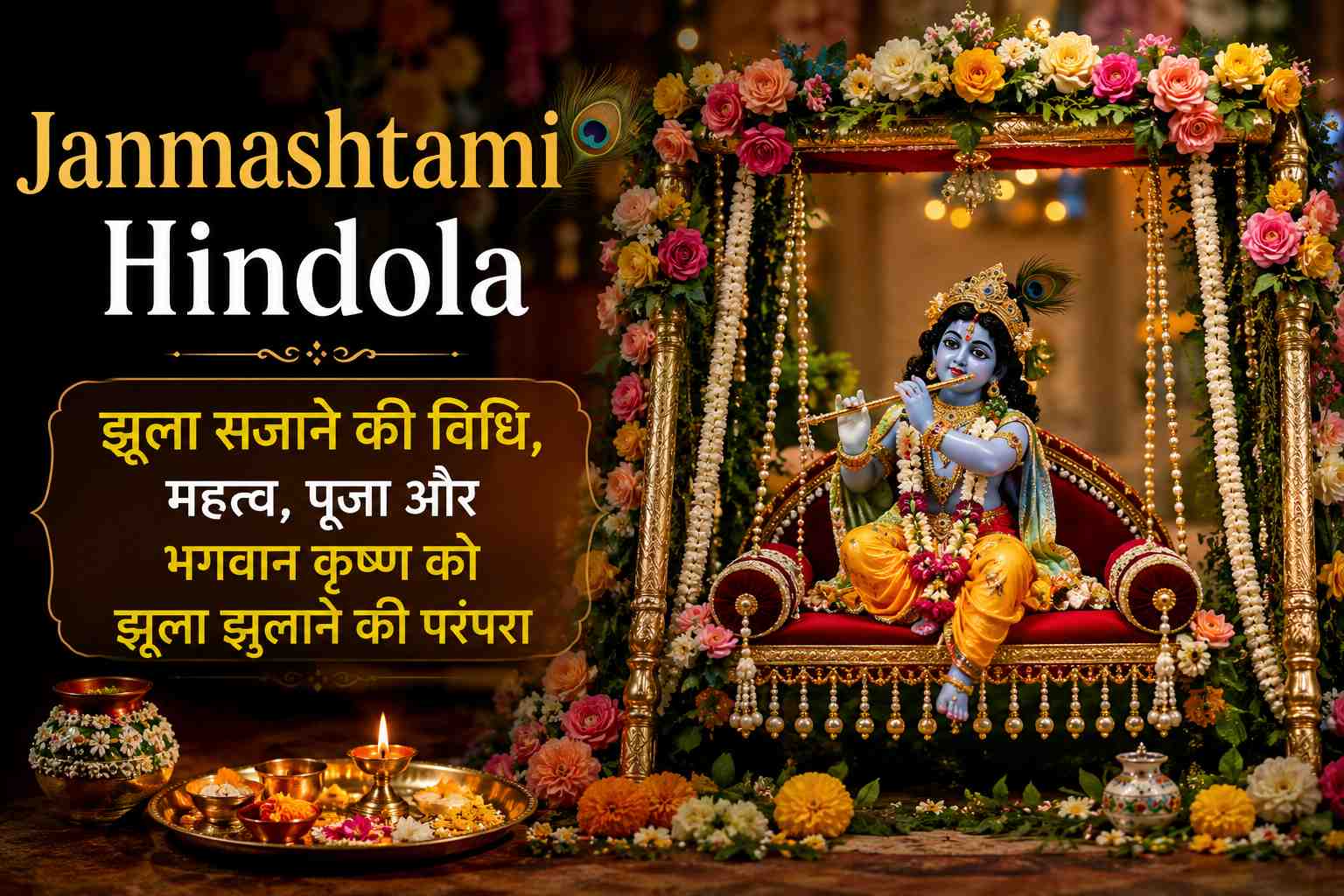
A complete guide on Janmashtami Hindola: step-by-step jhula decoration ideas, puja rituals, and rules for swinging Laddu Gopal.
BBhakti Guide Editorial

A complete 2000+ word master guide on sitting postures, spine alignment, mudras, breath synchronization, Tulsi mala rules, and sacred midnight Naam Jaap techniques for Krishna Janmashtami.
BBhakti Sadhana Kendra
Written with care — no invented temple clocks.
Ancient knowledge for a householder's day.
Sit with seekers who also return to the beads.
New guides for yatra, jaap, and daily sadhana.
The Bhakti blog is a journal for devotees and householders: yatra notes, mantra meaning, festival sense, and daily practice written without hurry. It is not a news feed and not a temple notice board. Essays here are meant to be read slowly, then carried into naam jaap or a short walk. We do not invent darshan timings. Before you travel, confirm aarti and opening hours locally. If a guide mentions a place, treat it as orientation, not a ticket. The bhakti blog exists so searching for a naam or a dham lands you in a quiet room, not a shouting page.
Open one article. Read the introduction. Keep whatever line stays. Then sit — eleven names or a mala — so the blog does not become another tab you finish. Tags for yatra, mantras, and daily sadhana are doors, not a syllabus. Save a post if you are signed in; return when the week allows. Bhakti Voice would rather you finish a small sitting than finish the archive. The bhakti blog is a companion to practice, not a replacement for it.
No. A blog can explain naam jaap, ekadashi as a householder might keep it, or how to think about a yatra day. It cannot give diksha, cannot see your health, and cannot speak for a mandir. Lunar dates move. Confirm tithi on Aaj Ki Tithi, then confirm local custom. We write original copy for devotees; we do not paste other sites. Where a page embeds a video, we do not own that film. Use the bhakti blog as a lamp, not as a master.
All three, in ordinary language. Some essays walk a pilgrim through a dham without pretending we stood at the gate this morning. Some sit with a mantra so pronunciation and mood are clear before you open the jaap counter. Some speak to daily sadhana: sankalp, diary, aarti, bhajan and kirtan. Browse from this listing, or search if you already know the naam. Related links at the end of an article are invitations, not a funnel.
Yes. That is one reason the tone stays human. Send a single essay, not the whole archive. If they are new, pair the reading with the naam jaap counter so the idea has a sitting. Hindi pages exist for the same guides when a translation is published. Do not treat our words as scripture. They are a householder’s notes on the path — yatra, mantras, daily practice — written so a family can begin without fear of doing it wrong.