The Dawn of Prosperity: Puthandu and the Joy of the Tamil New Year
As the sun transitions into the zodiac sign of Aries (Mesha Rasi), a wave of renewal, vibrant colors, and deep spiritual reverence sweeps across the southern state of Tamil Nadu and Tamil communities worldwide. This highly auspicious day is celebrated as Puthandu or Puthuvarusham—the traditional Tamil New Year. Falling on the first day of the Tamil solar month of Chithirai (usually April 14th), Puthandu is not just a change in the calendar; it is a profound celebration of cosmic creation, agricultural abundance, and philosophical balance.
The Mythological and Cosmic Significance
According to ancient Hindu scriptures, Puthandu holds immense mythological significance. It is widely believed that on this very day, Lord Brahma commenced the creation of the universe. Consequently, the day pulsates with the energy of new beginnings and pure creative life force.
Furthermore, in the vibrant temple town of Madurai, this month marks the grand Chithirai Thiruvizha, celebrating the divine wedding of Goddess Meenakshi (Parvati) and Lord Sundareswarar (Shiva), as well as the journey of Lord Kallazhagar (Vishnu). Thus, the entire month is soaked in an aura of divine love, harmony, and celestial blessings.
"Puthandu is a gentle reminder from the cosmos that every ending is simply the fertile ground for a beautiful new beginning. It teaches us to step into the future with a heart full of hope and a mind anchored in gratitude."
Chithirai Kani: The Auspicious First Sight
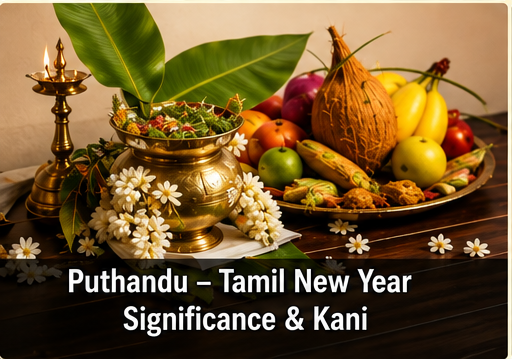
The most enchanting and essential ritual of Puthandu is the viewing of the Chithirai Kani (meaning "the first fruit of Chithirai"). On the eve of the New Year, the matriarch or elders of the family lovingly arrange a sacred tray in the prayer room to ensure that the family wakes up to a vision of absolute abundance.
The traditional Chithirai Kani arrangement is placed in front of a mirror and deities, and it typically includes:
- The Mukkani (Three Royal Fruits): Mango, Banana, and Jackfruit, which symbolize sweetness and agricultural prosperity.
- Precious Items: Gold or silver jewelry, coins, and currency notes, representing financial stability and wealth.
- Auspicious Offerings: Betel leaves, areca nuts, coconuts, and a sacred brass lamp (Kuthu Vilakku) to dispel the darkness of ignorance.
- The Mirror: Placed so that when one looks at the tray, they see their own reflection amidst the abundance, symbolizing that the divine wealth and grace reside within them.
Sacred Traditions: Kolam, Panchangam, and Prayers
As the morning of Puthandu unfolds, the day is marked by several deeply rooted cultural practices:
- Vibrant Kolams: The entrances of houses are thoroughly cleaned and adorned with elaborate, intricate Kolams (rangoli made of rice flour). In the center of the Kolam, a lump of cow dung with a pumpkin flower is often placed, and the borders are lined with red mud (Kavi), welcoming Goddess Lakshmi into the home.
- Temple Visits: Families dress in new traditional clothes—often silk dhotis for men and vibrant Kanchipuram sarees for women—and visit temples to seek the blessings of the Almighty for a hurdle-free year.
- Panchangam Padithal: The family priest or the eldest member reads the Panchangam (the Hindu almanac) for the new year, predicting the astrological forecasts, weather patterns, and agricultural prospects for the months ahead.
Mangai Pachadi: Tasting the Flavors of Life
No Tamil New Year is complete without the iconic festive feast, the centerpiece of which is the Mangai Pachadi. This unique, traditional dish is far more than a culinary delight; it is a profound philosophical lesson served in a bowl.
Mangai Pachadi is meticulously crafted to include all the six primary tastes of nature:
- Sweet: Jaggery (representing joy and happiness)
- Astringent: Raw Mango (representing surprises and new challenges)
- Bitter: Neem Flowers (representing sadness or difficulties)
- Sour: Tamarind juice (representing unpleasantness or disgust)
- Spicy: Red or Green Chilies (representing anger or passion)
- Salty: Salt (representing fear or the basic essence of life)
By consuming this dish at the start of the year, Tamil families symbolically accept that the coming year will be a mixture of joy, sorrow, anger, and surprise. It teaches the ultimate spiritual truth: to live peacefully, one must embrace all of life's varied experiences with a balanced and equanimous mind.