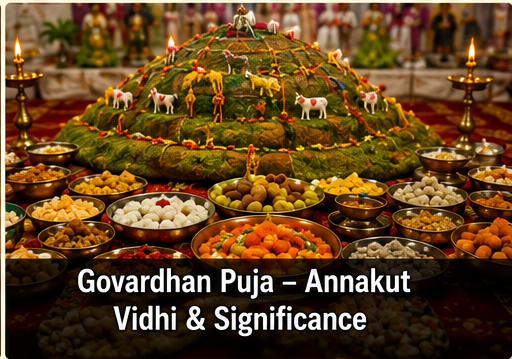
The Divine Mountain of Protection: The Significance of Govardhan Puja and Annakut
Following the radiant, lamp-lit night of Diwali, the spiritual landscape of India shifts from the illumination of the soul to a profound gratitude for the natural world. Govardhan Puja, celebrated on the first lunar day of the bright fortnight (Shukla Paksha) in the month of Kartik, is a beautiful testament to eco-spirituality, community harmony, and supreme devotion to Lord Krishna. This festival beautifully bridges the gap between the divine and the earth, reminding humanity that nature is not merely a resource to be exploited, but a living manifestation of God to be revered.
The Epic Legend: Shattering the Ego of Lord Indra
The origins of Govardhan Puja are rooted in one of the most beloved and dramatic episodes of the Bhagavata Purana. The agrarian villagers of Vrindavan were preparing for a grand annual sacrifice to appease Lord Indra, the mighty god of rain and storms, fearing his wrath if he were neglected. The young Lord Krishna, advocating for a path of righteous duty (Karma) and environmental gratitude, convinced the villagers to direct their offerings to Govardhan Hill instead. He argued that it was the mountain, the forests, and the pastures that truly provided sustenance, water, and grass for their cattle.
Furious at this perceived insult and blinded by his own cosmic pride, an ego-intoxicated Indra unleashed torrential rains and apocalyptic thunderstorms, intending to drown Vrindavan. In a spectacular display of supreme compassion, Lord Krishna effortlessly lifted the entire Govardhan Hill on His little finger (the Kanishtha). For seven continuous days and nights, He held it aloft like a giant umbrella, providing a safe shelter for all the villagers and animals. Humbled and utterly defeated, Lord Indra realized Krishna's supreme divinity, apologized, and the destructive rains ceased.
"Govardhan Puja is the ultimate spiritual lesson that true divine power is used not to intimidate through fear, but to protect, nourish, and shelter the innocent."
Gau Puja: The Sacred Worship of the Cow
An integral and deeply moving part of this festival is Gau Puja (Cow Worship). In the ancient Vedic tradition, the cow is revered as Gau Mata (Mother Cow), the ultimate symbol of selfless sustenance, maternal grace, non-violence, and the earth's endless bounty. On the day of Govardhan Puja, cows and bulls are bathed and beautifully adorned with vibrant flower garlands, tinkling bells, and saffron tilak.
Devotees circumambulate (perform Parikrama around) the cows, offering them fresh jaggery and green grass. This ritual highlights a core tenet of Hindu philosophy: acknowledging our deep, inextricable interdependence with the animal kingdom and treating the creatures that sustain human life with the highest spiritual respect.
The Grandeur of Annakut: A Mountain of Devotion and 56 Bhog
The word Annakut literally translates to "a mountain of food." In homes and courtyards, devotees traditionally create a symbolic representation of the mighty Govardhan Hill made of cow dung, adorning it with flowers and worshiping it with deep reverence.
Inside the temples, the celebration takes the form of an awe-inspiring culinary offering known as the Chappan Bhog (56 distinct food items). The significance of the number 56 is deeply touching and mathematical: because Lord Krishna held the mountain for seven days without eating His usual eight meals a day (7 days x 8 meals = 56), the devotees lovingly prepare 56 different delicacies to compensate for His fast and express their immense gratitude.
This majestic, vegetarian feast typically includes:
- Sweets and Dairy: Makhan (fresh butter), peda, rabri, kheer, and various laddoos.
- Savory Dishes: Kadhi, fragrant rice, mixed vegetable curries, and crispy pakoras.
- Breads and Snacks: Puris, kachoris, and mathris.
Once offered to the deity, this massive feast is distributed among the devotees as Prasad. The Annakut ritual dissolves all boundaries of caste, class, and status, as everyone sits together to partake in the divine meal, fostering a powerful sense of universal brotherhood and equality.
Govardhan Puja ultimately teaches us to look at nature with deep reverence rather than unchecked greed. In our modern, fast-paced world, how can we incorporate the eco-spiritual message of Govardhan Puja to better protect and respect the natural environment that sustains us?