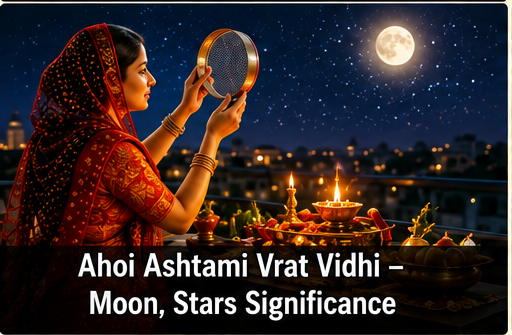
Ahoi Ashtami: Quick Overview and Key Facts
Auspicious Muhurat and Sacred Timings
Complete Puja Samagri (Item Checklist)
- Altar and Image: Ahoi Mata calendar or natural Geru (red ochre) and rice flour paste for wall drawing.
- The Silver Syau Garland: Engraved silver pendant of Ahoi Mata and two round silver beads on a red cotton thread (Kalava/Mauli).
- Water Pots: One brass or earthen spouted pot (Karwa) with lid, and one copper lota for Arghya.
- Sacred Grains and Plants: Seven or eight fistfuls of unbroken wheat grains, sacred grass shoots (Dub/Kusha), and fresh flowers.
- Food Offerings (Bhog):
- Eight sweet whole-wheat fried dumplings (Pua) or Halwa made in pure cow ghee.
- Boiled water chestnuts (Singhara).
- Fresh sugarcane pieces.
- Fresh radishes with leaves intact.
- Puja Dravya: Pure cow ghee, cotton wicks, earthen lamps, dhoop sticks, roli (kumkum), unbroken raw rice (akshat), and sandalwood paste.
- Baya (Gifts for In-Laws): Traditional sweets, fresh seasonal fruits, a new saree, and monetary gift for the mother-in-law.
Step-by-Step Vrat Vidhi
- Morning Sankalpa: Wake before dawn, take a purifying bath, wear clean festive clothes, and take the vow of waterless fasting holding water and rice in your right hand.
- Drawing the Mural: Draw the traditional eight-cornered image of Ahoi Mata along with seven sons, the sacred cow, calf, lion, and the hedgehog with her cubs using geru on the north or east wall.
- Preparing the Karwa: Fill the spouted pot with clean drinking water, insert fresh grass blades into the spout, place wheat on the lid, and balance a lit earthen cow-ghee lamp on top.
- Sanctifying the Silver Syau: Cleanse the silver Syau pendant and beads with raw milk and Gangajal, apply a vermilion tilak, and place it beside the deity.
- Listening to the Katha: Hold seven grains of wheat and grass blades in folded hands while reciting or listening to the ancient Ahoi Ashtami Vrat Katha.
- Performing Aarti: Perform aarti of Goddess Ahoi with a lighted camphor or ghee lamp, singing praises for the protection of all children.
- Star Sighting and Arghya: Step out at twilight, locate the first stars, and pour the consecrated water from the Karwa toward the stars.
- Wearing the Amulet: Place the consecrated silver Syau necklace around your neck.
- Baya Presentation: Touch the feet of mother-in-law and elders, seek their blessings, and offer the Baya plate.
- Breaking the Fast (Parana): Sip water offered by the hands of your child and eat a piece of sweet pua or kheer to conclude the fast.
Star Sighting (Taaron Ka Arghya) Rules
The Silver Syau Mala Structure
- Pendant: Silver locket embossed with the image of Ahoi Mata.
- Starting Beads: Two solid silver beads placed on either side of the central pendant.
- Cord: Red and yellow sanctified cotton thread (Mauli).
- Yearly Addition: One or two silver beads added every year on Ahoi Ashtami, or one bead added per child in the family.
- Removal: Worn from Ahoi Ashtami night until Diwali, then stored safely in the home vault until the following year.
Radha Kund Holy Bath (Santaan Prapti)
Strict Do's and Don'ts Matrix
Core Mantras for Ahoi Ashtami
1. Sankalpa Mantra (Morning Resolution)
मम पुत्राणां (पुत्रीणां) दीर्घायुष्य-आरोग्य-ऐश्वर्य-अभिवृद्ध्यर्थम् अहोई-अष्टमी-व्रतं करिष्ये।
Purpose: Chanted before sunrise while taking the vow of the day-long Nirjala fast.
2. Ahoi Mata Dhyan Mantra (Evening Puja)
ॐ अहोई मातर्यै नमः। सर्वमंगल मांगल्ये शिवे सर्वार्थ साधिके। शरण्ये त्र्यम्बके गौरि नारायणि नमोऽस्तु ते॥
Purpose: Chanted while lighting the ghee lamp and worshiping the deity.
3. Star Arghya Mantra (Dusk Libation)
गगनार्णव-संभूत तारागण-समन्विते। गृहाणार्घ्यं मया दत्तं पुत्राणां शुभ-वर्धिनि॥
Purpose: Chanted while pouring sacred water from the Karwa toward the evening stars.