
Why Is Tulsi Considered Sacred in Hinduism?
Discover why the Tulsi plant is considered sacred in Hinduism. Read the fascinating story of Devi Vrinda, Lord Vishnu, the Shaligram curse, and Tulsi Vivah.
Bhakti Voice
Writer & Research Team
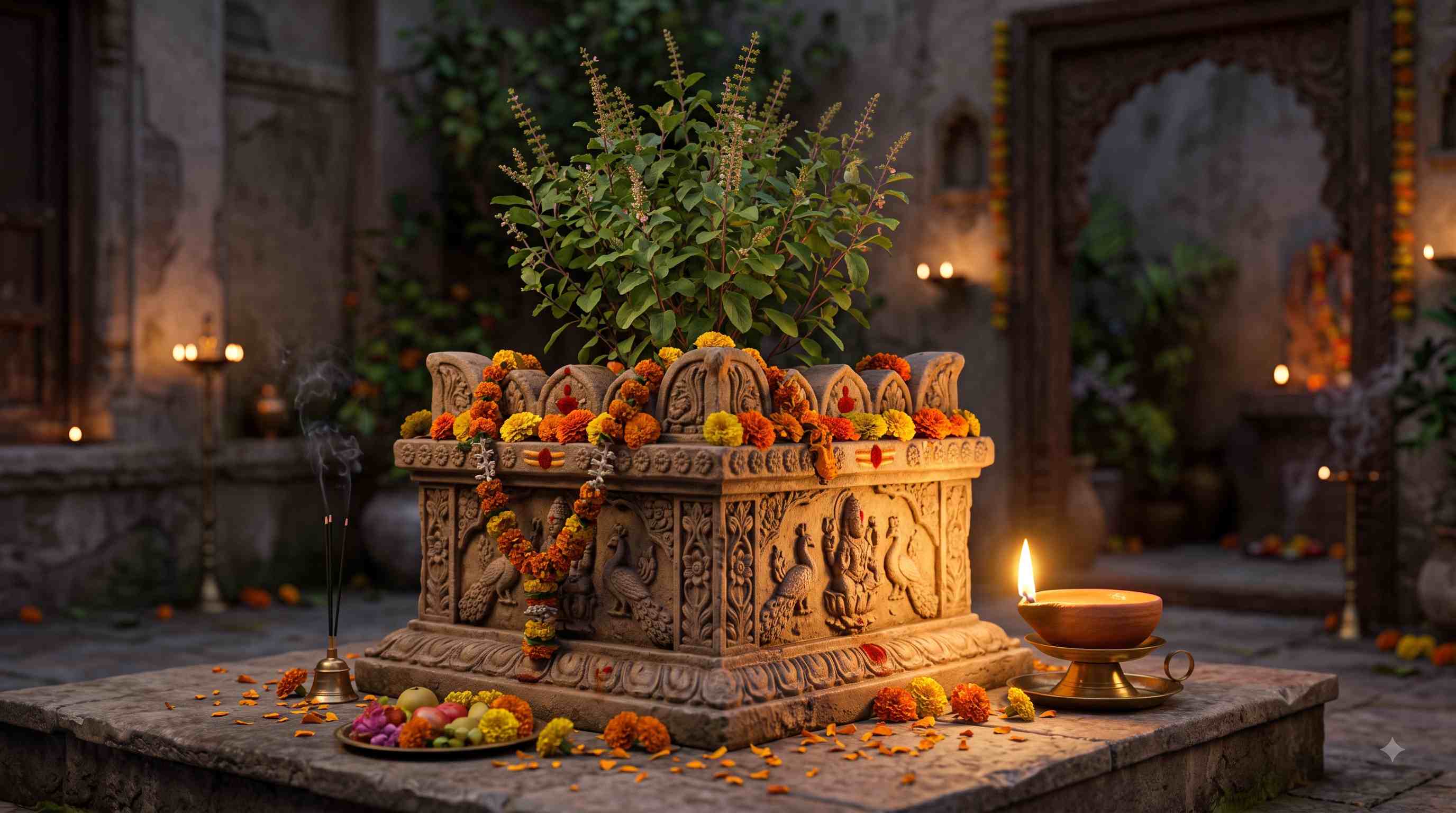
Walk into the courtyard of any traditional Indian home, and you will almost certainly find a vibrant green plant placed reverently on a pedestal. This is the Tulsi, or Holy Basil. While modern science and Ayurveda praise it for its incredible medicinal, antiviral, and stress-relieving properties, its significance in Hinduism goes infinitely deeper. To millions of devotees, Tulsi is not just a plant; she is Maa Tulsi, a goddess of devotion, purity, and unparalleled spiritual power. But why is this specific plant held in such extraordinarily high esteem? Why is it said that Lord Vishnu refuses any food offering that lacks a Tulsi leaf? The answer lies in an ancient, heart-wrenching, and beautiful mythological saga from the Puranas—the epic story of Devi Vrinda, the mighty demon king Jalandhar, and the supreme preserver of the universe, Lord Vishnu.
Sacred Heritage
Timeless Temple Tradition
Architectural Wonder
Ancient Vedic Mastery