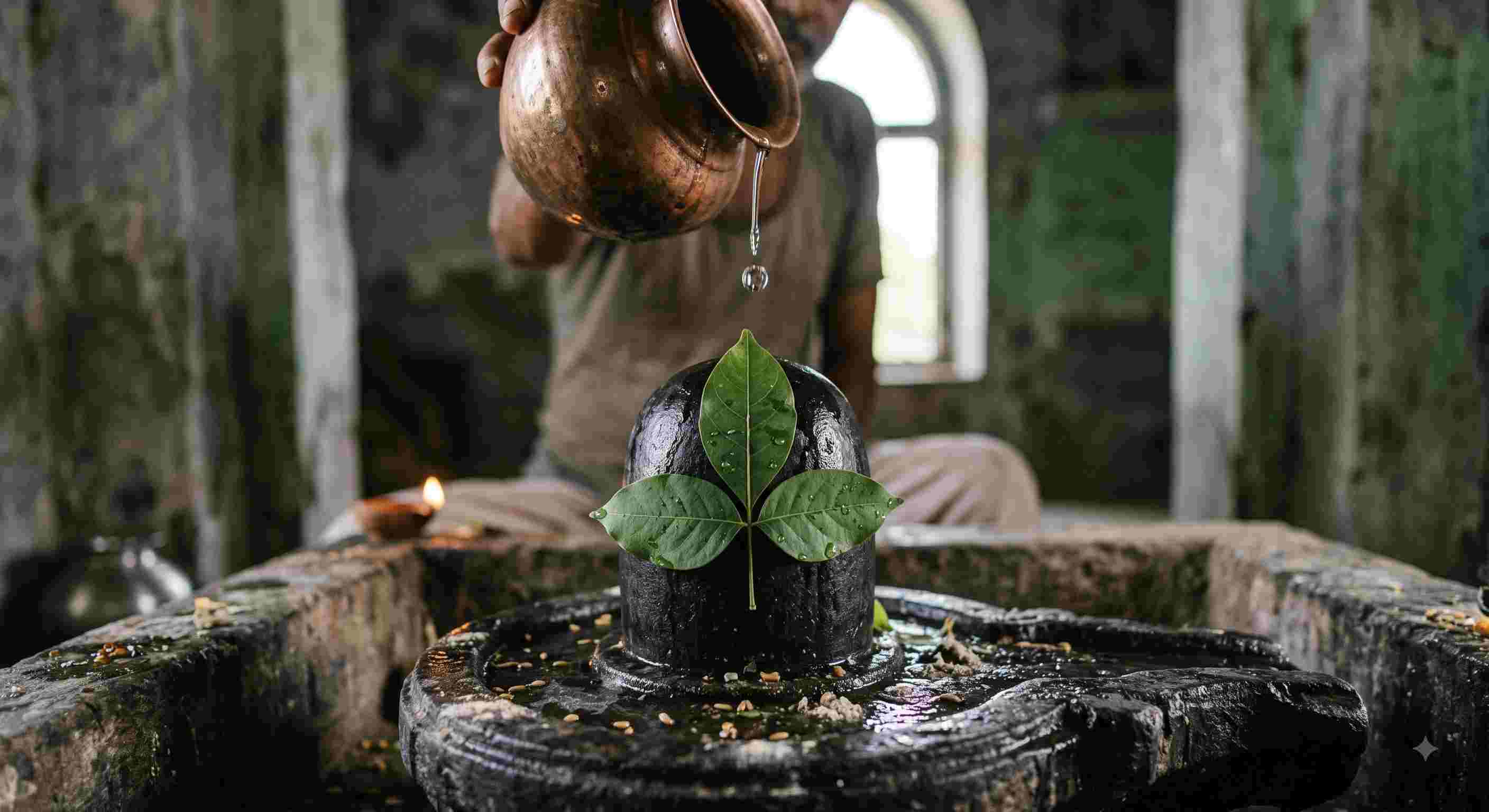
The Ultimate Guide: How to Offer Belpatra to Lord Shiva Correctly
For millions of devotees, worshipping Lord Shiva is incomplete without the offering of sacred Bilva leaves or Belpatra. But did you know that merely placing a leaf on the Shivling isn't enough? According to ancient Hindu scriptures, there is a deep spiritual science and a highly specific methodology for offering these sacred leaves. Whether you are performing a daily puja or preparing for a major festival like Mahashivratri, understanding the correct way to offer Belpatra on a Shivling can profoundly amplify the spiritual benefits of your prayers.
The Deep Spiritual Significance of the 3-Leaf Belpatra
If you have ever observed a Belpatra closely, you will notice it naturally grows in unique clusters of three. In Hindu philosophy, this specific three-leaf structure (Tridal) holds immense cosmic symbolism. It is believed to represent:
- The Holy Trinity (Tridev): Lord Brahma (the creator), Lord Vishnu (the preserver), and Lord Mahesh/Shiva (the destroyer).
- The Trinetra: Lord Shiva's three powerful eyes, which govern the sun, the moon, and the fire of wisdom.
- The Trishul: Mahadev's primary divine weapon, the trident.
- The Three Gunas: The fundamental forces of nature—Sattva (purity), Rajas (passion), and Tamas (chaos).
When you offer this sacred leaf, you are not just performing a ritual; it is a symbolic gesture of completely surrendering your ego, mind, and physical karma to the Supreme Lord.
Crucial Rules for Plucking Belpatra: Days to Avoid
Before you even step into the temple, you must know the scriptural rules for plucking Belpatra. According to the revered Linga Purana, you cannot simply pluck Bilva leaves whenever you wish. The tree is considered highly sacred, and plucking leaves on specific days is considered inauspicious.
Important Note: Never snap an entire branch off the tree. You should only carefully pluck the individual three-leaf clusters, mentally seeking permission from the tree before doing so.
Preparation: The Importance of Removing the 'Vajra'
Once you have acquired your Bel leaves, carefully inspect them. A standard, acceptable Belpatra must have exactly three interconnected leaves. Make sure none of the leaves are torn, dried out, or eaten by insects. A defective leaf should never be offered to the deity.
Crucially, observe the thick, knotty stem at the very bottom where the three leaves join. This thick, hardened part is known as the 'Vajra'. According to Vedic scriptures, the Vajra is considered heavy, impure, and inauspicious. You must gently pinch off this thick stem before making the offering. Once the Vajra is removed, wash the leaves thoroughly with clean water or purifying Ganga Jal.
The Correct Orientation: How to Place Belpatra on the Shivling
This is where many devotees make a common mistake. The orientation of the leaf is the most critical part of the Shivling puja rules.
- The Smooth Side Down: The smooth, shiny surface of the Belpatra must always face downwards, directly touching the surface of the Shivling.
- The Rough Side Up: The rough side with the visible veins should be facing upwards towards you.
- Use the Right Fingers: When offering, strictly use your right hand. Specifically, hold the leaf using your thumb, ring finger, and middle finger. Never use the index finger (the pointing finger), as it represents human ego and is considered highly disrespectful in traditional Hindu rituals.
Mantras to Chant & The Miraculous Rule of Reusability
To elevate the spiritual merit of your offering, it is highly recommended to write the word 'Ram' (राम) or 'Om' (ॐ) on the three leaves using pure Ashtagandha, Sandalwood paste (Chandan), or Bhasma (sacred ash) before placing them on the Lingam.
While gently placing the leaf, chant the sacred Bilvashtakam Mantra:
"Tridalam Trigunakaram Trinetram Cha Triyayudham / Trijanma Papa Samharam Eka Bilvam Shivarpanam"
(I offer this one Bilva leaf to Lord Shiva, which has three leaves, represents the three Gunas, the three eyes, and destroys the accumulated sins of three births.)
If you cannot pronounce the Sanskrit shloka, simply chanting 'Om Namah Shivaya' with pure devotion is equally powerful.
What If You Don't Have Fresh Belpatra?
Finding fresh leaves daily can be difficult, especially for those living in urban areas or abroad. The Agni Purana offers a beautiful, comforting solution: a Belpatra never becomes stale or impure.
If you cannot find fresh leaves, you can pick up a previously offered Belpatra right off the Shivling, wash it gently with pure water, and offer it back to the Lord. This act of recycling the sacred leaf is completely permissible in the scriptures and incurs absolutely no sin. Devotion, ultimately, is what Mahadev values the most.