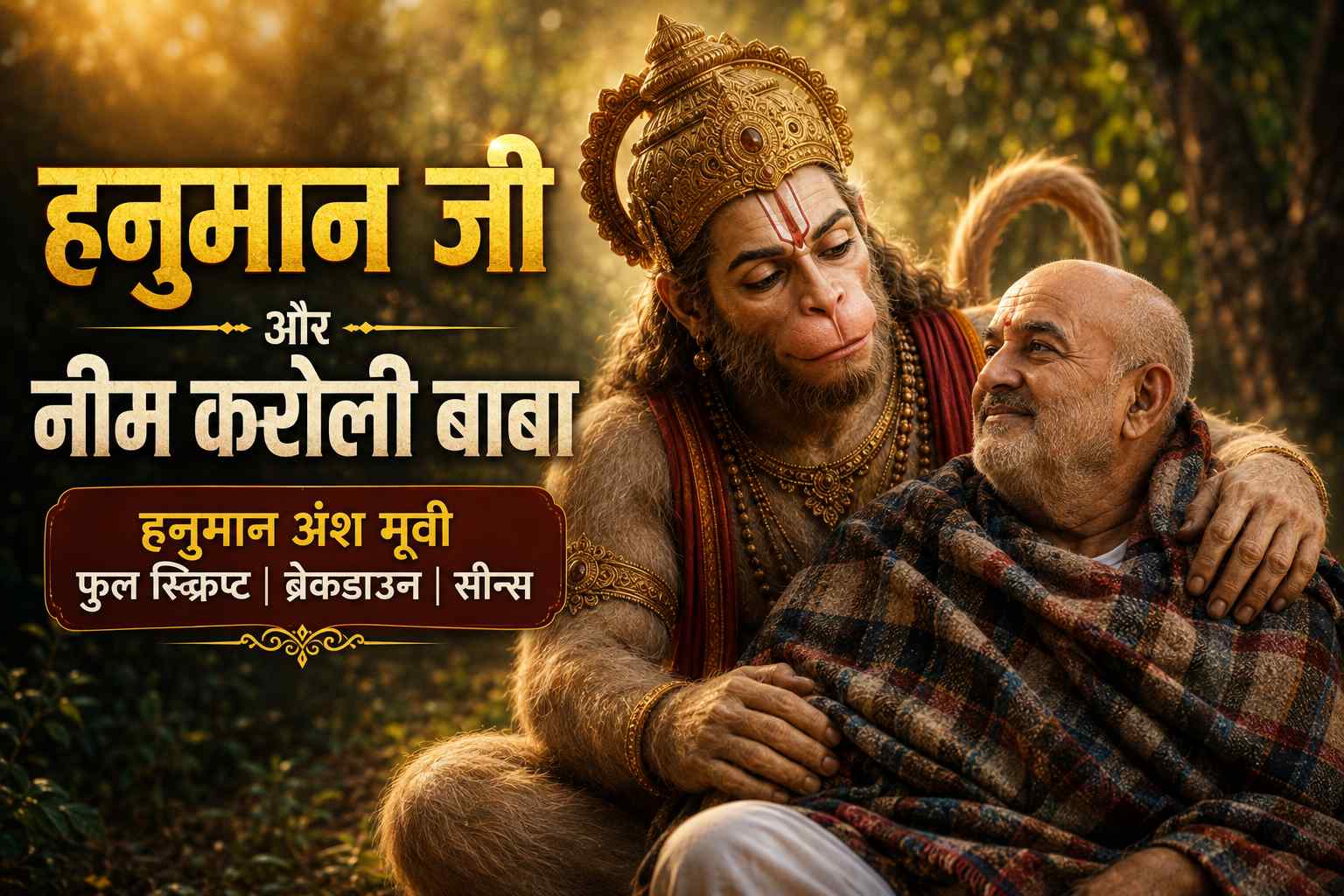
Scene 1 to 5: The Hanuman Ansh Starting Scene and Awakening
The script opens with a serene, atmospheric shot of the Braj region at dawn. The ambient sound of temple bells mixes with the soft, meditative chanting of 'Ram, Ram'. For those looking for the exact Hanuman Ansh starting scene, we see young Lakshman Das (played by Vihaan Shedge) sitting quietly by the banks of a river, his eyes closed, reflecting an unusual depth for a boy his age.
The turning point of his childhood arrives when his mother passes away. In a deeply moving sequence, young Lakshman sits dry-eyed amidst mourning relatives. While others weep uncontrollably, his gaze is fixed on the open sky. Delivering one of the most profound Hanuman Ansh movie quotes, he reflects in a voiceover that love cannot die; it only changes its address, moving from a mortal body to the infinite cosmos.
This realization sparks his permanent departure from domestic life, setting him onto the path of an unattached seeker.
Scene 6 to 12: The Ascetic Wandering and Yogic Immersion
The narrative shifts to Lakshman's teenage years as a wandering sadhu. The script details his rigorous ascetic practices across northern India. In one visually striking sequence, local villagers near a remote river stream discover a young man who has spent hours meditating completely submerged underwater.
When he surfaces, his face radiates absolute calm, refusing any praise or material offerings.
He moves through various hermitages, testing his endurance against harsh weather, hunger, and loneliness. Rather than seeking spiritual ego or supernatural siddhis, his singular focus remains on the repetition of the holy name.
The script highlights how he often corrects self-important scholars simply by offering them a piece of simple bread or engaging in a whole conversation about unconditional love.
Scene 13 to 20: The Iconic Hanuman Ansh Train Scene & Dialogues
One of the cinematic highlights meticulously detailed in the screenplay is the famous Hanuman Ansh train scene. Twenty-five-year-old Lakshman boards a train compartment.
A stern British ticket collector notices him traveling without a ticket and rudely commands him to get off at the next minor station.
As soon as Lakshman steps onto the platform, the exact scene unfolds: the train's engine stalls completely. The driver applies full power, mechanics check the valves and steam pressure, yet the wheels refuse to turn an inch.
Tension mounts among the railway staff. Finally, an Indian official who recognizes the aura of the young mystic tells the British manager that a holy man was wrongfully ejected.
The manager runs down the platform, falls at Lakshman's feet, and pleads with him to let the train move. Lakshman smiles gently, delivering a quiet but powerful Hanuman Ansh dialogue that poor sadhus must never be harassed, and watches as the engine roars back to life.
Scene 21 to 28: Transformation into Maharaj-ji and Radical Compassion
The second half transitions to the mature phase of the saint's life, portrayed by Shobhinaw Satyaa. The tone shifts from solitary asceticism to dynamic, joyful engagement with common people.
We see him sitting under trees, feeding stray dogs, wrapping blankets around shivering paupers, and offering cryptic advice that solves complex family and psychological disputes of visiting devotees.
The script emphasizes his unique style: he avoids long lectures, often shies away from direct worship directed at his physical form, and constantly redirects everyone's attention toward Lord Hanuman and Lord Rama.
His interactions with Western seekers and skeptical intellectuals form the emotional core building up to the film's finale.
Scene 29 to 35: Hanuman Ansh Climax, Last Scene & Spiritual Legacy
The final acts draw the audience into a state of deep reflection. For audiences wanting the Hanuman Ansh climax explained, the film intentionally avoids a standard Hollywood-style cinematic showdown.
Instead, the Hanuman Ansh movie last scene concludes with an overwhelming wave of inner peace, collective bhajan singing, and a powerful message of human unity.
The script closes with visuals bridging the historical saint's physical presence to the global devotion seen today.
As a bonus, the post credit scene in Hanuman Ansh leaves the audience primed for the upcoming chapters of this spiritual cinematic journey.
⭐ Movie Verdict: 10/10 – Must Watch