
Complete Guide to Vishu Festival: Meda Sankranti, Golden Kani & Krishna Worship
Discover complete Vishu guide. Learn how to arrange the auspicious Vishukkani in Uruli with Kani Konna flowers, give Vishu Kaineettam coins, prepare Vishu Kanji, and worship Lord Krishna.
Vedic Rituals & Panchang Editorial Desk
Writer & Research Team
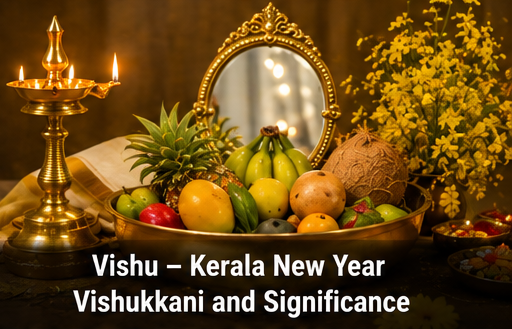
Vishu is the traditional astronomical New Year festival of Kerala, Tulu Nadu (Karnataka), and adjoining regions, marking the astronomical ingress of the Sun into the first zodiac sign Mesha (Aries) on Meda Sankranti. Falling around April 14 or 15, Vishu signifies cosmic equilibrium—where day and night are of equal duration. The cornerstone of Vishu is 'Vishukkani'—the practice of viewing an auspicious arrangement of golden items, grains, fruits, and Lord Krishna's idol as the very first sight upon waking at dawn, ensuring a prosperous and blessed year.
Sacred Heritage
Timeless Temple Tradition
Architectural Wonder
Ancient Vedic Mastery
Scriptural Origin
Puranic & Epic History
Spiritual Sadhana
Living Faith & Wisdom
Observed on the first day of the Malayalam solar month Medam.
The Liberation of the Sun: The Mythological Origin and Radiant Traditions of Vishu
In the rich tapestry of Puranic traditions, the story of Vishu begins not on earth, but in the cosmos. Long ago, the formidable demon king Narakasura grew so arrogant and intoxicated with his own power that he disrupted the very balance of nature. He physically blocked Surya Deva (the Sun God) from rising freely in the East, plunging the world into a state of unnatural darkness and disarray. The seasons halted, and the rhythm of life was violently interrupted.
To restore the cosmic order, Lord Krishna—accompanied by his fierce consort Satyabhama—waged a monumental battle against Narakasura. On this highly auspicious day, Krishna vanquished the demon king, liberating Surya Deva. Free from Narakasura’s shadow, the Sun God was finally able to rise perfectly in the East, shining in equal measure across all directions. This divine victory and the restoration of natural harmony gave birth to Vishu, a festival celebrating radiant balance, spiritual renewal, and the precise astronomical spring equinox.
"Vishu is not merely a shift in the calendar; it is the ultimate reminder that no matter how deep the darkness of arrogance grows, the supreme light of consciousness will always restore the balance."
The Essence of Vishu: Kerala's Golden New Year
Celebrated with immense joy and spiritual fervor, Vishu marks the traditional New Year in Kerala and the neighboring regions of South India. Falling on the first day of the Malayalam month of Medam (usually mid-April), it corresponds perfectly with the solar new year. Vishu literally translates to "equal" in Sanskrit, celebrating the day when day and night are of equal length. The festival is characterized by themes of light, abundance, family ties, and new beginnings.
Vishukkani: The Sacred First Sight of Prosperity
The heart of the Vishu celebration lies in a breathtaking morning ritual known as the Vishukkani (which translates to "that which is seen first"). The elders of the family lovingly prepare this auspicious setup the night before, ensuring that the first thing the family sees upon waking is a reflection of absolute abundance and divine grace.
The Vishukkani is traditionally arranged in a sacred circular brass vessel called an Uruli, placed in front of a mirror (Aranmula Kannadi) and an idol or image of Lord Krishna. The radiant setup includes:
- Konna Pookal (Cassia Fistula): Golden-yellow flowers that bloom exclusively during this season, symbolizing the crown of Lord Krishna.
- Kanikonna and Raw Grains: Unhusked rice (Paddy) and raw rice signifying agricultural prosperity.
- Golden Fruits and Vegetables: Golden cucumbers, coconuts, jackfruits, and mangoes representing nature's endless bounty.
- Gold Coins and Currency: Placed in a betel leaf, representing material wealth and financial stability.
- Nilavilakku (Traditional Lamp): A glowing brass lamp representing the light of Surya Deva and the eradication of ignorance.
At the crack of dawn, the elder of the house gently wakes each family member, covering their eyes and leading them to the altar. Opening their eyes to this golden, radiant sight ensures that the entire year will be filled with spiritual and material prosperity.
Vishu Kaineettam: The Gift of Generosity
After viewing the Vishukkani and offering prayers, the beautiful tradition of Vishu Kaineettam takes place. The elders of the family give money—traditionally fresh coins or crisp new notes—to the younger members, children, and even household staff.
This gesture is far more than a monetary gift; it is a profound transfer of blessings. It teaches the young the value of wealth, the importance of sharing, and signifies that prosperity should flow freely from the older generation to the next, much like the sun's rays nourishing the earth.
Traditions of Joy: Kodi Vastram, Sadya, and Fireworks
The celebration of balance extends into every aspect of the day:
- Kodi Vastram (New Clothes): Following a holy bath, family members dress in pristine new clothes, typically the traditional Kerala Kasavu (white and gold attire), symbolizing purity and a fresh start.
- Vishu Sadya: A grand, vegetarian feast served on a fresh banana leaf. The Sadya is a perfect culinary representation of the equinox—it includes dishes that balance sweet, salty, sour, and bitter flavors, reminding us that life is a beautiful mixture of all experiences.
- Vishu Padakkam (Fireworks): The joyous day is punctuated by the lighting of firecrackers by children and adults alike, a festive echo of Lord Krishna's triumphant battle and a visual celebration of light conquering darkness.
Ultimately, Vishu is a profound spiritual awakening. It invites us to clear the darkness of our own egos, balance our internal energies, and step into a new year with a heart full of radiant hope and boundless generosity.
Why this matters today
Discover complete Vishu guide. Learn how to arrange the auspicious Vishukkani in Uruli with Kani Konna flowers, give Vishu Kaineettam coins, prepare Vishu Kanji, and worship Lord Krishna.
Frequently asked questions
What items are traditionally placed inside the Vishukkani Uruli?
Raw rice, golden cucumber (Kani Vellarikka), betel leaves, arecanut, mangoes, jackfruit, golden shower flowers (Cassia fistula/Kani Konna), a Valkannadi mirror, gold coins, and lit Nilavilakku lamp.
What is the custom of Vishu Kaineettam?
Elders in the family gift coins and money (Kaineettam) to children and younger relatives with heartfelt blessings for financial flourishing and good character in the upcoming year.
Why are Kani Konna (golden shower tree) flowers essential for Vishu?
The radiant golden-yellow blossoms symbolize solar energy, the crown ornaments of Lord Krishna, and the blooming abundance of the harvest season.