
Vaikuntha Ekadashi Guide: Vaikuntha Dwaram Opening, Fasting Rules & Gita Jayanti
Complete Vaikuntha Ekadashi guide. Learn Uttara Dwara (Gateway to Vaikuntha) opening rituals in Tirupati and Srirangam, strict fasting rules, Vishnu Sahasranama, and Moksha blessings.
Vedic Rituals & Panchang Editorial Desk
Writer & Research Team
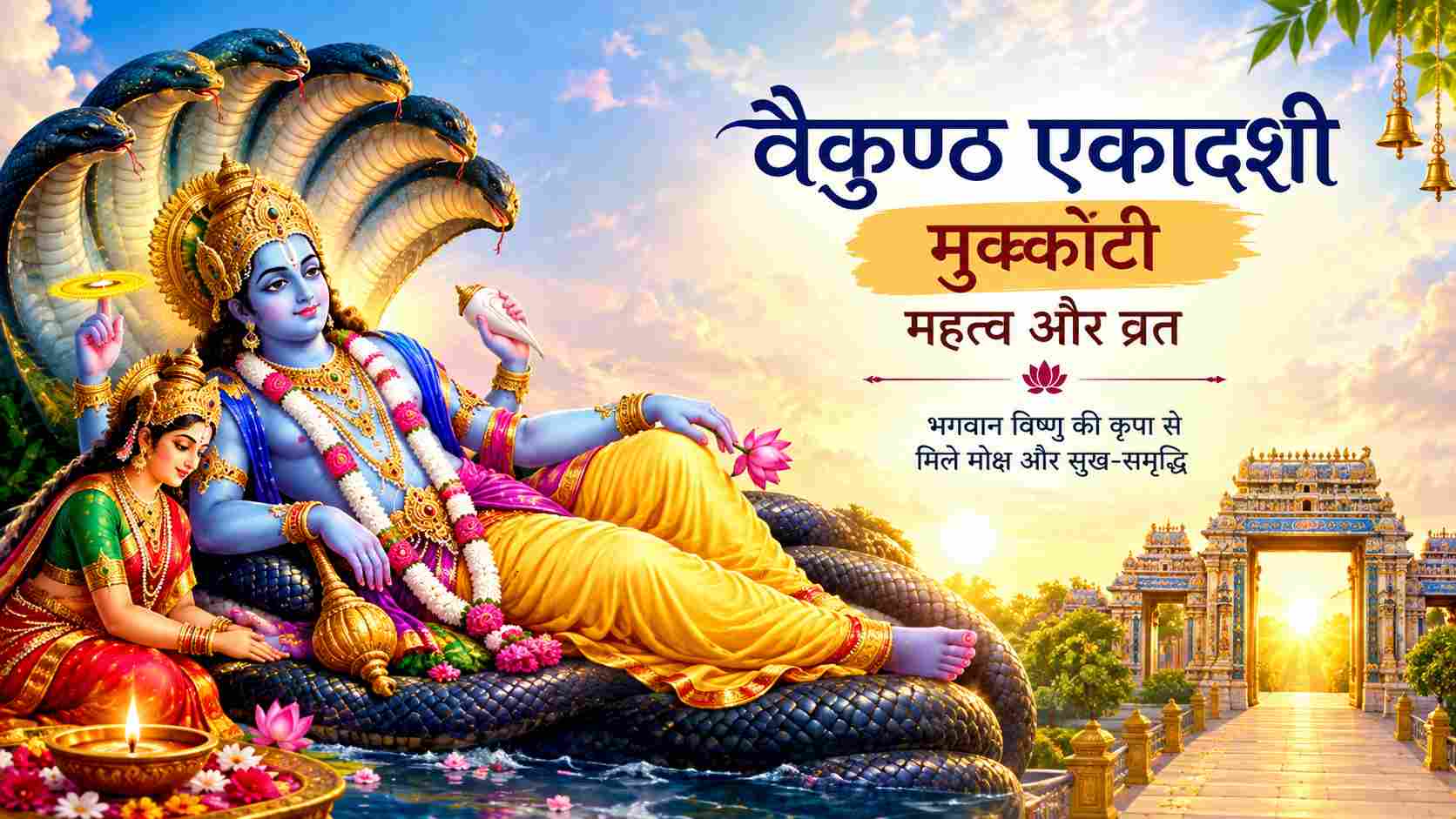
Vaikuntha Ekadashi, known as Mukkoti Ekadashi in Telugu states and Swarga Vathil Ekadashi in Kerala, is celebrated on the Shukla Paksha Ekadashi of Margashirsha (or Dhanurmasam / Dhanu month). It is the most revered Vaishnava festival across South India, particularly at the great shrines of Tirumala Venkateswara Temple and Sri Ranganathaswamy Temple in Srirangam. It is believed that on this sacred day, the Vaikuntha Dwaram (the northern celestial gate to Lord Vishnu's abode) is unlocked, granting liberation (Moksha) to all who pass through the temple's northern portal and observe a pure fast.
Sacred Heritage
Timeless Temple Tradition
Architectural Wonder
Ancient Vedic Mastery
Scriptural Origin
Puranic & Epic History
Spiritual Sadhana
Living Faith & Wisdom
Observed on the Shukla Paksha Ekadashi falling in the solar month of Dhanu.
Vaikuntha Ekadashi: Significance, Uttara Dwara Darshanam & Fasting Rituals
Among the twenty-four sacred Ekadashis observed in the Hindu calendar, Vaikuntha Ekadashi stands supreme as the crown jewel of Vaishnava traditions. Also celebrated as Mukkoti Ekadashi in Andhra Pradesh and Telangana, Swarga Vathil Ekadashi in Kerala, and Margazhi Ekadashi in Tamil Nadu, this holy day is dedicated entirely to Lord Maha Vishnu, the cosmic preserver. It occurs during the auspicious Dhanurmasam (the solar month of Sagittarius), specifically on the 11th lunar day (Shukla Paksha Ekadashi) of the waxing moon fortnight in the month of Margashirsha (December–January).
According to ancient scriptures, on this singular day, the celestial gates of Vaikuntha—the supreme, transcendental abode of Lord Vishnu—swing wide open. Millions of devotees gather at grand temples to pass through the consecrated Uttara Dwara (the Northern Gate of Heaven), seeking liberation from the karmic cycles of birth and death (Moksha).
"Vaikunthe tu gata nityam, na cha shoko na cha klamah. Ekadashyam upavashena, Vishnu-loke mahiyate."
(He who fasts with devotion on Vaikuntha Ekadashi is freed from all grief and exhaustion, attaining the eternal, radiant abode of Lord Vishnu.)
Quick Facts and Overview
| Attribute | Scriptural & Ritual Details |
|---|---|
| Festival Name | Vaikuntha Ekadashi (Mukkoti Ekadashi / Swarga Vathil Ekadashi) |
| Presiding Deity | Lord Maha Vishnu (Sri Ranganatha, Sri Venkateswara, Lord Narayana) |
| Hindu Calendar Date | Margashirsha / Dhanu Masam, Shukla Paksha Ekadashi (11th Waxing Moon Day) |
| Primary Ritual Feature | Uttara Dwara Darshanam (passing through the sacred Northern Portal) |
| Fasting Nature | Nirjala or Phalahar Vrat (complete avoidance of rice and grains) |
| Concurrent Festival | Gita Jayanti (the anniversary of Lord Krishna delivering the Bhagavad Gita) |
| Major Temple Epicenters | Srirangam Ranganathaswamy Temple, Tirumala Venkateswara Temple, Bhadrachalam |
| Spiritual Reward | Remission of mortal sins, generational blessings, and entry into Moksha |
The Mythological Origins: Legends of Vaikuntha Ekadashi
Several ancient Puranic texts, most notably the Padma Purana and Skanda Purana, narrate the awe-inspiring legends behind the sanctity of this day:
1. The Manifestation of Goddess Ekadashi and the Slaying of Demon Mura
In the Satya Yuga, a tyrannical demon named Murasura terrorized the three worlds, driving the devas from heaven. The gods sought refuge in Lord Vishnu, who entered into a fierce battle with the demon that lasted for thousands of years. To draw the battle to a close, Lord Vishnu retreated to a cave named Himavati in Badarikashrama to rest in cosmic yogic sleep (Yoga Nidra).
Seeing the Lord asleep, Murasura raised his weapon to deliver a mortal strike. At that exact instant, an effulgent female energy wielding luminous weapons emerged directly from the consciousness of Lord Vishnu. With a single divine roar, She reduced the demon to ashes. Awakened by the sound, Lord Vishnu was pleased by Her valor and named Her Ekadashi. He granted Her a supreme boon:
"Whoever observes a sincere fast on the day of your manifestation, meditating upon My divine name and detaching from worldly desires, shall be cleansed of the gravest sins and shall directly enter My eternal abode of Vaikuntha."
2. The Redemption of Madhu and Kaitabha
Another beloved legend recounts that the two demon brothers, Madhu and Kaitabha, who had stolen the Vedas from Brahma, were redeemed by Lord Vishnu on this day. Before merging into His divine body, they requested that the northern gates of Vaikuntha be opened for all mortals on this sacred tithi, so that anyone who passes through them in devotion would be blessed with salvation.
3. The Churning of the Ocean (Samudra Manthan)
It is also deeply believed that during the great churning of the cosmic milk ocean by the gods and demons, the pot of divine immortal nectar (Amrita) finally emerged on this very Ekadashi, granting eternal life to the devas.
Uttara Dwara Darshanam: Crossing the Threshold of Heaven
The defining and most visually magnificent ritual of Vaikuntha Ekadashi is Uttara Dwara Darshanam (also known as Vaikuntha Vaasal in Tamil or Paramapada Vasal). In major Vaishnavite shrines across India, a special northern gateway—which remains firmly shut throughout the rest of the year—is unlocked exclusively during the pre-dawn hours of this day.
Why the Northern Direction?
In Vedic cosmology, the North (Uttara) is the direction of spiritual ascension, wisdom, and eternal light. It corresponds with the start of Uttarayana (the northern transit of the sun), representing the daytime of the gods. Entering a temple through the northern portal symbolizes shedding one's mortal impurities, walking out of the cycle of Samsara, and stepping straight into the heavenly gates of Vaikuntha.
The Grand Celebrations at Prominent Temples:
- Sri Ranganathaswamy Temple, Srirangam (Tamil Nadu): The largest functional Hindu temple in the world celebrates this during its 21-day Vaikuntha Ekadashi Peruvizha. In the pre-dawn darkness (around 4:00 AM), the presiding deity, Lord Namperumal, adorned in a dazzling armor of diamonds and rubies (Rathnangi), is carried in a grand procession through the golden Paramapada Vasal, accompanied by Vedic chanting and traditional instruments.
- Tirumala Venkateswara Temple, Tirupati (Andhra Pradesh): The golden portal encircling the sanctum sanctorum (Vaikuntha Dwaram) is thrown open for ten continuous days. Millions of pilgrims walk through this inner passage to receive the blessing of Lord Sri Balaji.
- Sri Sita Ramachandraswamy Temple, Bhadrachalam (Telangana): Lord Rama arrives in the majestic Garuda Vahana avatar to pass through the Uttara Dwaram, flanked by hundreds of thousands of chanting pilgrims along the banks of the Godavari River.
Fasting Rules and Sacred Vrat Vidhi
Observing the Vaikuntha Ekadashi fast requires physical purity, sensory restraint, and unbroken devotion across three consecutive lunar days (Dashami, Ekadashi, and Dwadashi):
1. Dashami (The Day Before): Preparation
On the 10th lunar day, devotees take a single sattvic meal at lunch. Eating after sunset is strictly avoided, ensuring the digestive system is completely clean before the fast begins.
2. Ekadashi (The Fasting Day): Absolute Devotion
- Morning Cleansing: Wake during Brahma Muhurta (around 4:00 AM). Take a sacred bath, wear clean traditional attire (yellow or white is highly auspicious), and apply sacred Tilak (Urdhva Pundra) on the forehead.
- The Fasting Vow: Fasting can be observed in two ways:
- Nirjala Vrat: Consuming no food and no water throughout the day (meant for healthy adults).
- Phalahar Vrat: Consuming only water, milk, and fresh fruits while completely abstaining from grains, cereals, pulses, and vegetables.
- The Ban on Rice: Eating rice is strictly forbidden on all Ekadashis, and particularly on Vaikuntha Ekadashi. Scriptural folklore states that the demon Mura hides inside grains of rice on this day; consuming rice is believed to obstruct spiritual consciousness.
- Chanting and Reading: Spend the day reciting the Vishnu Sahasranama (the thousand names of Vishnu), the Bhagavad Gita (since this day is also celebrated as Gita Jayanti), and chanting the sacred mantra: "Om Namo Bhagavate Vasudevaya".
- Night Vigil (Akhanda Jagaran): The fast is incomplete without staying awake throughout the night. Devotees gather in temples or home altars, singing devotional hymns, playing cymbals, and reciting Puranic tales till the dawn of Dwadashi.
Parana Vidhi: Breaking the Fast on Dwadashi
The fast must be broken at a precise astrological time on Dwadashi (the 12th lunar day) known as the Parana Muhurat. Breaking the fast too early or after the Dwadashi tithi expires diminishes the spiritual merit of the vrat.
The Traditional Parana Diet:
The traditional meal consumed to break the fast is designed with ancient Ayurvedic precision to gently recondition the digestive tract after 24 hours of fasting:
- Agathi Keerai (Sesbania Leaves): Rich in calcium and cooling properties, these leaves protect the stomach lining from gastric acidity.
- Nelli / Amla (Indian Gooseberry): Packed with vitamin C and antioxidants, fresh amla pachadi restores bodily vitality and balances digestive fire (Agni).
- Sundakkai (Turkey Berry): Consumed to eliminate stomach worms and intestinal toxins accumulated during fasting.
- Sweet Payasam or Kheer: Offered first to Lord Vishnu alongside Tulsi leaves before being consumed by the devotee.
Strict Do's and Don'ts for Devotees
| Mandatory Do's | Strict Prohibitions (Don'ts) |
|---|---|
| Meditate upon Lord Vishnu and visit a temple for Uttara Dwara Darshanam. | Do not consume rice, wheat, or grains: Avoid cereals, pulses, and beans. |
| Keep Tulsi leaves ready the day before; offer them with pure water to the Lord. | Do not pluck Tulsi leaves on Ekadashi: Plucking holy basil on this day is a sin. |
| Observe nocturnal vigil (Jagaran) singing hymns and reading sacred scriptures. | Do not sleep during the day or night: Avoid lethargy and excessive resting. |
| Offer food, warm clothing, and financial donations to the needy on Dwadashi. | Avoid negative conduct: Refrain from anger, harsh speech, and gossip. |
| Maintain complete celibacy (Brahmacharya) and mental tranquility throughout. | Do not consume onion, garlic, or intoxicants: Strictly avoid tamasic items. |
The Connection with Gita Jayanti
Vaikuntha Ekadashi coincides with Gita Jayanti—the momentous day when Lord Sri Krishna delivered the timeless message of the Bhagavad Gita to Prince Arjuna on the battlefield of Kurukshetra. Facing grief and moral paralysis, Arjuna was shown the universal cosmic form (Vishwaroopa) of the Supreme Lord and was taught the paths of Karma Yoga, Jnana Yoga, and Bhakti Yoga.
Reading the 18 chapters of the Bhagavad Gita or chanting its sacred verses on Vaikuntha Ekadashi is believed to illuminate the mind with divine clarity and dissolve all illusions of worldly attachment.
Frequently Asked Questions (FAQs)
1. Can elderly people, pregnant women, or sick individuals observe this fast?
Yes, but with sensible modifications. The scriptures explicitly state that physical self-destruction is never the objective of fasting. Those with medical conditions, pregnant women, and the elderly should observe a mild fast by consuming warm milk, fresh fruits, and essential medicines. Their spiritual focus should remain on prayer and chanting.
2. What if one cannot visit a temple with an Uttara Dwara?
While walking through a consecrated temple gateway is auspicious, the true gateway to Vaikuntha lies within the devotee's heart. If unable to visit a grand shrine, face North in your home altar during sunrise, meditate on Lord Vishnu seated upon the serpent Shesha, and recite the Narayana Suktam or Vishnu Sahasranama.
3. Why are Tulsi leaves not plucked on Ekadashi?
Goddess Tulsi is the dearest consort of Lord Vishnu. According to tradition, Mother Tulsi observes a rigorous fast on Ekadashi for the pleasure of the Lord. Plucking Her leaves causes Her distress; therefore, devotees harvest Tulsi leaves on Dashami (the day before) and keep them preserved for the Ekadashi rituals.
4. What happens if someone accidentally consumes rice on this day?
If done unintentionally, immediately perform a purifying bath, offer water and sincere apologies before Lord Vishnu, chant the Maha Mantra (Hare Krishna Maha Mantra or Om Namo Bhagavate Vasudevaya) 108 times, and resolve to maintain strict discipline going forward.
Conclusion
Vaikuntha Ekadashi is a profound reminder that human life is a temporary pilgrimage, and the ultimate destination of the soul is union with the Divine. By mastering the physical senses, renouncing pride and worldly attachments, and walking through the sacred northern doorway with pure humility, devotees not only honor an ancient tradition but awaken the celestial realm of Vaikuntha within their own consciousness.
"Om Namo Bhagavate Vasudevaya! May the grace of Lord Sri Ranganatha and Sri Venkateswara open the portals of wisdom, peace, and eternal liberation for you and your family."
Why this matters today
Complete Vaikuntha Ekadashi guide. Learn Uttara Dwara (Gateway to Vaikuntha) opening rituals in Tirupati and Srirangam, strict fasting rules, Vishnu Sahasranama, and Moksha blessings.
Frequently asked questions
What is the spiritual significance of the Uttara Dwara (Northern Gate)?
The northern direction represents Uttarayan, devayana (path of the gods), and higher consciousness. Walking through the temple's northern gate symbolizes transcending mundane reincarnation.
Why is rice strictly forbidden on Vaikuntha Ekadashi?
Scriptures note that the negative energy of sins (Papa-Purusha) resides in grains (especially rice) on Ekadashi. Abstaining from rice preserves spiritual clarity and physiological purity.
Why is Gita Jayanti also celebrated on this day?
On Margashirsha Shukla Ekadashi in Kurukshetra, Lord Krishna revealed the eternal spiritual wisdom of the Srimad Bhagavad Gita to Arjuna.