
Complete Guide to Thaipusam & Soorasamharam: Lord Murugan, Vel & Kavadi Vratam
Complete guide to Thaipusam and Skanda Sashti. Learn about Goddess Parvati bestowing the divine spear (Vel), penance of Kavadi Attam, fasting rules, and Soorasamharam victory.
Vedic Rituals & Panchang Editorial Desk
Writer & Research Team
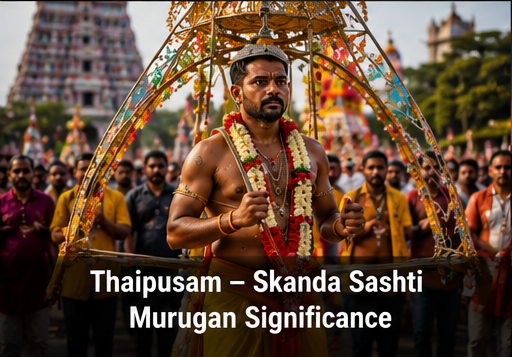
Thaipusam is a major devotional Hindu festival celebrated by Tamil communities worldwide in Tamil Nadu, Kerala, Malaysia (Batu Caves), and Singapore during the Thai month on the Purnima day coinciding with Pusam (Pushya) Nakshatra. The festival commemorates the auspicious moment when Goddess Parvati presented the invincible golden spear—the divine 'Vel' (symbolizing divine knowledge and discriminative wisdom)—to Her son, Lord Murugan (Kartikeya), enabling Him to annihilate the demon Soorapadman and liberate celestial beings.
Sacred Heritage
Timeless Temple Tradition
Architectural Wonder
Ancient Vedic Mastery
Scriptural Origin
Puranic & Epic History
Spiritual Sadhana
Living Faith & Wisdom
Observed on Pusam Nakshatra during the full moon in the Tamil solar month Thai.
The Birth of the Divine Warrior: Lord Skanda and the Triumph of Light
In the vast expanse of Hindu mythology, few tales are as electrifying and deeply symbolic as the genesis of Lord Skanda (also revered as Murugan, Kartikeya, or Subramanya). Long ago, the celestial realms were plunged into absolute darkness. Three fearsome Asura (demon) brothers—Soorapadman, Tarakasura, and Simhamukha—unleashed a reign of unprecedented terror across the universe. Intoxicated by power and boons, they drove the Devas (gods) out of their heavenly abodes, dismantling the cosmic balance and leaving creation in despair.
A Cosmic Plea and a Fiery Genesis
Desperate and destitute, Lord Indra and the displaced gods sought refuge at the feet of Lord Shiva (Mahadeva). Hearing their agonizing pleas, Shiva entered a state of profound meditation. Suddenly, from His mighty third eye, six blinding sparks of divine cosmic fire erupted. These blazing seeds of supreme consciousness were so intensely hot that neither the gods nor the elements could hold them.
The fire god, Agni, and the wind god, Vayu, carefully carried these incandescent sparks and deposited them into the cooling, sacred waters of the Saravana lake. In this mystical lotus pond, the six sparks manifested into six beautiful, radiant infants. They were lovingly nurtured by the six Krittika nymphs (the Pleiades). When Goddess Parvati embraced the babies, they merged into one magnificent, six-faced child—the supreme cosmic commander, Lord Skanda.
"The birth of Skanda is not just a martial epic; it is the awakening of supreme divine intellect required to pierce through the darkest layers of human ignorance and ego."
Thaipusam: The Gift of the Invincible Vel
As Lord Skanda grew into a peerless warrior, the time came for Him to fulfill His cosmic destiny. On the highly auspicious day of Thaipusam (falling in the Tamil month of Thai under the Pusam star), Mata Parvati bestowed upon Her son the ultimate weapon: the divine Vel (a sacred spear).
This Vel was no ordinary weapon. It possessed the depth of Shiva's consciousness and the dynamic energy (Shakti) of Parvati. It symbolizes a sharply focused, piercing intellect that is vast, deep, and capable of destroying the illusions of the mind.
Skanda Sashti: The Epic Annihilation at Tiruchendur
Armed with the Vel and leading the celestial army, Lord Skanda marched toward the coastal fortress of Tiruchendur to confront the mighty Soorapadman. For six grueling days, a cosmic war waged between the forces of light and darkness. Soorapadman, a master of illusion, took various terrifying forms, eventually transforming into a colossal mango tree under the ocean.
With a single, decisive throw of the divine Vel, Lord Skanda split the tree in two. One half became a peacock (His divine mount), and the other became a rooster (the emblem on His battle flag). The demon was not killed, but transformed and subjugated, symbolizing that the ultimate victory is not the destruction of the ego, but its mastery and redirection towards divine service. This momentous victory over demonic forces is celebrated globally as Skanda Sashti.
Sacred Traditions: Kavadi Attam and Vel Worship
Today, millions of devotees commemorate these epic cosmic events through vibrant, deeply emotional festivals characterized by immense physical and spiritual endurance. These traditions keep the ancient history alive in the hearts of the modern world:
- Thaipusam Celebrations: A grand festival of gratitude and devotion where devotees celebrate the receiving of the Vel. It is a day of fulfilling vows, marked by vibrant processions, rhythmic drum beats, and chants of "Vel, Vel, Muruga."
- Kavadi Attam (The Burden Dance): Devotees carry intricately decorated wooden or metal structures (Kavadi) on their shoulders, often walking barefoot for miles under the scorching sun. This profound act represents carrying one's earthly burdens to the Lord, trusting Him to dissolve their karmic weight.
- Vel Worship and Penance: As an act of absolute surrender, many devotees pierce their cheeks, tongues, or skin with small Vels. Done in a deep meditative trance, this extreme act of devotion is believed to be painless due to the Lord's grace. Piercing the mouth specifically represents holding holy silence (Mauna) and directing all life force toward the divine.
The legends of Lord Skanda continue to offer a profound spiritual roadmap: when the inner demons of fear, greed, and ego conquer our mental peace, the sharp, divine Vel of wisdom is the only force capable of piercing the darkness and restoring our internal harmony.
Why this matters today
Complete guide to Thaipusam and Skanda Sashti. Learn about Goddess Parvati bestowing the divine spear (Vel), penance of Kavadi Attam, fasting rules, and Soorasamharam victory.
Frequently asked questions
What is the Kavadi Attam performed during Thaipusam?
Kavadi is a physical burden (a decorated wooden or brass canopy often holding pots of fresh milk) carried on the shoulders after weeks of strict celibacy, prayer, and fasting to offer gratitude to Lord Murugan.
What does the sacred weapon 'Vel' symbolize?
The Vel represents spiritual wisdom (Jnana Shakti). Its broad blade denotes expansive knowledge, its sharp tip signifies laser-like discrimination, and its tall shaft reflects deep steadfastness.
How did Lord Murugan deal with demon Soorapadman after defeat?
Rather than destroying him, Lord Murugan transformed the humbled demon into a magnificent peacock (His celestial vahana) and a fighting rooster (His battle flag emblem).