
Karwa Chauth Guide: Nirjala Vrat, Sargi, Moon Sighting & Shiva-Parvati Puja
Discover complete Karwa Chauth rituals. Get exact moonrise timings, learn the story of Queen Veeravati, Sargi traditions, and step-by-step evening puja vidhi for marital bliss.
Vedic Rituals & Panchang Editorial Desk
Writer & Research Team
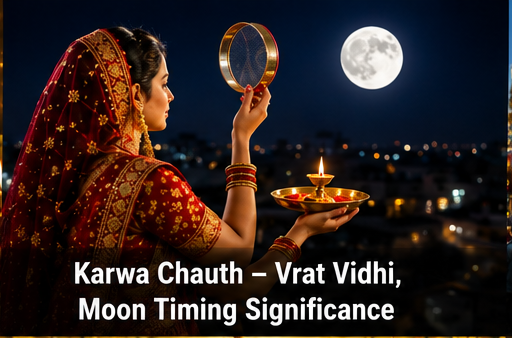
Karwa Chauth is an austere and deeply revered fast observed by married Hindu women for the longevity, prosperity, and well-being of their husbands. Celebrated on the Chaturthi (fourth day) of the Krishna Paksha in the month of Kartika, women observe a strict dawn-to-dusk 'Nirjala' fast (abstaining from food and water). The day commences before sunrise with the consumption of 'Sargi' (a pre-dawn meal gifted by the mother-in-law). The fast concludes only after offering Arghya (holy water) to the Moon God through a sieve and viewing the husband's face.
Sacred Heritage
Timeless Temple Tradition
Architectural Wonder
Ancient Vedic Mastery
Scriptural Origin
Puranic & Epic History
Spiritual Sadhana
Living Faith & Wisdom
Observed on the day Chaturthi Tithi prevails during moonrise (Chandrodaya Vyapini).
The Tapestry of Devotion: Karwa Chauth Significance, Katha, and Rituals
In the vibrant spectrum of Indian festivals, few days are as deeply steeped in marital devotion, endurance, and romance as Karwa Chauth. Celebrated on the fourth day (Chaturthi) of the dark fortnight (Krishna Paksha) in the Hindu month of Kartik, this festival is a profound expression of love. From before sunrise until the moon graces the night sky, married women observe a strict Nirjala fast (without food or a single drop of water), praying for the longevity, prosperity, and well-being of their husbands.
The word Karwa refers to an earthen pot with a spout (symbolizing peace and prosperity), and Chauth means the fourth day. While traditionally observed by women, modern times have seen many husbands joining the fast, turning the day into a mutual celebration of companionship and unwavering support.
"Karwa Chauth is not merely an act of fasting; it is a silent, powerful prayer where endurance meets eternal love, woven under the watchful gaze of the moon."
The Enduring Legend: The Katha of Queen Veervati
The spiritual foundation of Karwa Chauth is often anchored in the poignant legend of Queen Veervati. As the only sister among seven loving, protective brothers, Veervati was deeply cherished. After her marriage, she visited her maternal home during Karwa Chauth and observed the strict fast for her husband.
As evening approached, the young queen grew severely weak from thirst and hunger. Unable to bear their beloved sister's suffering, her brothers hatched a plan. They climbed a tall Pipal tree, lit a massive fire behind it, and placed a round sieve in front of the flames to create the illusion of a glowing moon. Believing the moon had risen, an innocent Veervati broke her fast.
The moment she took her first morsel, tragic news arrived: her husband, the King, had fallen unconscious and was pierced with hundreds of mystical needles. Heartbroken but undeterred, Veervati rushed to his side and spent an entire year devotedly removing the needles one by one. By the time the next Karwa Chauth arrived, only one needle remained. She observed the fast again—this time with absolute adherence and faith. Pleased by her unshakeable devotion and penance, Goddess Parvati blessed her, and her husband awoke, completely healed. The story signifies that pure devotion can rewrite destiny.
Karwa Chauth Vrat Vidhi: Rituals of Purity
The observance of Karwa Chauth is a beautifully orchestrated sequence of rituals that foster a sense of community among women and deepen family bonds:
- The Pre-Dawn Sargi: The day begins long before sunrise (around 4:00 AM). The mother-in-law lovingly prepares a Sargi—a traditional thali containing vermicelli (seviyan), fruits, dry fruits, sweets, and coconuts. This nourishing meal provides the women with the energy needed to sustain the rigorous fast.
- The Sankalp (Vow): After the morning bath, women take a vow (Sankalp) to observe the fast with a pure heart for the well-being of their husband, resolving not to consume food or water until the moonrise.
- Baya and Evening Puja: In the late afternoon, women dress in their finest traditional attire, typically red or pink (colors of marital bliss), adorned with henna (mehndi) and jewelry. They gather in a circle to listen to the Karwa Chauth Katha. The Baya—a gift containing clothes, jewelry, and sweets—is presented to the mother-in-law as a mark of respect.
- The Karwa Exchange: During the puja, women pass their Karwas (earthen pots filled with water) in a circle while chanting traditional songs, praying to Goddess Gauri (Parvati) for a long and happy married life.
The Sieve, the Moon, and Breaking the Fast
The most anticipated moment of Karwa Chauth arrives with the moonrise. Because the moon's trajectory varies by geographical location, the exact timing shifts slightly from city to city, usually appearing between 8:00 PM and 8:45 PM in most parts of the Indian subcontinent.
Once the moon is sighted, the culmination of the fast takes place through a beautiful, intimate ritual:
- The wife looks at the glowing moon through a circular sieve (Channi), offering a prayer and a water oblation (Arghya) from her Karwa.
- She then turns the sieve to look at her husband's face. The sieve acts as a filter, believed to protect her husband from the evil eye while filtering the divine blessings of the moon onto him.
- The husband gently breaks her fast by offering her the first sip of water and a bite of sweet, sealing the day of devotion with gratitude and love.
Karwa Chauth remains a timeless testament to the strength of marital bonds, reminding us that love is not just found in words, but in quiet acts of sacrifice, patience, and shared faith.
Why this matters today
Discover complete Karwa Chauth rituals. Get exact moonrise timings, learn the story of Queen Veeravati, Sargi traditions, and step-by-step evening puja vidhi for marital bliss.
Frequently asked questions
What is the importance of 'Sargi' in Karwa Chauth?
Sargi is a traditional pre-dawn thali of sweets, fruits, feni, and dry fruits given by the mother-in-law as a blessing. It provides vital energy for the grueling waterless fast ahead.
Why is the moon viewed through a sieve (Chhalni)?
The sieve diffuses the harsh rays of the moon. Viewing the moon and then the husband through the sieve symbolizes filtering out negativity and praying for the husband's long, unblemished life.
Can unmarried women observe Karwa Chauth?
Yes, unmarried or engaged women often observe this fast for their future husbands. However, they typically break their fast by looking at the Pole Star (Tara) rather than the moon.