
Jain Diwali Guide: Nirvana Ladoo Offering, Illumination & Moksha Parva
Discover the significance of Jain Diwali. Learn about Lord Mahavira's Nirvana Kalyanak at Pavapuri, offering the Nirvana Ladoo, and lighting lamps of spiritual knowledge.
Vedic Rituals & Panchang Editorial Desk
Writer & Research Team
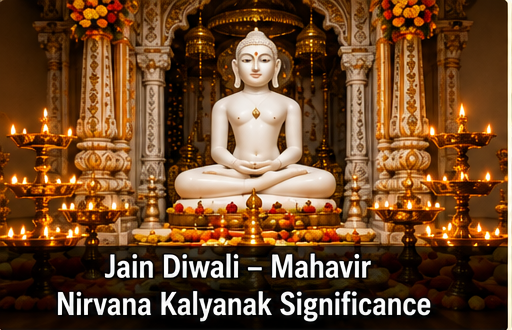
While most of India celebrates Diwali as Lord Rama's return to Ayodhya, the Jain community observes Diwali for a profoundly different spiritual reason. Jain Diwali commemorates the 'Nirvana Kalyanak'—the exact moment Lord Mahavira, the 24th Tirthankara, attained Moksha (complete liberation from the cycle of birth and death) at Pavapuri in 527 BCE. Occurring on the amavasya (new moon) of the Kartika month, Jains celebrate this day not with firecrackers (which violate the vow of Ahimsa), but by illuminating temples and homes with diyas (earthen lamps). These lamps symbolize the light of spiritual knowledge replacing the physical light of the departed Tirthankara.
Sacred Heritage
Timeless Temple Tradition
Architectural Wonder
Ancient Vedic Mastery
Scriptural Origin
Puranic & Epic History
Spiritual Sadhana
Living Faith & Wisdom
Celebrated on the New Moon (Amavasya) of the Kartika month.
The Twilight of a Spiritual Sun: Pavapuri, 527 BCE
In the ancient, fertile plains of Bihar, the year 527 BCE marked a turning point in human spiritual history. In the tranquil town of Pavapuri, the 24th Tirthankara, Lord Mahavira, was nearing the end of His earthly journey. At 72 years of age, having spent decades walking barefoot across the Indian subcontinent to spread the message of radical non-violence (Ahimsa) and truth, His physical body was preparing for its final rest. Yet, His aura remained as luminous as ever. This was not a time of mourning for the great sage, but the precipice of ultimate triumph—the absolute destruction of the karmic cycle and the attainment of Moksha.
The Final Sermon: The Uttaradhyayana Sutra
Sensing that His physical departure was imminent, Lord Mahavira initiated what would become His most profound and enduring gift to humanity. For two continuous days and nights, He delivered an uninterrupted spiritual discourse.
"True liberation is found not in the conquering of the world, but in the absolute mastery of the self."
This monumental 48-hour sermon was meticulously documented by His followers and is revered today as the Uttaradhyayana Sutra. The atmosphere in Pavapuri was one of breathless reverence. Kings, commoners, ascetics, and celestial beings gathered in absolute silence, absorbing the supreme spiritual light radiating from the Tirthankara. He spoke of the intricate web of karma, the eternal nature of the soul, and the rigorous yet beautiful path to total freedom.
A Night Without a Moon: Nirvana and the First Jain Diwali
In the deeply quiet, early hours of Kartika Amavasya—the darkest, moonless night of the Hindu month of Kartik—the ultimate moment arrived. Lord Mahavira effortlessly shed His physical vessel. In that fraction of a second, He shattered the last remaining chains of karmic bondage forever, achieving Nirvana.
When the vast assembly awoke to the realization that the living embodiment of spiritual illumination had departed the physical realm, a profound void enveloped the earth. To honor His legacy and compensate for the sudden loss of His physical presence, the grieving kings and devotees spontaneously lit thousands of earthen lamps. This poignant, heartfelt gesture birthed the origin of Jain Diwali.
To this day, the Jain community honors this moment through key reflections:
- Celebrating Spiritual Wealth: Recognizing that true prosperity is the purity of the soul, not material accumulation.
- The Triumph over Darkness: Lighting lamps as an external symbol of igniting one's own internal spiritual awakening.
- Reverence for Liberation: Commemorating the exact moment Lord Mahavira stepped out of the cycle of birth and death.
The Awakening of Gautam Swami: From Grief to Omniscience
While the world celebrated the Tirthankara's liberation, a deeply human story was unfolding. Gautam Swami, Lord Mahavira’s chief disciple, was away on an errand when his master departed. Despite his unparalleled intellect and years of ascetic practice, Gautam Swami harbored a deep, personal attachment to Mahavira.
Upon hearing the news of his master's Nirvana, he was consumed by overwhelming grief. He wept bitterly, questioning how his beloved teacher could leave him behind. However, in the absolute depths of that sorrow, a piercing realization struck him: even the most beautiful, pure human attachment is still a chain that binds the soul.
In letting go of his grief and realizing the futility of personal attachment, the final veil of karma was lifted from his soul. That very same evening, Gautam Swami attained Keval Gyan (omniscient knowledge). This spectacular transformation turned a night of worldly sorrow into a doubly sacred occasion, proving that the master's teachings lived on perfectly within the disciple.
పండుగ యొక్క ముఖ్య సంప్రదాయాలు & ఆచారాలు
- ✓Offering the Nirvana Ladoo: Devotees wake up early in the Brahma Muhurat on Kartika Amavasya to visit local Jain temples and offer a large spherical sweet called the 'Nirvana Ladoo' at Lord Mahavira's feet, symbolizing ultimate liberation and spiritual sweetness.
- ✓Recitation of Uttaradhyayana Sutra: Jains spend a significant part of the day reading and chanting verses from the Uttaradhyayana Sutra, which contains Lord Mahavira’s final teachings and spiritual wisdom given right before attaining Moksha.
- ✓Lighting Diyas for Knowledge: Homes and temples are illuminated with rows of earthen oil lamps (diyas) to commemorate the historical lighting done by devas and kings to dispel the darkness caused by the physical departure of the supreme light.
- ✓Observing Strict Ahimsa & Fasting: Upholding the core values of Jainism, followers avoid all forms of celebrations involving noise or harm, choose to keep a partial or complete fast (Upvas/Ayambil), and engage in intense introspection and charity.
ఇంట్లో సులభమైన పూజా విధానం
Why this matters today
Discover the significance of Jain Diwali. Learn about Lord Mahavira's Nirvana Kalyanak at Pavapuri, offering the Nirvana Ladoo, and lighting lamps of spiritual knowledge.
Frequently asked questions
What is the 'Nirvana Ladoo' offered on Jain Diwali?
On the early morning of Diwali, Jains visit the temple to offer a large, spherical sweet known as the 'Nirvana Ladoo' (or Moksha Ladoo) at the altar. Its round shape represents perfection, infinity, and the sweetness of ultimate liberation.
Why is Gautam Swami remembered on Jain Diwali?
Gautam Swami was Lord Mahavira's chief disciple (Ganadhar). Overcome by grief over Lord Mahavira's Nirvana, he realized his deep emotional attachment was holding him back. Letting go of this final attachment, Gautam Swami attained Kevala Jnana (omniscience) on the very evening of Diwali.
Why do Jains not burst firecrackers on Diwali?
Bursting firecrackers causes immense harm to the environment, creates noise pollution, and kills microscopic airborne and ground insects, which strictly violates the foundational Jain principle of Ahimsa (non-violence).