
Complete Guide to Guru Purnima: Veda Vyasa Jayanti, Guru Paduka Puja & Chanting
Complete guide to Guru Purnima. Discover the appearance day of Sage Veda Vyasa, the sacred Guru-Shishya parampara, Guru Paduka worship, and spiritual benefits of fasting on Ashadha Purnima.
Vedic Rituals & Panchang Editorial Desk
Writer & Research Team
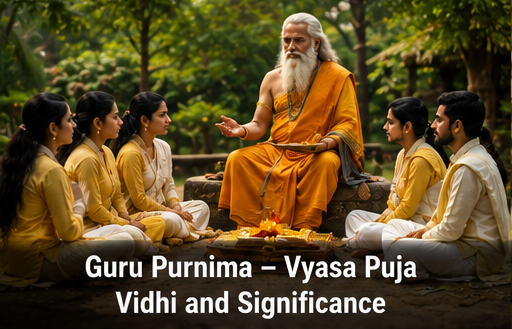
Guru Purnima, historically revered as Vyasa Purnima, is observed on the full moon (Purnima) day of the sacred Ashadha month. This sublime festival is dedicated to expressing boundless gratitude to spiritual masters, teachers, and guides who dispel the darkness of ignorance (Gu = darkness; Ru = remover of darkness). The day commemorates the appearance of Sage Krishna Dvaipayana Veda Vyasa—the legendary compiler of the four Vedas, author of the 18 Puranas, the Mahabharata, and the Brahma Sutras. Disciples and spiritual seekers perform Guru Paduka Puja, take vows of self-restraint, and start the four-month monastic period known as Chaturmasya.
Sacred Heritage
Timeless Temple Tradition
Architectural Wonder
Ancient Vedic Mastery
Scriptural Origin
Puranic & Epic History
Spiritual Sadhana
Living Faith & Wisdom
Celebrated on the full moon day of the Vedic month of Ashadha.
The Light in the Darkness: The Epic Legacy of Sage Vyasa and the Spirit of Guru Purnima
In the ancient dawn of civilization, the absolute spiritual and cosmic knowledge of the universe existed, but it was vast, unified, and overwhelmingly complex. As the wheel of time turned toward the Kali Yuga (the current age of spiritual decline), the great seers realized that the human intellect would soon become too limited to grasp this infinite wisdom. Humanity was in desperate need of a supreme guide, a master who could organize the cosmic truths into digestible drops of wisdom. This cosmic necessity birthed the legend of Maharishi Veda Vyasa.
The Birth of the Supreme Teacher
Born to the fisherwoman Satyavati and the great Sage Parashara on the radiant full moon day of the Hindu month of Ashadha, Vyasa grew up to possess unparalleled spiritual brilliance. Recognizing the plight of future generations, Sage Vyasa undertook a monumental, lifelong mission. He meticulously gathered the infinite cosmic sounds and divided the single, massive body of knowledge into four distinct Vedas: the Rigveda, Yajurveda, Samaveda, and Atharvaveda.
But his compassion did not stop there. Knowing that the intricate philosophy of the Vedas might still be too dense for the common person, he wove these profound truths into captivating stories, composing the 18 great Puranas and the epic Mahabharata. Because of this unparalleled service to humanity, Maharishi Vyasa is celebrated as the original and greatest Guru (Adi Guru) of the Hindu tradition. The full moon day of Ashadha, which marks his birth and his monumental contributions, is universally revered as Guru Purnima or Vyasa Purnima.
"The syllable 'Gu' stands for darkness, and the syllable 'Ru' stands for the dispeller of that darkness. A Guru is not just a teacher; they are the radiant force that completely removes the blindness of our ignorance."
The Deep Significance of Guru Purnima
Guru Purnima is a profound celebration of spiritual and academic awakening. Falling at the onset of the monsoon season, this day also holds deep ecological and historical significance. In ancient times, wandering monks and ascetics (Sanyasis) would halt their travels due to the heavy rains. They would settle in one place for four months (Chaturmas) to deeply meditate and impart wisdom to their disciples (the Guru-Shishya Parampara).
It is also the day when Lord Shiva, as the Adi Yogi, is said to have transmitted the ultimate science of yoga to the Saptarishis (the seven legendary sages), thus becoming the first Guru to the world.
From Ancient Gurus to Modern Mentorship
While the traditional image of a Guru involves ashrams and spiritual ascetics, the core essence of Guru Purnima translates seamlessly into the modern concept of mentorship. In our fast-paced, often chaotic world, a mentor acts as our personal Vyasa.
Whether it is a school teacher who recognizes our hidden talents, a professional mentor who guides us through career storms, or a spiritual guide who helps us find inner peace, modern mentors serve the exact same purpose: they see the potential within us that we are blind to. Guru Purnima is the perfect occasion to pause, reflect, and express heartfelt gratitude to anyone who has shaped our intellect, character, and soul.
Guru Purnima Puja Vidhi: Sacred Rituals of Reverence
The Puja Vidhi (ritual procedure) for Guru Purnima is centered entirely around surrender, respect, and gratitude. Here is how it is traditionally observed:
- Morning Purification: Devotees wake up before sunrise (Brahmamuhurta), take a holy bath, and wear clean, preferably white or yellow garments, symbolizing purity and the light of knowledge.
- Setting the Altar (Vyasa Peeth): A sacred space is prepared with a picture or idol of Maharishi Veda Vyasa, one's personal Guru, or the presiding deity. The altar is decorated with fresh flowers and sandalwood paste.
- Offerings of Gratitude: Devotees offer garlands, fruits, incense, and a lit Diya (lamp). It is customary to offer a token of respect (Dakshina) or a simple gift (Vastram) to one's physical Guru or teachers.
- Worshiping the Lotus Feet: In traditional settings, the ritual of Guru Pada Puja is performed, where the disciples wash the feet of their Guru, acknowledging that the dust of the master's feet carries the weight of universal wisdom.
- Satsang and Study: The day is best spent reading sacred texts like the Bhagavad Gita or the Guru Gita, fasting lightly (Sattvic diet), and engaging in deep meditation.
Sacred Mantras to Honor the Guru
Chanting on this day is believed to magnify one's spiritual receptivity. The most powerful and universally chanted mantra is:
"Gurur Brahma, Gurur Vishnu, Gurur Devo Maheshwara,
Guru Sakshat Parabrahma, Tasmai Shri Gurave Namaha."
(The Guru is Brahma the Creator, Vishnu the Preserver, and Shiva the Destroyer. The Guru is truly the Supreme Absolute. To that supreme Guru, I bow in deep reverence.)
Guru Purnima is a beautiful reminder that our spiritual and worldly journeys are not meant to be walked alone. Who is the "Guru" or mentor in your life that has helped dispel the darkness during your most challenging times?
Why this matters today
Complete guide to Guru Purnima. Discover the appearance day of Sage Veda Vyasa, the sacred Guru-Shishya parampara, Guru Paduka worship, and spiritual benefits of fasting on Ashadha Purnima.
Frequently asked questions
Why is Guru Purnima also celebrated as Vyasa Purnima?
It marks the birthday of Sage Veda Vyasa and the day He began dictating the Brahma Sutras to His disciples, establishing the unbroken lineage of Vedic transmission.
How is Guru Paduka Puja performed at home?
Place the Guru's Padukas (wooden sandals) or portrait on a clean cloth, bathe/anoint with holy water and Chandan, offer fragrant flowers, light a ghee lamp, and chant the Guru Stotram.
What is the connection between Guru Purnima and Chaturmasya?
On Guru Purnima, Sannyasis and sadhus take vows to stay in one place for four rainy months (Chaturmasya) to study scriptures, meditate, and impart spiritual discourses.