
Bonalu Festival Guide: Offering Bonam to Mother Goddess, Ghatam & Trance
Explore the Bonalu festival of Telangana. Learn about offering Bonam to Goddess Yellamma/Mahakali during Ashada month, the role of Potharaju, and the Ghatam procession.
Vedic Rituals & Panchang Editorial Desk
Writer & Research Team
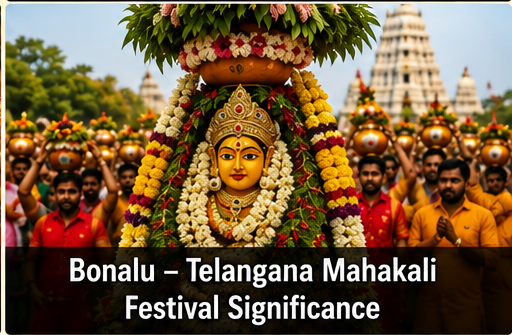
Bonalu is an extraordinary and vibrant Hindu festival celebrated prominently in the twin cities of Hyderabad and Secunderabad, and across Telangana, dedicated to Goddess Mahakali (and Her regional forms like Yellamma, Pochamma, and Maisamma). Celebrated during the Ashada month (July/August), the word 'Bonalu' stems from 'Bhojanam' (a meal/feast). Devotees express profound gratitude for the fulfillment of vows by carrying beautifully decorated brass or earthen pots on their heads, containing rice cooked with milk and jaggery, adorned with neem leaves, turmeric, and a lit oil lamp, offering it as a divine meal to the Mother Goddess.
Sacred Heritage
Timeless Temple Tradition
Architectural Wonder
Ancient Vedic Mastery
Scriptural Origin
Puranic & Epic History
Spiritual Sadhana
Living Faith & Wisdom
Observed primarily on Sundays during the lunar month of Ashada.
The Divine Mother's Feast: The Vibrant Celebration of Bonalu
In the sweeping, culturally rich landscape of Telangana, the monsoon season brings with it an eruption of color, hypnotic drum beats, and fierce devotion. This is Bonalu, the official state festival of Telangana, celebrated with unparalleled fervor during the Hindu month of Ashadha (July/August). Centered entirely around the worship of Goddess Mahakali, Bonalu is a profound expression of gratitude, a spiritual feast offered to the Mother Goddess for Her protection, grace, and life-sustaining energy.
"When the Mother Goddess is invoked, She arrives not only with fierce power to destroy our inner demons but with the limitless compassion to nourish her children."
The Historical Origins: A Vow Against the Plague
While the worship of the Goddess is ancient, the current grandeur of Bonalu is closely tied to a historical event. In 1869, the twin cities of Hyderabad and Secunderabad were ravaged by a deadly plague (cholera). In their desperation, a military battalion deployed in Ujjain prayed to Goddess Mahakali, vowing to install Her idol in their city if the epidemic subsided. The disease miraculously retreated, and the soldiers returned to fulfill their vow. This historic gratitude gave birth to the modern celebration of Bonalu, where devotees thank the Goddess for fulfilling their deepest desires and warding off calamities.
The Sacred Offering: The Preparation of the Bonam
The word Bonam is a Telugu derivative of the Sanskrit word Bhojanam, meaning a feast or meal. The heart of the festival lies in the meticulous and loving preparation of this offering by the women of the household. The ritual transforms ordinary ingredients into a powerful spiritual conduit:
- The Sacred Pot: A new earthen or brass pot is deeply smeared with turmeric and adorned with vermilion (kumkum) dots, representing the Goddess's fierce cosmic energy.
- The Divine Meal: The pot is filled with rice cooked in milk and sweetened with jaggery, creating a pure, sattvic offering for the Mother.
- The Crown of Light: The pot is topped with sacred neem leaves (believed to possess medicinal and evil-warding properties) and a lit earthen lamp (diya).
Dressed in stunning traditional silk sarees and adorned with traditional jewelry, women carry these heavy, glowing pots on their heads. Walking barefoot to the temple amidst the rhythmic beats of drums, they often enter a trance-like state. It is deeply believed that during this journey, the spirit of the Mother Goddess Herself briefly resides within them.
The Fierce Protector: The Dance of Potharaju
No Bonalu procession is complete without the electrifying presence of Potharaju. Mythologically revered as the protective, fearsome brother of the seven sister-goddesses (including Mahakali), Potharaju is represented by well-built men leading the procession.
Bare-bodied, painted entirely in vibrant turmeric and vermilion, and wearing heavy bells on their ankles, the Potharajus dance vigorously to the hypnotic, thunderous rhythm of the dappu (traditional drums). Wielding a heavy, braided whip, they fiercely strike the ground and playfully lash at the devotees—a symbolic act believed to drive away evil spirits, ward off diseases, and clear a pure, spiritual path for the Mother Goddess's arrival.
Bonalu beautifully captures the duality of nature—the fierce, protective wrath of Mahakali and Her tender, nurturing love. Have you ever witnessed a cultural festival where the sheer energy and rhythmic drumbeats made you feel completely mesmerized?
Why this matters today
Explore the Bonalu festival of Telangana. Learn about offering Bonam to Goddess Yellamma/Mahakali during Ashada month, the role of Potharaju, and the Ghatam procession.
Frequently asked questions
What is inside the 'Bonam' pot?
The Bonam is a sacred meal of rice cooked with milk and jaggery (sometimes with onions). It is placed in a pot smeared with turmeric and vermilion, crowned with neem branches and a lamp.
Who is Potharaju in the Bonalu procession?
Potharaju is considered the fierce, protective brother of the Goddess. A man enacting Potharaju, bearing a whip and smeared with turmeric and vermilion, dances vigorously to the rhythmic drum beats to ward off evil.
What is the 'Rangam' ritual?
Rangam is an oracle session held the morning after the main Bonalu. An unmarried woman, acting as the medium for the Goddess, predicts the future of the state and provides divine guidance to devotees.