
Ahoi Ashtami Guide: Fasting for Children, Syau Mata Puja & Star Sighting
Explore the complete Ahoi Ashtami guide. Mothers fast strictly for the well-being of their children. Learn the Syau Mata story, twilight puja vidhi, and star sighting rules.
Vedic Rituals & Panchang Editorial Desk
Writer & Research Team
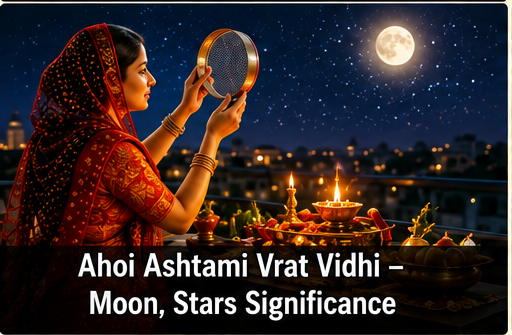
Ahoi Ashtami is a deeply emotional and austere fasting festival observed by mothers for the longevity, health, and prosperity of their children. Falling on the Ashtami (eighth day) of the Krishna Paksha in the Kartik month, exactly eight days before Diwali, mothers observe a strict dawn-to-dusk waterless fast (Nirjala Vrat). In the evening, the protective Goddess Ahoi (a manifestation of Goddess Parvati) and 'Syau Mata' (a porcupine mother from folklore) are worshipped using traditional wall paintings. The fast is generally broken after spotting the first stars at twilight, though some mothers wait for the late moonrise.
Sacred Heritage
Timeless Temple Tradition
Architectural Wonder
Ancient Vedic Mastery
Scriptural Origin
Puranic & Epic History
Spiritual Sadhana
Living Faith & Wisdom
Observed four days after Karwa Chauth on Ashtami Tithi.
Ahoi Ashtami: Quick Overview and Key Facts
| Attribute | Ritual Details |
|---|---|
| Festival Name | Ahoi Ashtami (also known as Ahoi Aathe) |
| Hindu Calendar Date | Kartika Krishna Paksha Ashtami (8th day of the waning moon phase) |
| Observed By | Mothers (for sons and daughters) and women seeking progeny (Santaan Prapti) |
| Primary Deity | Goddess Ahoi (Ahoi Mata / Syahu Mata, an avatar of Goddess Parvati) |
| Type of Fast | Nirjala Vrat (strict fast observed without food or water from sunrise to dusk) |
| Fast Breaking Trigger | Sighting of the evening stars (Taara Darshan); some families wait for Moonrise |
| Primary Purpose | Longevity, protection, health, and prosperity of children |
| Key Amulet | Silver Syau pendant with silver beads strung on a red sacred thread |
Auspicious Muhurat and Sacred Timings
| Ritual Phase | Traditional Timing | Primary Action |
|---|---|---|
| Brahma Muhurta | 04:15 AM to 05:15 AM | Purifying bath and taking the solemn morning vow (Sankalpa) |
| Nirjala Fasting Window | Sunrise to Twilight | Strict avoidance of food, water, and daytime sleep |
| Evening Puja Muhurat (Pradosh Kaal) | 05:45 PM to 07:05 PM | Worshiping Ahoi Mata, lighting the ghee lamp, reciting Vrat Katha |
| Star Sighting (Taara Darshan) | Around 06:10 PM to 06:35 PM | Offering sacred water (Arghya) to visible constellations |
| Moonrise on Ashtami | 11:20 PM to 11:55 PM | Chandra Arghya (only for families following lunar tradition) |
| Radha Kund Snan (Govardhan) | Midnight (11:45 PM to 12:30 AM) | Holy dip for childless couples praying to conceive |
Complete Puja Samagri (Item Checklist)
- Altar and Image: Ahoi Mata calendar or natural Geru (red ochre) and rice flour paste for wall drawing.
- The Silver Syau Garland: Engraved silver pendant of Ahoi Mata and two round silver beads on a red cotton thread (Kalava/Mauli).
- Water Pots: One brass or earthen spouted pot (Karwa) with lid, and one copper lota for Arghya.
- Sacred Grains and Plants: Seven or eight fistfuls of unbroken wheat grains, sacred grass shoots (Dub/Kusha), and fresh flowers.
- Food Offerings (Bhog):
- Eight sweet whole-wheat fried dumplings (Pua) or Halwa made in pure cow ghee.
- Boiled water chestnuts (Singhara).
- Fresh sugarcane pieces.
- Fresh radishes with leaves intact.
- Puja Dravya: Pure cow ghee, cotton wicks, earthen lamps, dhoop sticks, roli (kumkum), unbroken raw rice (akshat), and sandalwood paste.
- Baya (Gifts for In-Laws): Traditional sweets, fresh seasonal fruits, a new saree, and monetary gift for the mother-in-law.
Step-by-Step Vrat Vidhi
- Morning Sankalpa: Wake before dawn, take a purifying bath, wear clean festive clothes, and take the vow of waterless fasting holding water and rice in your right hand.
- Drawing the Mural: Draw the traditional eight-cornered image of Ahoi Mata along with seven sons, the sacred cow, calf, lion, and the hedgehog with her cubs using geru on the north or east wall.
- Preparing the Karwa: Fill the spouted pot with clean drinking water, insert fresh grass blades into the spout, place wheat on the lid, and balance a lit earthen cow-ghee lamp on top.
- Sanctifying the Silver Syau: Cleanse the silver Syau pendant and beads with raw milk and Gangajal, apply a vermilion tilak, and place it beside the deity.
- Listening to the Katha: Hold seven grains of wheat and grass blades in folded hands while reciting or listening to the ancient Ahoi Ashtami Vrat Katha.
- Performing Aarti: Perform aarti of Goddess Ahoi with a lighted camphor or ghee lamp, singing praises for the protection of all children.
- Star Sighting and Arghya: Step out at twilight, locate the first stars, and pour the consecrated water from the Karwa toward the stars.
- Wearing the Amulet: Place the consecrated silver Syau necklace around your neck.
- Baya Presentation: Touch the feet of mother-in-law and elders, seek their blessings, and offer the Baya plate.
- Breaking the Fast (Parana): Sip water offered by the hands of your child and eat a piece of sweet pua or kheer to conclude the fast.
Star Sighting (Taaron Ka Arghya) Rules
| Parameter | Ritual Instruction |
|---|---|
| Sky Direction | Look toward the North or North-East evening sky at dusk |
| Vessel Used | The spouted Karwa or a clean copper Lota containing the sanctified water |
| Additions to Water | Unbroken wheat grains, a pinch of roli, and a few drops of raw milk |
| Pouring Technique | Hold vessel at eye level with both hands; pour in an unbroken stream toward the stars |
| Ground Protection | Collect the falling water in a clean vessel or direct it to a Tulsi pot so it does not touch the feet |
| Cloudy Weather Rule | If skies are overcast, use the Panchang's exact star-rise time, face North-East, visualize the constellations, and offer Arghya |
The Silver Syau Mala Structure
- Pendant: Silver locket embossed with the image of Ahoi Mata.
- Starting Beads: Two solid silver beads placed on either side of the central pendant.
- Cord: Red and yellow sanctified cotton thread (Mauli).
- Yearly Addition: One or two silver beads added every year on Ahoi Ashtami, or one bead added per child in the family.
- Removal: Worn from Ahoi Ashtami night until Diwali, then stored safely in the home vault until the following year.
Radha Kund Holy Bath (Santaan Prapti)
| Aspect | Pilgrimage Detail |
|---|---|
| Sacred Place | Radha Kund, Govardhan Hill, Mathura, Uttar Pradesh |
| Holy Time | Midnight (Nishita Kaal) on Kartika Krishna Ashtami |
| Devotees | Married couples praying for childbirth and the removal of fertility obstacles |
| Required Offering | A raw white ash gourd (Kushmanda / Petha) offered into the waters |
| Spiritual Blessing | Divine grace of Sri Radha Rani to bless childless couples with healthy progeny |
Strict Do's and Don'ts Matrix
| Mandatory Do's | Strict Prohibitions (Don'ts) |
|---|---|
| Maintain a peaceful and loving attitude toward all children throughout the day. | Do not use sharp tools: Never use knives, scissors, blades, or sewing needles on this day. |
| Feed green fodder, jaggery, and flour dough balls to a mother cow and calf. | Do not dig the earth: Avoid digging soil, plucking grass roots, or gardening. |
| Pray equally for the welfare of both sons and daughters. | Do not sleep during the day: Fasting mothers must stay awake in prayer. |
| Wear auspicious colors like red, yellow, or pink. | Do not wear black or dark blue: Avoid dark clothing during the fast. |
| Distribute prasad and food to needy children before breaking the fast. | No non-sattvic food: Keep the entire household free of onion, garlic, and non-veg food. |
Core Mantras for Ahoi Ashtami
1. Sankalpa Mantra (Morning Resolution)
मम पुत्राणां (पुत्रीणां) दीर्घायुष्य-आरोग्य-ऐश्वर्य-अभिवृद्ध्यर्थम् अहोई-अष्टमी-व्रतं करिष्ये।
Purpose: Chanted before sunrise while taking the vow of the day-long Nirjala fast.
2. Ahoi Mata Dhyan Mantra (Evening Puja)
ॐ अहोई मातर्यै नमः। सर्वमंगल मांगल्ये शिवे सर्वार्थ साधिके। शरण्ये त्र्यम्बके गौरि नारायणि नमोऽस्तु ते॥
Purpose: Chanted while lighting the ghee lamp and worshiping the deity.
3. Star Arghya Mantra (Dusk Libation)
गगनार्णव-संभूत तारागण-समन्विते। गृहाणार्घ्यं मया दत्तं पुत्राणां शुभ-वर्धिनि॥
Purpose: Chanted while pouring sacred water from the Karwa toward the evening stars.
Why this matters today
Explore the complete Ahoi Ashtami guide. Mothers fast strictly for the well-being of their children. Learn the Syau Mata story, twilight puja vidhi, and star sighting rules.
Frequently asked questions
Why is Syau (Porcupine) Mata drawn alongside Ahoi Mata?
The folklore involves a woman accidentally killing porcupine (Syau) cubs, cursing her with barrenness. She regained her children by serving a cow and praying to Ahoi Mata. Drawing the Syau honors this repentance and protective maternal instinct.
How is the Ahoi Ashtami fast broken?
Most mothers break their fast (Parana) after spotting the first stars at twilight and offering holy water (Arghya). However, in some families, the fast is broken only after seeing the moon, which rises very late on Ashtami.
What is the significance of the silver Ahoi necklace (Syau)?
Mothers thread a silver Ahoi pendant with silver beads (Syau). A new bead is added each time a child is born or married. This necklace is worn during the puja as a symbol of the growing, protected lineage.