
The Scientific and Spiritual Reasons Women Don't Break Coconuts in Pujas
Uncover the deep spiritual and biological symbolism in Hinduism that explains why women are traditionally advised not to smash or break coconuts during religious rituals.
Vedic Wisdom
Writer & Research Team
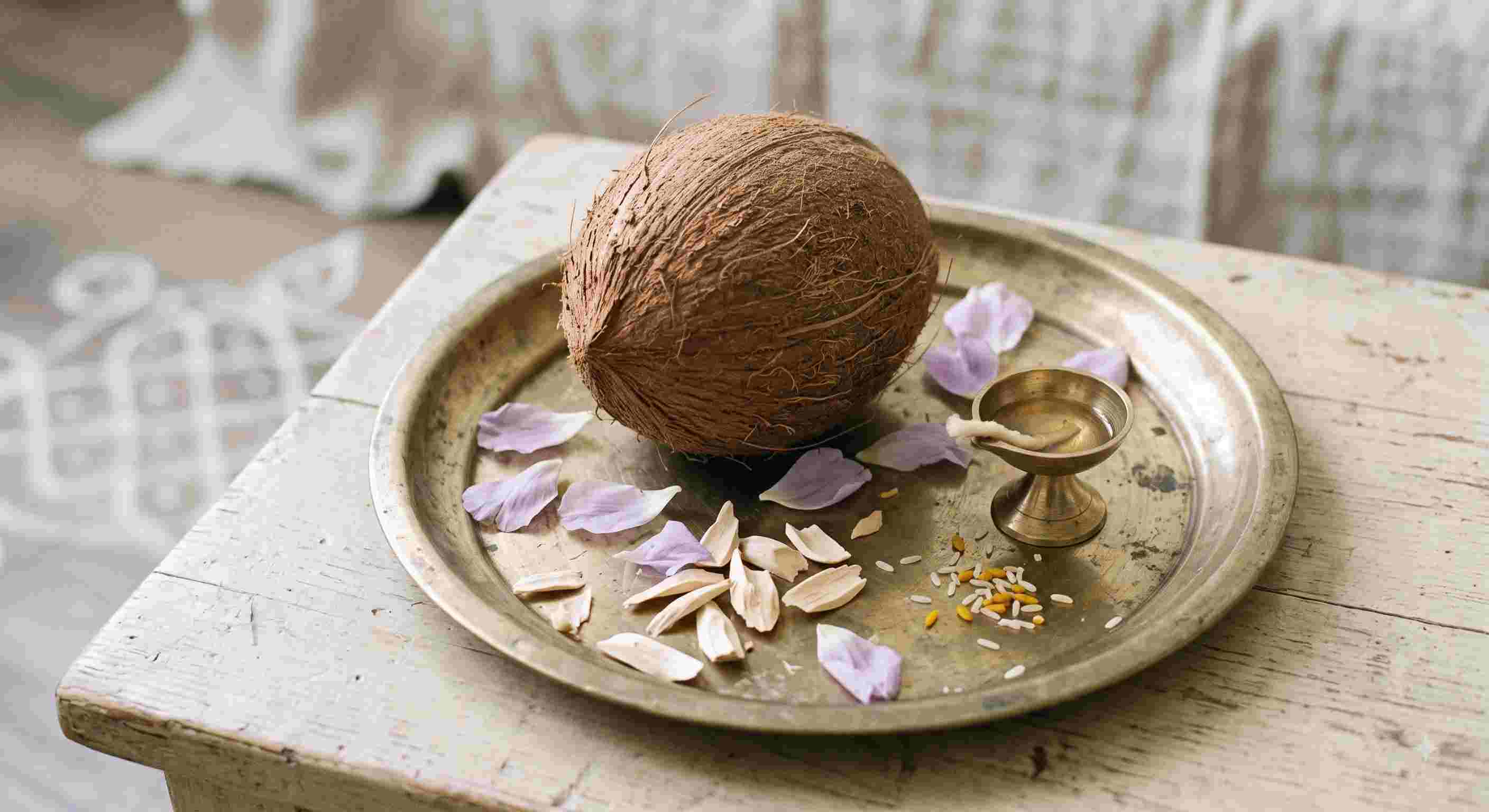
The coconut, known as 'Shriphal' (the fruit of the Gods), is an indispensable part of almost every Hindu ritual, inauguration, and Puja. Smashing a coconut symbolizes the shattering of the human ego before the divine. However, you might have noticed a long-standing tradition: while women prepare the offerings and offer the whole coconut to deities, they are traditionally stopped from physically smashing or breaking it open. Is this a patriarchal restriction, or does it hold a deeper symbolic meaning related to creation and life? Let’s decode the logic behind this ancient custom.
Sacred Heritage
Timeless Temple Tradition
Architectural Wonder
Ancient Vedic Mastery
Scriptural Origin
Puranic & Epic History
Spiritual Sadhana
Living Faith & Wisdom
The Coconut as a Seed of Life
In Vedic traditions, a coconut is not just a fruit; it is considered a 'seed' (Bija). Just like a seed holds the potential for new life, a coconut contains the water and kernel required to sprout a new palm tree. It represents fertility, creation, and the continuity of life.
In nature, the breaking or destruction of a seed halts the entire process of creation. Therefore, the act of smashing a coconut is seen as the destruction of a seed, an act that carries deep symbolic weight in Hindu philosophy.
Women as the Creators: The Energy of Shakti
According to Hindu philosophy, women are the human manifestation of 'Shakti'—the divine feminine energy of creation and nourishment. A woman’s womb nurtures life, making her the ultimate 'creator' in the biological realm.
Since a woman is symbolically an incubator of life (a seed bearer), it is considered energetically contradictory for her to destroy or 'smash' a seed (the coconut). Breaking the seed is seen as a harsh act of destruction, which goes against the fundamental nurturing and life-giving nature of a woman. It is believed that preserving this nurturing energy is vital for the harmony of the universe.
The Concept of Symbolic Sacrifice (Bali)
In ancient times, animal sacrifices were sometimes performed to appease certain deities. As society evolved towards non-violence (Ahimsa), sages wisely replaced animal sacrifices with the breaking of a coconut.
The coconut, with its three 'eyes' and fibrous hair, resembles a human head. Smashing it is a symbolic 'Bali' (sacrifice) of the ego and negative traits. Since Vedic culture predominantly assigns acts of protection, fierce rituals, and external physical sacrifices to the masculine energy (Shiva/Purusha), the physical act of smashing the coconut was designated to men. Meanwhile, women led the prayers of peace, nourishment, and devotion.
Balancing the Divine Energies
Hindu rituals are ultimately about balancing energies. The man performs the destructive act (breaking the ego/coconut), and the woman performs the creative act (offering prayers, lighting the lamp, preparing the Prasad). Together, these actions create a complete, harmonious ritual.
Therefore, the tradition of women not breaking coconuts is not a rule of suppression or patriarchy, but rather a profound acknowledgment of the sacred, life-giving power that women embody in the cosmic design.
Why this matters today
Uncover the deep spiritual and biological symbolism in Hinduism that explains why women are traditionally advised not to smash or break coconuts during religious rituals.
Related Topics
Frequently asked questions
Can women offer a whole coconut during Puja?
Absolutely. Women can offer the whole, unbroken coconut (Shriphal) to the deity as a symbol of devotion. The restriction only applies to the physical act of smashing or splitting it open.
What does breaking a coconut symbolize in Hinduism?
Breaking the hard outer shell of the coconut symbolizes shattering one's ego (Ahamkara). The pure white meat inside represents a pure soul, and the water represents the inner nectar or spiritual cleansing offered to the Lord.
Is it a sin if a woman accidentally breaks a coconut?
No, it is not considered a sin. It is simply a traditional guideline based on symbolic energy principles. There is no concept of divine punishment if a woman breaks a coconut.
Who should ideally break the coconut at home?
Traditionally, the male head of the family, a brother, a husband, or a son breaks the coconut during religious ceremonies to maintain the symbolic balance of masculine and feminine energies.