
Why Mauli (Kalawa) is Not Tied During Pitru Paksha: Scriptural Rules & Reasons
Discover the scriptural reasons why tying the sacred Mauli (Kalawa) is strictly prohibited during Pitru Paksha. Learn Shradh rules, what to do with old threads, and when to tie it again.
Vedic Wisdom
Writer & Research Team
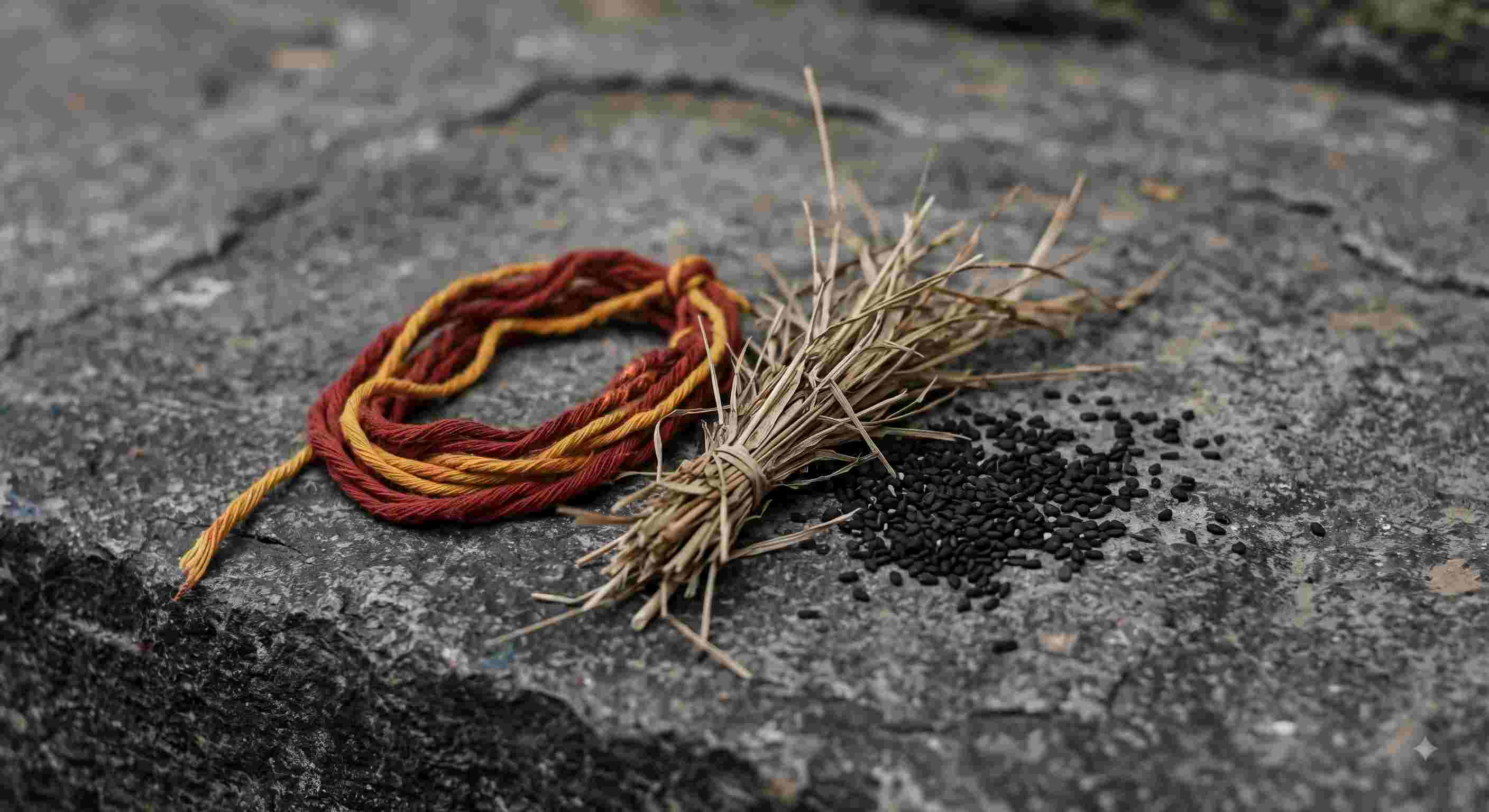
The sacred thread of Mauli (or Kalawa) is a prominent and highly auspicious symbol in Hinduism, generally tied to invoke divine protection, prosperity, and the blessings of the Tridevas (Brahma, Vishnu, Mahesh). However, during the solemn 16-day period of Pitru Paksha (Shradh), tying a new Mauli is strictly prohibited by Vedic scriptures. But why does a powerful symbol of protection become restricted during this time? How does it affect the rituals of Tarpan and Pind Daan? Let's explore the deep scriptural logic behind this rule and understand what you should do with existing threads on your wrist.
Sacred Heritage
Timeless Temple Tradition
Architectural Wonder
Ancient Vedic Mastery
Scriptural Origin
Puranic & Epic History
Spiritual Sadhana
Living Faith & Wisdom
The Deep Spiritual Significance: Why Mauli is Not Tied During Pitru Paksha
Pitru Paksha, also known as Shradh, Mahalaya Paksha, or Kanagat, is one of the most solemn and spiritually profound periods in the Hindu lunar calendar. Spanning 16 days, this period is dedicated entirely to honoring, remembering, and offering peace to departed ancestors (Pitrs). In Hindu philosophy, this is a time marked by deep reflection, immense gratitude, and a subdued sense of mourning, rather than festivity or worldly celebration. Understanding the strict traditions of this period requires a deep dive into Vedic rituals, particularly regarding the use of sacred threads like the Kalawa or Mauli.
For generations, a recurring question among devotees, especially during the onset of the Shradh period, revolves around the tying of the sacred red thread. In the Hindi-speaking belt, people frequently ask their priests and search online for pitra paksh me muli kyu nahi bandhte hai. To understand the profound reasoning behind this restriction, we must explore the spiritual contrast between ancestral reverence (Pitru Karya) and divine celebration (Deva Karya).
The Core Reason: Mourning vs. Celebration in Vedic Traditions
In Sanatana Dharma, the year is divided into specific energy cycles. Pitru Paksha is an intensely reverent 16-day period where the veil between the earthly realm (Bhu Loka) and the ancestral realm (Pitr Loka) is believed to be the thinnest. It is a time for introspection, paying off ancestral debts (Pitr Rina), and performing selfless acts of charity so that the departed souls find eternal peace.
Mauli, traditionally crafted from bright red, yellow, and sometimes green cotton threads, is a vibrant symbol of auspiciousness, joy, active physical energy, and the direct blessings of reigning deities. Tying it explicitly signifies a festive, joyous, or 'Manglik' (auspicious) occasion. Using such a highly celebratory symbol goes completely against the profoundly solemn, quiet, and restrained nature required for Shradh. When individuals ask pitra paksh me muli kyu nahi bandhte hain, the simplest theological answer is that the bright, fiery energy of the Mauli contradicts the cooling, peaceful energy required to soothe the departed souls.
The color red in Hinduism represents Shakti (active cosmic energy), passion, and worldly desires (Rajasic qualities). During Shradh, practitioners are advised to adopt a purely Sattvic (pure, calm, and detached) lifestyle. Wearing the bright red Mauli is believed to anchor the mind to worldly desires and festive joys, distracting the devotee from the solemn remembrance of their ancestors.
The Principle of Absolute Simplicity (Sada Puja) and Sattvic Living
Worship during Pitru Paksha is fundamentally different from regular daily prayers or grand temple festivals. The worship of regular deities (Deva Puja) involves vibrant decorations, the loud ringing of bells, the offering of bright garments, colorful flowers, and highly festive energies. In stark contrast, ancestor worship (Pitru Karya) requires a calm, strictly simple, and unadorned approach.
This concept is known as "Sada Puja" or simple worship. During Shradh rituals like Tarpan (offering of water) and Pind Daan (offering of food to ancestors), the materials used are deliberately devoid of vibrant colors. Priests and devotees wear simple white or yellow unstitched clothes. Offerings consist of black sesame seeds, white rice, milk, Kusha grass, and water. Red flowers, kumkum, and heavily perfumed items are strictly prohibited.
Therefore, wearing a bright, newly tied festive thread like Mauli is believed to disrupt the peaceful, austere energy required to properly channel prayers to the ancestors' souls. During these 16 days, the focus must remain purely on selfless service, feeding the poor, offering food to crows, cows, and dogs, and showing devotion without any physical or spiritual adornments.
The Logic of Sankalpa (Vows) in Pitru Paksha
To deeply understand why the sacred thread is avoided, one must understand the Vedic concept of a "Sankalpa." In Vedic tradition, a Kalawa is almost always tied on the wrist at the onset of a fresh auspicious vow or a specific desire-driven prayer. It is also tied to mark the successful completion of a joyful puja, such as a Satyanarayan Katha, a Griha Pravesh (housewarming), a marriage ceremony, or festivals like Diwali and Raksha Bandhan.
A Sankalpa is essentially a cosmic contract. When a priest ties the Mauli on your wrist while chanting mantras, you are binding yourself to a vow of divine protection, material prosperity, or the successful completion of a joyous event. It is a prayer for personal gain, health, and wealth in the material world.
During Pitru Paksha, however, no new beginnings, property purchases, vehicle acquisitions, or 'Manglik' (auspicious) rituals are permitted. The entire 16-day period is reserved solely for paying off past karmic debts to one's lineage, not for asking the universe for new worldly boons. Because the period restricts new auspicious vows for personal gain, the act of tying a Mauli—which inherently seals a vow of divine protection and prosperity for the wearer—is naturally excluded from the rituals of Tarpan and Pind Daan. The focus shifts from "me and my future" to "them and our past."
Addressing the Common Queries of Devotees
As the Shraddha period approaches, search volumes for specific regional phrases spike. A very common query among the youth trying to understand traditional practices is pitra paksh me muli kyu nahi bandhte h. This curiosity is a positive sign of the younger generation wanting to understand the "why" behind the ritual, rather than just blindly following it.
The answer to this query encompasses everything mentioned above: the clash of energies (Rajasic vs. Sattvic), the restriction on new worldly vows (Sankalpa), and the mandatory adherence to mourning and simplicity. The Shradh period is a time of cosmic gratitude. Tying a Mauli is a request for future protection, whereas Shradh is a time to say "thank you" for the past. Mixing the two intentions is what Vedic scriptures advise against.
Detailed Guidelines: What About Old Mauli or Rakhi?
A very common dilemma arises regarding sacred threads or Rakhis already present on the wrist before Pitru Paksha begins. Since Raksha Bandhan usually falls a month or so before Shradh, many brothers still have their Rakhis tied to their wrists when Mahalaya Paksha commences. Furthermore, devotees who regularly visit temples might have a Kalawa tied from a previous auspicious occasion.
According to Dharmashastras (Hindu codes of conduct), if you have an old Mauli or a Rakhi tied from previous festivals, you are not strictly forced to cut them off the moment Shradh begins. The presence of an older thread does not invalidate your ancestral prayers.
However, specific rules apply regarding the maintenance and disposal of these old threads during the 16 days:
- Condition of the Thread: If the thread has become old, excessively dirty, or starts fraying and breaking during the 16 days of Shradh, you should respectfully remove it.
- Method of Disposal (Visarjan): You must never throw a sacred thread into a regular dustbin. If you remove it during Pitru Paksha, place it near the roots of a sacred plant (like Peepal or Tulsi), or immerse it in a flowing river or a clean water body.
- The Ultimate Restriction: The critical and unbroken rule is simply that once you remove the old, broken thread, you must not replace it with a fresh one until the ancestral period is completely over. Your wrist must remain bare of any new auspicious threads for the remainder of the Paksha.
Comprehensive Guide: Do's and Don'ts During Pitru Paksha
To provide a broader context on why the Kalawa is prohibited, it is helpful to look at the other strict regulations maintained during this period. The avoidance of the red thread is just one part of a larger lifestyle shift designed to honor the Pitrs. Below is a detailed table outlining the essential guidelines for a respectful Shradh observance.
| Category | What to Avoid (Don'ts) | What to Practice (Do's) |
|---|---|---|
| Clothing & Adornments | Avoid bright red/vibrant clothes, tying new Mauli/Kalawa, wearing leather belts, or buying new clothes. | Wear simple, unstitched white, yellow, or subdued cotton garments during rituals. Maintain physical simplicity. |
| Dietary Restrictions | Strictly avoid onion, garlic, non-vegetarian food, alcohol, lentils like Masoor Dal, and heavily spiced or stale foods. | Consume fresh, pure, Sattvic home-cooked meals. Use rock salt (Sendha Namak) and ghee. Offer food to ancestors first. |
| Purchases & Investments | Do not buy new properties, vehicles, gold jewelry, or start new business ventures during these 16 days. | Focus on clearing old debts, donating to charities, and giving raw food materials (Sidha) to priests or the needy. |
| Rituals & Celebrations | No marriages, engagements, Griha Pravesh (housewarming), or Mundan (head shaving) ceremonies. No ringing of bells during Pitru Puja. | Perform daily Tarpan with black sesame seeds and Kusha grass. Feed crows, cows, dogs, and ants daily. Read the Bhagavad Gita (especially the 7th Chapter). |
| Personal Grooming | The person performing the Shradh rites traditionally avoids cutting hair, shaving, or trimming nails during this period. | Maintain strict bodily purity, take daily baths before sunrise, and practice Brahmacharya (celibacy). |
Astrological and Ayurvedic Perspectives on Shradh and the Mauli
Beyond theology, there are also astrological and Ayurvedic interpretations of these customs. Astrologically, Pitru Paksha aligns with the Sun's transit into the zodiac sign of Virgo (Kanya Rashi). This specific planetary alignment is considered highly conducive for spiritual liberation and connecting with ancestral energies, but it is considered astrologically "weak" for starting new worldly endeavors.
In Ayurveda, tying a Kalawa on the wrist is believed to stimulate specific acupressure points (Nadis) related to the heart and digestion, boosting active physical energy (Agni). During Shradh, the goal is to calm the internal fire, turn the senses inward, and practice intense meditation and fasting. Stimulating the active Nadis through the tying of a tight new thread is therefore seen as counterproductive to the required state of deep, meditative calm.
The Culmination: Sarva Pitru Amavasya
The 16-day period of solemnity reaches its peak on the final day, known as Sarva Pitru Amavasya or Mahalaya Amavasya. This is the most crucial day of the Paksha. If a family does not know the exact lunar death anniversary (Tithi) of their ancestors, they can perform all the Shradh rituals, Tarpan, and Pind Daan on this day. It is believed that on this dark moon night, the ancestors begin their return journey to the Pitr Loka, deeply satisfied by the offerings and respect shown by their descendants.
Until the sunset of Sarva Pitru Amavasya, the strict rules of simplicity, including the ban on tying the Mauli, remain in full effect.
The Glorious Transition: When Can You Tie Mauli Again?
The restriction on tying Mauli is lifted the moment Pitru Paksha concludes on Sarva Pitru Amavasya. The cosmic energy undergoes a dramatic and beautiful shift overnight. The very next morning marks the vibrant, energetic, and highly auspicious beginning of Sharad Navratri—a nine-day festival dedicated to the supreme feminine energy, Goddess Durga (Shakti).
This transition is one of the most stark contrasts in the Hindu calendar. From 16 days of absolute quiet, mourning, and simplicity, devotees wake up to a period of vibrant colors, joyous chanting, ringing bells, and divine celebration.
Devotees enthusiastically resume tying fresh Kalawa during the Kalash Sthapana (Ghatasthapana) rituals on the very first day of Navratri (Pratipada). As the priest invokes the Goddess into the Kalash, the red thread is tied on the wrists of the family members, symbolizing a renewed vow of protection, the return of auspiciousness, and the blessing of the Divine Mother. It symbolically marks the transition from a period of ancestral mourning and reflection back to a period of divine celebration, worldly prosperity, and Devi worship.
Conclusion: The Wisdom of Pausing
In the modern, fast-paced world, the strict rules of Pitru Paksha often seem difficult to comprehend. Questions regarding the Mauli highlight a desire to understand the deeper mechanics of Hindu rituals. By restricting the use of the sacred red thread, the ancient sages implemented a psychological tool. It forces the practitioner to pause their relentless pursuit of future desires, personal vows, and material acquisitions.
By keeping the wrist bare of new auspicious threads, the individual is reminded daily for 16 days that they owe their current existence, their body, their wealth, and their knowledge to the generations that came before them. It is a profound practice of humility. Only when we have properly mourned, remembered, and thanked our roots during Pitru Paksha, are we spiritually cleared to ask the divine for new blessings and tie the Mauli once again during the joyous days of Navratri.
Why this matters today
Discover the scriptural reasons why tying the sacred Mauli (Kalawa) is strictly prohibited during Pitru Paksha. Learn Shradh rules, what to do with old threads, and when to tie it again.
Related Topics
Frequently asked questions
Can we remove an already tied Mauli during Pitru Paksha?
Yes, if your previously tied Mauli is old, faded, or tearing, it can be respectfully removed. You should place it under a sacred tree (like Peepal or Tulsi) or immerse it in flowing water. However, you must not tie a new one to replace it until Pitru Paksha concludes.
Can we wear a Rakhi during Pitru Paksha?
Since Rakhi is also an auspicious and protective thread similar to Mauli, it is generally advised not to tie a new Rakhi during the 16 days of Shradh. If a Rakhi is already tied from Raksha Bandhan, you may leave it on, but many choose to respectfully remove it before performing ancestral Tarpan.
Can we tie a black thread during Pitru Paksha?
Black threads are generally associated with warding off evil eyes (Nazar) and are distinct from the auspicious 'Manglik' Mauli. While technically different, strict practitioners advise against adopting any new protective threads or jewelry during Shradh to maintain absolute spiritual purity and simplicity.
When is the correct time to tie Mauli after Pitru Paksha?
You can tie a fresh Mauli immediately after Pitru Paksha ends. The very next day marks the beginning of Sharad Navratri. Tying a new Kalawa during the Kalash Sthapana (Ghatasthapana) on the first day of Navratri is considered highly auspicious.