
Why Is Kashi Called the City of Lord Shiva? The Eternal Story Behind Varanasi
Discover why Kashi (Varanasi) is known as the sacred abode of Lord Shiva. Explore the legends of the Trishul, Anandavan, Jyotirlinga, and the path to Moksha.
Bhakti Voice Editorial
Writer & Research Team
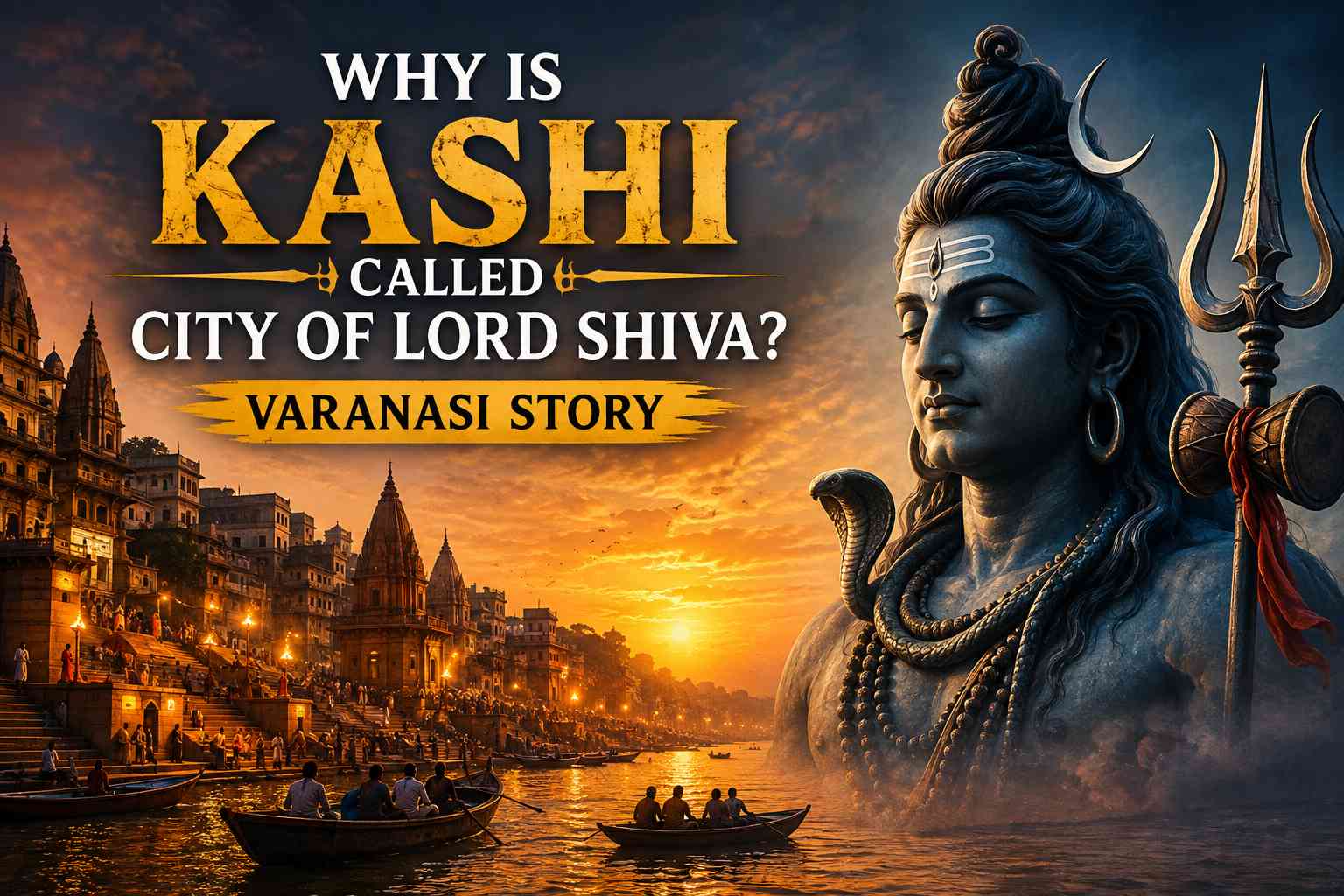
Known as one of the world's oldest continuously inhabited spiritual centers, Kashi (Varanasi) is not merely a geographic settlement on the banks of the sacred Ganges—it is revered as the eternal home of Lord Shiva (Mahadev). According to Vedic scriptures, Puranas, and timeless oral traditions, Kashi stands outside the boundaries of cosmic destruction, resting directly upon the trident (Trishul) of Shiva. From its origins as 'Anandavan' (the Forest of Supreme Bliss) to its eternal promise of Mukti (liberation), explore the deep mythological, spiritual, and philosophical reasons why Kashi is indivisibly tied to Lord Shiva.
Sacred Heritage
Timeless Temple Tradition
Architectural Wonder
Ancient Vedic Mastery
Scriptural Origin
Puranic & Epic History
Spiritual Sadhana
Living Faith & Wisdom
1. The Divine Creation of Anandavan: Shiva's Sacred Sanctuary
In the Kashi Khanda of the Skanda Purana, the origin of Kashi is described as predating the physical universe itself. Before Brahma initiated material creation, Lord Shiva and Goddess Shakti manifested this radiant expanse as a sanctuary of pure consciousness, known as 'Anandavan' (the Garden of Bliss).
When Lord Shiva sought a permanent terrestrial abode where tapasya (spiritual austerity) and peace could flourish uninterrupted, He established Kashi. It is said that even when Mahadev wanders across the cosmos or resides on Mount Kailash, His spiritual heart never leaves Kashi. Hence, the city is formally designated as 'Avimukta Kshetra'—a sacred realm that Shiva never forsakes.
2. The Legend of Shiva's Trident (Trishul)
One of the most famous metaphysical beliefs about Varanasi is that it rests upon the three prongs of Lord Shiva's Trishul. Symbolically, these three prongs represent the three fundamental Gunas (Sattva, Rajas, and Tamas), the three worlds (Triloka), and the three stages of time (past, present, and future).
Scriptures declare that because Kashi is supported by the Trishul rather than the crust of the earth, it remains untouched by the cyclical destructions of nature. During the Great Dissolution (Pralaya), when entire solar systems dissolve into water and void, Lord Shiva holds Kashi aloft on His trident, shielding His devotees and all sentient life residing in the holy perimeter.
3. The Fiery Pillar of Light: Kashi Vishwanath Jyotirlinga
Kashi houses the Kashi Vishwanath temple, one of the foremost of the twelve sacred Jyotirlingas. The Shiva Purana recounts the legendary dispute between Lord Brahma and Lord Vishnu regarding cosmic supremacy. To dissolve their delusion, Shiva manifested as an endless, infinite pillar of cosmic light (Jyotirlinga) piercing through the netherworld to the zenith of the heavens.
The point where this pillar first manifested upon earth is revered as Kashi. Vishwanath translates to 'Ruler of the Universe', emphasizing that the supreme formless reality (Nirguna Brahman) anchored Himself here as a luminous beacon of wisdom.
4. The Gateway to Liberation (Moksha Dayini)
In Sanatana Dharma, Kashi is celebrated as the foremost among the seven Moksha-granting cities (Sapta Puris). The unique theological promise of Kashi is that salvation here is not dependent strictly on intense yogic penance; mere physical passing within its boundaries leads to liberation from Samsara.
At the historic cremation ghats—Manikarnika and Harishchandra—the sacred fire has burned without interruption for thousands of years. Tradition affirms that at the moment a soul leaves its body in Kashi, Lord Shiva Himself appears, cradles the departed soul, and whispers the sacred Taraka Mantra, liberating them from future rebirths forever.
5. The Descent of the Crescent Moon and River Ganga
When the celestial river Ganga descended from the heavens with overwhelming momentum that threatened to split the earth, it was Lord Shiva who caught her turbulent waters in His matted hair (Jata). When Ganga flowed down to the plains to liberate the ancestors of King Bhagiratha, she made a northward crescent loop (Uttravahini) at Kashi.
By flowing northward toward her origin in the Himalayas, the Ganges pays homage to Lord Shiva seated in Kashi. This unique crescent alignment mirrors the moon on Shiva's crest (Chandrashekhara), turning every dip at the Varanasi ghats into an act of deep spiritual purification.
Why this matters today
Discover why Kashi (Varanasi) is known as the sacred abode of Lord Shiva. Explore the legends of the Trishul, Anandavan, Jyotirlinga, and the path to Moksha.
Related Topics
Frequently asked questions
Why is Kashi said to rest on Lord Shiva's Trishul (Trident)?
According to the Skanda Purana and Shiva Purana, Kashi is not bound to the mortal earth like other lands. When Mahapralaya (cosmic dissolution) consumes the universe, Lord Shiva lifts Kashi on the tip of His trident to protect it from annihilation, making it an eternal sacred realm.
What is the meaning of the word 'Kashi'?
The word 'Kashi' originates from the Sanskrit root 'Kash' (काश्), which means 'to shine' or 'to illuminate'. Kashi translates to 'The City of Light', symbolizing the spiritual illumination and inner awakening bestowed by Lord Shiva.
What happens when a person dies in Kashi?
Scriptures state that Lord Shiva resides in Kashi as the ultimate deliverer. At the moment of death in Kashi, Mahadev whispers the liberating 'Taraka Mantra' into the dying soul's ear, instantly freeing them from the cycle of rebirth (Samsara) and granting Moksha.
Why is Varanasi called 'Anandavan'?
Before it grew into a bustling city, Shiva and Parvati chose this tranquil region filled with fragrant flora and divine tranquility as their private hermitage of joy, earning it the name Anandavan (the Forest of Supreme Bliss).