
The Spiritual Significance of Goddess Lakshmi's Lotus
Explore why Goddess Lakshmi, the Hindu deity of wealth and prosperity, is deeply associated with the lotus flower.
Spiritual Insights
Writer & Research Team
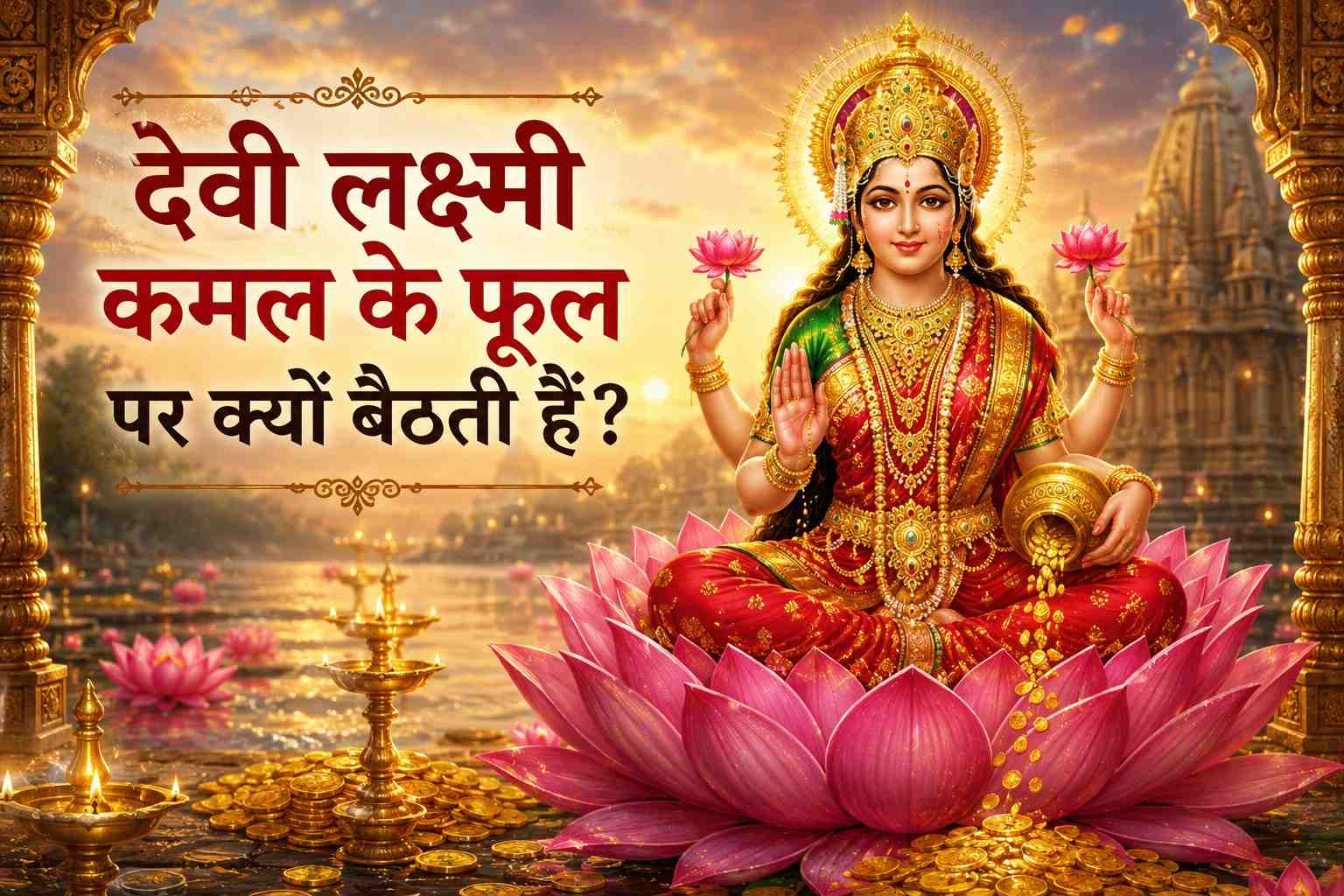
Goddess Lakshmi is globally revered in Hinduism as the bestower of wealth, prosperity, fortune, and abundance. In traditional iconography, she is resplendent, draped in red and gold silk, showering gold coins, and most notably, either holding a lotus, standing on a lotus, or sitting gracefully atop a fully bloomed lotus flower (Padma). Her association with the lotus is so profound that many of her names—Padma, Padmavati, Kamalatmika—are directly derived from the flower. But why does the Goddess of Wealth choose a flower that grows in muddy waters as her divine seat?
Sacred Heritage
Timeless Temple Tradition
Architectural Wonder
Ancient Vedic Mastery
Scriptural Origin
Puranic & Epic History
Spiritual Sadhana
Living Faith & Wisdom
Maintaining Divine Purity in a Materialistic World
The unique botanical nature and growth process of the remarkable lotus flower offers the most crucial and striking spiritual lesson for all seekers of true prosperity. A lotus seed takes its initial root deep down in thick, smelly mud and stagnant, dirty waters, surrounded by decay and impurity. Yet, despite its highly undesirable surroundings, the strong stem relentlessly pushes upward toward the warm sunlight, eventually breaking high above the dark surface to bloom into a breathtakingly magnificent, absolutely spotless flower. Miraculously, not a single drop of the surrounding murky mud ever manages to stain its delicate, vibrant petals. Furthermore, due to the leaf's unique microscopic texture, whenever water droplets fall upon a broad lotus leaf, they simply roll off entirely effortlessly, without ever wetting or permanently clinging to the leaf's green surface.
By choosing to permanently sit on the pristine lotus, Goddess Lakshmi conveys an immensely vital, timeless teaching about the nature of true wealth and human character. The 'mud' in this powerful metaphor accurately represents the highly corrupting, toxic influences of the modern material world—such as unquenchable greed, bitter jealousy, inflated ego, and the unethical, cutthroat practices often heavily associated with the relentless pursuit of money. The Goddess wisely teaches her devotees that while one may actively live in the chaotic material world and vigorously pursue financial wealth to support their family, their inner character and spiritual core must remain strictly untainted by greed and corruption. Just like the lotus miraculously remains entirely untouched by the filthy mud it calls home, a true devotee must remain financially successful yet morally spotless.
The Balance Between Spiritual Wealth and Material Wealth
The pursuit of physical wealth (known in Sanskrit as Artha) in classical Hinduism is absolutely not condemned or looked down upon; in fact, it is officially recognized as one of the four legitimate, necessary aims of a complete human life (Purusharthas). However, Lakshmi's delicate lotus seat constantly serves to remind us that mere material wealth is highly transient, fragile, and ultimately temporary by its very nature. A beautiful lotus blooms majestically and captures everyone's attention for a short time, but it eventually and inevitably wilts away and dies. This teaches us that true, permanent, and indestructible wealth is not found in bank accounts, but rather in the glorious blooming of one's own inner, higher consciousness—which is ultimate spiritual realization and inner peace.
If monetary wealth is successfully acquired through strictly ethical means and righteous actions (Dharma), and is generously used for the genuine betterment of others and society, it rightfully becomes a divine, life-giving blessing. However, if wealth is selfishly hoarded with massive ego, arrogance, and cruelty, it quickly becomes highly destructive and poisonous to the soul. Goddess Lakshmi sits very lightly and gracefully on the delicate petals of the lotus, subtly indicating that she simply does not permanently stay where there is heavy arrogance, stagnation, or impure, selfish intentions. She freely graces and forever blesses only those rare individuals who successfully maintain strict inner purity, a generous heart, and a clear, unattached mind, much like the perfect lotus she sits upon.
Why this matters today
Explore why Goddess Lakshmi, the Hindu deity of wealth and prosperity, is deeply associated with the lotus flower.
Related Topics
Frequently asked questions
Why is the lotus flower special in Hinduism?
The lotus represents purity, spiritual awakening, and non-attachment.