
Mythology & Devotion
Why Is Hanuman Ji Called Sankat Mochan?
Bhakti Voice · 8 min · Updated 2026-08-18
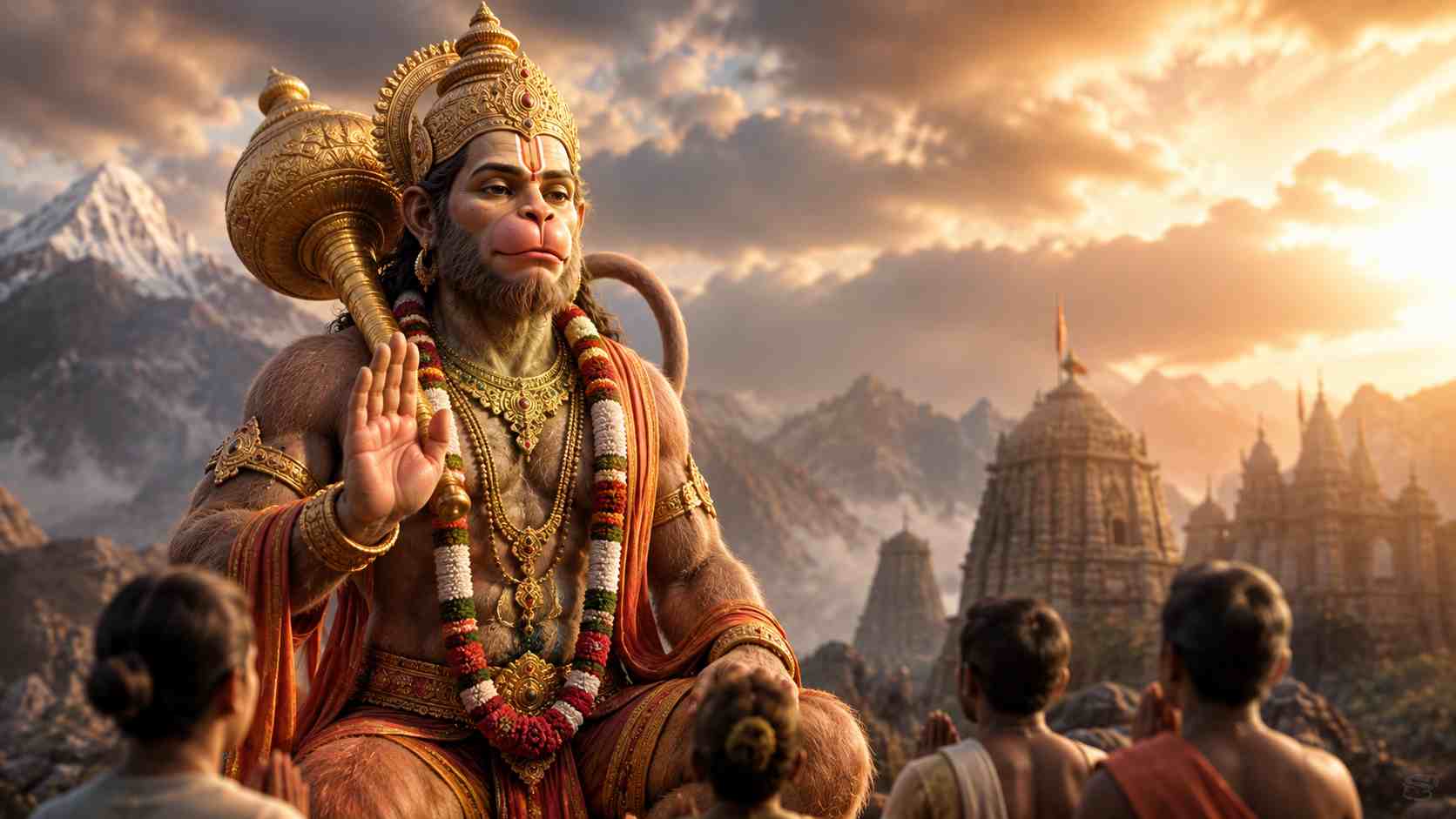
In the vast and glorious pantheon of Hindu deities, few figures inspire as much immediate comfort, deep devotion, and unwavering courage as Lord Hanuman. Known by 108 majestic names—Maruti, Anjaneya, Bajrangbali, Mahavira, and Pawanputra—there is one title that resonates most profoundly when a devotee is facing seemingly insurmountable odds: Sankat Mochan. When darkness looms, millions of devotees close their eyes and chant this powerful name. But why is Hanuman Ji called Sankat Mochan? What is the fascinating mythological story behind the name, and how did a humble Vanara warrior become the universe's ultimate remover of sorrow?
The Literal Meaning of Sankat Mochan
To truly understand the depth of this divine title, we must first break down its Sanskrit roots. The name is composed of two powerful words: 'Sankat', which translates to danger, peril, crisis, difficulty, sorrow, or agony; and 'Mochan', which translates to the one who frees, liberates, relieves, or eradicates.
Put together, Sankat Mochan literally means 'The Liberator from Dangers' or 'The Remover of Sorrows.' While Lord Rama is the supreme preserver of Dharma, Hanuman is the ultimate problem-solver. He does not just offer passive blessings; he leaps across oceans, uproots mountains, and fights cosmic demons to protect those who surrender to him.
Saving Mata Sita from Despair in Ashok Vatika
The first major 'Sankat' (crisis) of the Ramayana was the abduction of Mata Sita by the demon king Ravana. Imprisoned in the dark, intimidating Ashok Vatika in Lanka, surrounded by terrifying demonesses, Mata Sita was on the verge of giving up her life. The agony of separation from Lord Rama had pushed her to the brink of ultimate despair.
It was Hanuman who crossed the massive ocean in a single leap, evading sea monsters and divine tests, to find her. By presenting Lord Rama’s signet ring (Mudrika) and singing the glories of Rama, he dispelled her sorrow and gave her the hope to hold on. He rescued her not just physically from ignorance, but mentally from deep agony.
Uprooting the Dronagiri Mountain for Lakshmana
Perhaps the most famous visual representation of Hanuman's role as the remover of obstacles is the story of the Sanjeevani Booti. During the fierce battle of Lanka, Meghnad struck Lakshmana with the deadly Shakti Astra. Lakshmana fell unconscious, and the Lanka physician declared that only the magical glowing herb called Sanjeevani Booti, found in the distant Himalayas, could save him.
Time was running out. Reaching the Himalayas, the celestial herbs hid themselves from him. Without a second thought, exhibiting unimaginable strength and devotion, Hanuman uprooted the entire mountain and flew back to Lanka. He saved Lakshmana and saved Lord Rama from a grief he could not have borne, proving once again that no Sankat is too heavy for him to lift.
The Rescue from Patala Loka: The Origin of Panchamukhi Hanuman
During the Lanka war, Ravana called upon his dark brother Ahiravana, the king of Patala Loka (the underworld). A master of black magic, Ahiravana kidnapped Lord Rama and Lakshmana while they slept to sacrifice them. Hanuman immediately descended into the dark depths of Patala.
To defeat Ahiravana, Hanuman learned that the demon's life force was hidden in five lamps burning in five different directions. Hanuman manifested his magnificent Panchamukhi (Five-Faced) Form—Hanuman, Narasimha, Garuda, Varaha, and Hayagriva. With these five faces, he blew out the five lamps simultaneously, vanquished Ahiravana, and protected his Lord.
The Power of the Sankat Mochan Hanuman Ashtakam
The title was popularized by the great 16th-century poet-saint Goswami Tulsidas. Legend has it that Tulsidas was suffering from a terrible ailment and tormented by negative forces. He called out to Lord Hanuman and composed a magnificent eight-verse prayer detailing Hanuman's heroic deeds—the Sankat Mochan Hanuman Ashtakam.
The beauty of this prayer lies in its repeating chorus: 'Ko nahi jaanat hai jag mein kapi, Sankat Mochan naam tihara' (Who in this world does not know, O Lord of the Monkeys, that your name is the Remover of Sorrows?). It shifts the devotee's mindset from fear to absolute faith.
Frequently asked questions
What is the literal meaning of Sankat Mochan?
The word 'Sankat' means danger, crisis, or sorrow, and 'Mochan' means the one who frees or liberates. Together, Sankat Mochan translates to 'The Liberator from Dangers' or 'The Remover of Sorrows'.
Which prayer is best for invoking Sankat Mochan?
The Sankat Mochan Hanuman Ashtakam, written by Goswami Tulsidas, is considered the most powerful prayer to invoke Lord Hanuman in times of extreme distress.
Why is Hanuman worshipped on Tuesdays and Saturdays?
Tuesday is associated with Mars (energy and courage), while Saturday is linked to Lord Shani. Hanuman rescued Shani Dev from Ravana, earning a boon that his devotees would be free from Shani's malefic effects.