
Pilgrimage
Shakti Peethas in Pakistan: The Sacred Stories of Hinglaj Mata and Shivaharkaray
Bhakti Voice · 14 min · Updated 2026-08-22
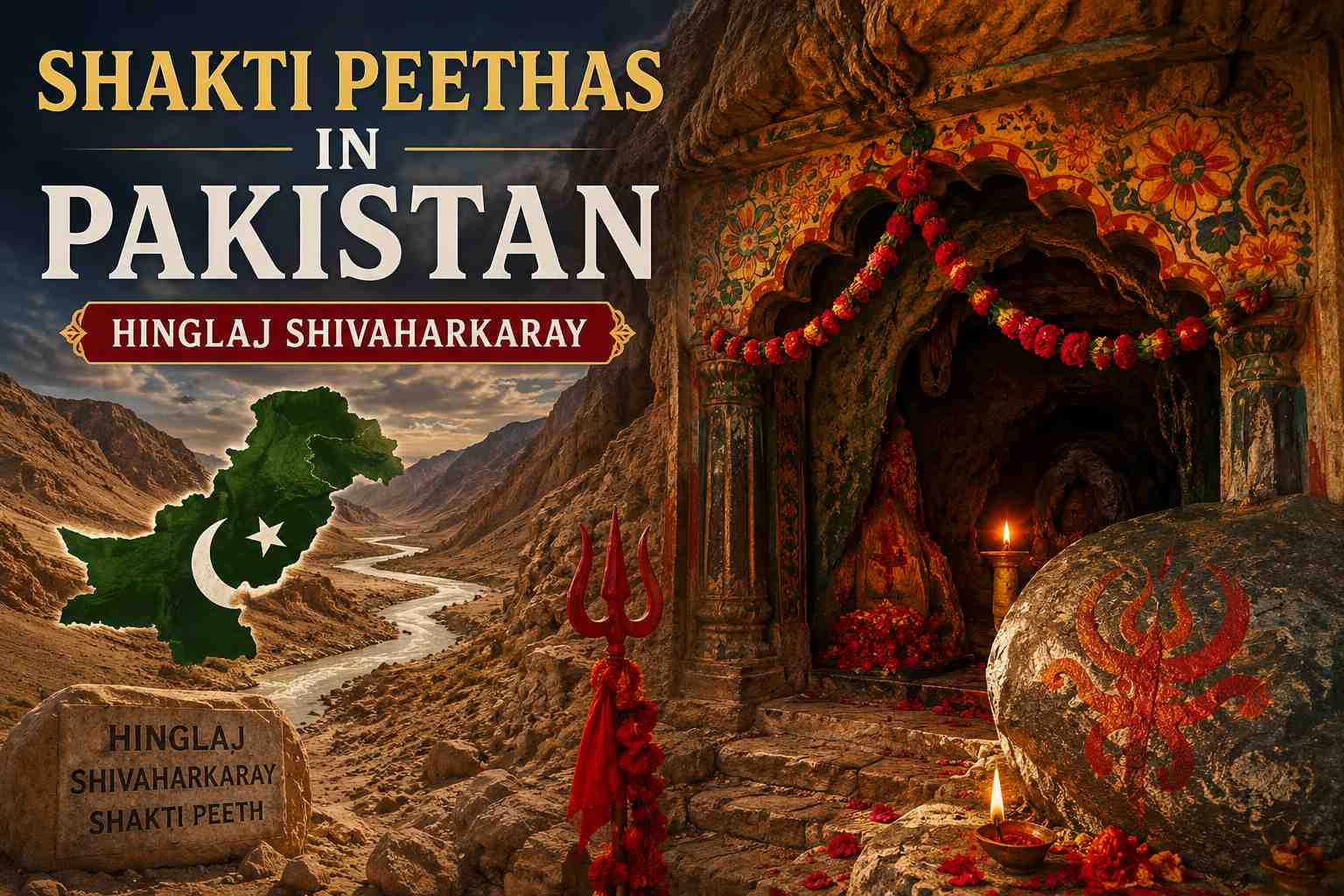
Jai Mata Di! When devotees think of the sacred Shakti Peethas, their thoughts often turn to renowned pilgrimage sites such as Kamakhya in Assam. Yet the Shakti Peetha tradition also connects several ancient sacred sites with regions that are now within present-day Pakistan. Among the best-known are Hinglaj Mata in Balochistan and the site traditionally identified as Shivaharkaray in Sindh. Sharada Peeth in the Kashmir region is also associated with the broader Shakta tradition, although its classification and the body part associated with it vary across different textual traditions. These sacred places carry stories of Goddess Sati, Lord Shiva and the enduring devotion of generations of pilgrims. Let us explore their mythology, history and spiritual significance with respect for the different traditions surrounding them.
The Cosmic Origin: How the Shakti Peethas Came to Be
The story of the Shakti Peethas begins with one of the most powerful episodes in Hindu mythology—the story of Goddess Sati, her father Daksha and Lord Shiva. Daksha organized a grand yajna but did not invite Sati and Shiva. Despite this, Sati attended the ceremony and was deeply hurt when Shiva was insulted.
Unable to bear the humiliation of her husband, Sati gave up her physical body through yogic power. When Lord Shiva learned of her death, he was overcome with grief and anger. He carried Sati's body and began the cosmic dance of destruction. According to the traditional story, Lord Vishnu used the Sudarshana Chakra to separate Sati's body, allowing the cosmic balance to be restored.
Where different parts of Sati's body, ornaments or garments were believed to have fallen became sacred centers of Shakti worship. These places came to be known as Shakti Peethas. Different scriptures and regional traditions give varying numbers and lists, commonly including 51 or 52 and sometimes other counts. Several sacred sites connected with this tradition are located in regions that are now part of Pakistan.
Hinglaj Mata Mandir: One of the Most Revered Shakti Shrines
Hinglaj Mata Temple is located in the Hingol region of Balochistan, Pakistan, amid the dramatic landscape of Hingol National Park. The shrine is situated inside a natural cave and is one of the most important pilgrimage destinations associated with the Hindu Shakti tradition in the region.
Traditional accounts connect Hinglaj with Goddess Sati and associate the site with a part of her head. However, descriptions of the exact body part differ among various textual traditions. The goddess is worshipped in a natural form rather than through a large sculpted idol, giving the shrine a distinctive character.
The annual Hinglaj Yatra is especially significant. Pilgrims undertake a demanding journey through the rugged landscape to reach the shrine and visit sacred locations associated with the pilgrimage, including Chandragup, a mud volcano traditionally regarded as an important part of the journey. The shrine is also known by names such as Nani Mandir, reflecting the deep cultural history surrounding the site.
For devotees, Hinglaj Mata represents the enduring presence of Shakti and the power of faith across generations. The pilgrimage is not simply a journey to a physical location but also a deeply spiritual experience connected with devotion, purification and the Mother Goddess.
Shivaharkaray: The Shakti Peetha Tradition in Sindh
Shivaharkaray, traditionally associated with Sindh, is another site connected with Shakti Peetha traditions. Some textual accounts identify it with Karavipur and associate the location with the eyes of Goddess Sati. As with many Shakti Peetha traditions, the exact location, name and body part can vary between different sources.
The goddess associated with this tradition is described in fierce forms of Shakti, while the corresponding Bhairava is identified differently in various textual lists. These traditions reflect the idea that Shakti and Shiva exist together as complementary divine principles.
Although Shivaharkaray is less widely known today than Hinglaj Mata, its place in traditional Shakta literature makes it an interesting subject for devotees and students of Hindu sacred geography. Its story also demonstrates how ancient pilgrimage traditions continued across regions that later became separated by modern political boundaries.
Why These Sacred Sites Still Matter Today
The Shakti Peetha tradition is more than a list of geographical locations. Each shrine carries layers of mythology, pilgrimage, regional culture and devotional memory. The stories associated with these sites have survived across centuries despite political and geographical changes.
Hinglaj Mata, Shivaharkaray and Sharada Peeth also demonstrate how Hindu sacred geography extends beyond the boundaries of the modern Indian state. For devotees, spiritual traditions are preserved through stories, rituals, pilgrimage and faith passed from one generation to another.
Whether one approaches these sites through mythology, history, spirituality or cultural heritage, they offer a fascinating window into the enduring traditions of Shaktism and the worship of the Divine Mother.
Frequently asked questions
How many Shakti Peethas are traditionally associated with present-day Pakistan?
The number varies according to different Shakti Peetha lists and textual traditions. Hinglaj Mata in Balochistan is one of the most widely recognized sites, while Shivaharkaray in Sindh and Sharada Peeth in the Kashmir region are also associated with Shakta traditions in some accounts.