
Temple Guide
Sri Kanaka Durga Temple Vijayawada: The Ultimate Pilgrimage Guide
Spiritual Yatra · 20 min · Updated 2026-08-26
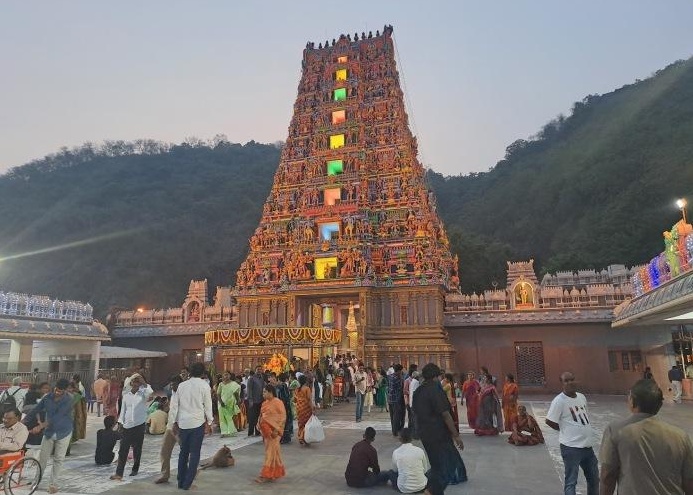
Welcome to the most comprehensive, deeply researched, and ultimate guide for visiting the sacred Sri Kanaka Durga Temple in Vijayawada, an architectural and spiritual marvel that stands as a beacon of devotion in South India. Nestled magnificently atop the scenic, lush green Indrakeeladri Hill on the banks of the sacred Krishna River, this ancient shrine is not only the second largest temple in the state of Andhra Pradesh but also an unparalleled powerhouse of cosmic spiritual energy. Every single year, millions of ardent devotees, pilgrims, and tourists from all corners of the globe flock to this self-manifested (Swayambhu) deity to seek the boundless blessings of Goddess Kanaka Durga, the supreme presiding deity and the fierce protector of the city. The temple's majestic gopuram, the echoing sounds of Vedic chants, the fragrance of sandalwood and incense, and the breathtaking panoramic view of the Krishna River winding through the bustling city of Vijayawada create an atmosphere of divine tranquility that leaves every visitor entirely spellbound. The journey up the hill, whether on foot through the ancient stone pathways or via the modern ghat road, is a transformative experience that prepares the mind and soul for the ultimate communion with the Divine Mother, who radiates compassion, power, and eternal grace. Whether you are a first-time visitor meticulously searching for the exact Kanaka Durga Temple Vijayawada timings, a seasoned pilgrim exploring seamless online ticket booking options for VIP darshan, or a history enthusiast wanting to dive deep into the mythological history of the radiant goddess defeating the formidable demon Mahishasura, this extensive and all-inclusive guide covers absolutely everything you need for a divine, hassle-free pilgrimage. We will walk you through the day-to-day schedules, the specific timings for various sacred rituals (sevas) such as Suprabhatam and Chandi Homam, the rigorous preparations and grand celebrations during the world-famous Dasara (Navratri) festival, and the essential guidelines regarding the temple's traditional dress code. Furthermore, we provide insider travel tips on navigating the bustling temple complex, utilizing the Sri Durga Malleswara Swamy Varla Devasthanam's official online portal for booking Pratyaksha and Paroksha sevas, and finding the best local transport and accommodation options in Vijayawada. Prepare to embark on a spiritual journey of a lifetime as we unfold the secrets, the legends, and the practical travel details of the magnificent Sri Kanaka Durga Temple.
Mythological History, Vedic Legends & The Significance of Indrakeeladri
The Sri Kanaka Durga Temple in Vijayawada is a monumental testament to India's rich spiritual heritage, acting not merely as a magnificent architectural structure made of stone and mortar, but as the pulsating spiritual heart of Andhra Pradesh, profoundly steeped in ancient Vedic mythology, divine epics, and awe-inspiring local legends. According to the sacred ancient scriptures, specifically the illustrious Kanaka Durga Mahatmya and chapters of the Skanda Purana, this entire region was once ruthlessly tormented by a terrifying and near-invincible demon king named Mahishasura. Through years of austere penance, Mahishasura had acquired a formidable boon from Lord Brahma that made him immune to death at the hands of any man, deity, or beast, leading him to unleash unparalleled cruelty and absolute chaos upon the three worlds. Unable to withstand his reign of terror and desperate for salvation, the celestial sages (Rishis), the Devas (gods), and even the holy trinity of Brahma, Vishnu, and Shiva pooled their divine cosmic energies together. From this blinding convergence of divine light and pure cosmic rage, Goddess Parvati assumed the spectacularly fierce, omnipotent, and radiant form of Maa Kanaka Durga. Shimmering like molten gold (hence the prefix 'Kanaka', meaning gold), riding a majestic, roaring lion, and armed with a multitude of lethal divine weapons in her eight arms—including the mighty trident (Trishul) of Shiva, the discus (Sudarshana Chakra) of Vishnu, and the thunderbolt (Vajra) of Indra—she descended upon the earth. The Goddess engaged in a ferocious, earth-shattering cosmic battle against the shape-shifting demon Mahishasura upon the rugged terrains of what is now the Indrakeeladri Hill. Following a grueling conflict that shook the foundations of the universe, she successfully pinned down the demon in his buffalo form and decisively pierced his heart with her radiant trident, restoring peace, dharma, and harmony to the cosmos. After her triumphant victory, the compassionate Goddess chose to make this very hill her permanent earthly abode, transforming into the eternal protector and divine mother for all the inhabitants of the region. Today, the awe-inspiring four-foot-high, self-manifested (Swayambhu) stone idol housed inside the temple’s inner sanctum sanctorum vividly and powerfully captures this exact victorious moment—depicting the beautifully adorned, eight-armed Goddess piercing the demon with her trident, serving as the ultimate epitome of breathtaking beauty, supreme feminine power (Shakti), and unwavering courage.
The sacred geography of the temple is just as legendary as the presiding deity herself, with the name 'Indrakeeladri' carrying immense, profound mythological weight that dates back thousands of years. As the ancient legend beautifully dictates, a deeply devoted and righteous Yaksha named 'Keela' performed unimaginably rigorous and agonizing penance on the banks of the mighty River Krishnaveni (now known as the Krishna River) to please Goddess Durga. Day and night, through scorching summers and torrential rains, Keela chanted the Goddess's name. Immensely impressed and moved by his pure, unwavering devotion, the compassionate Mother Goddess appeared before him in all her divine glory and granted him a boon of his choosing. Overwhelmed with love and devotion, Keela asked for nothing but for the Goddess to always reside within his heart for eternity. Touched by his selflessness, she commanded him to transform into a massive, immovable mountain on the riverbank, solemnly promising that after she completed her divine duty of annihilating the demons (specifically Mahishasura), she would return and forever dwell upon his head, thereby fulfilling his wish. Thus, the devoted Keela transformed into the Keeladri Hill. Later, as celestial beings, sages, and prominent gods like Lord Indra frequently descended from the heavens to visit the hill to worship the residing Goddess, the sacred mountain earned the name 'Indrakeeladri' (the hill visited by Indra). Furthermore, the bustling modern city of Vijayawada draws its very name and identity from the Sanskrit word 'Vijaya', which translates to 'Victory'. According to the great Indian epic, the Mahabharata, during the Pandavas' exile, the legendary warrior prince Arjuna performed an incredibly austere penance on this exact same hill to appease the mighty Lord Shiva. He sought the ultimate weapon to guarantee victory in the impending Kurukshetra war. Pleased with his immense dedication, Shiva, disguised as a tribal hunter (Kirata), tested Arjuna in combat before revealing his true divine form and granting him the invincible, world-destroying weapon known as the 'Pasupata Astra'. The city was subsequently named Vijayawada (The Land of Victory or The Place of Triumph) to eternally commemorate this divine triumph and Arjuna's success. Over the passing centuries and millennia, this sacred shrine has been passionately patronized, expanded, and protected by numerous powerful dynasties, including the Vishnukundinas, the Chalukyas, and the great Vijayanagara Empire under Sri Krishnadevaraya. It is also historically recorded that the great 8th-century philosopher and theologian, Adi Shankaracharya, visited this very shrine during his spiritual conquest of India. Recognizing the intense, fierce energy (Ugra Kala) of the deity, he performed Vedic rituals and installed a mathematically perfect, highly sacred 'Sri Chakra' at the lotus feet of the Goddess. This act successfully channeled and pacified her fierce energy into a benevolent, maternal form (Shanta Swaroopini), exponentially amplifying the spiritual aura, peace, and divine magnetism of the sanctum that devotees experience today.
Comprehensive Darshan Timings, Ticket Prices, and Online Booking Guide
Meticulously planning your itinerary requires precise, up-to-date knowledge of the Kanaka Durga Temple Vijayawada timings, the seasonal variations, and the specific hours of various rituals to ensure a peaceful, spiritually fulfilling, and utterly hassle-free darshan. The temple's daily schedule is a highly disciplined, clockwork routine governed by strict Agama Shastras. The heavy, ornate temple gates typically open in the very early, tranquil hours of the morning at exactly 4:00 AM, ushering in the new day with the deeply resonant and sacred chanting of the Suprabhatam (waking the deity). This is immediately followed by a series of intimate, early morning rituals including the Snana Seva (holy bath of the deity) and the visually stunning Balabhoga Naivedyam. For the general public and pilgrims, regular darshan usually commences around 6:00 AM and runs uninterrupted until 3:30 PM. As the afternoon progresses, the temple briefly pauses the general darshan queues from 3:30 PM to 6:00 PM. This necessary intermission is dedicated to essential internal rituals, profound cleaning of the sanctum, and the preparation of the Goddess for the majestic evening Maha Harathi. The gates reopen with renewed vigor at 6:00 PM, allowing devotees to witness the Goddess under the dazzling illumination of countless oil lamps and electric lights, and finally closing for the day at around 9:00 PM or 10:00 PM after the serene Pavalimpu Seva (putting the deity to rest). However, it is absolutely crucial to note that on highly auspicious days of the week—specifically Fridays and Saturdays—as well as during major Hindu festivals, public holidays, and the phenomenally crowded month of Ashada, the temple sees an enormous, unyielding influx of tens of thousands of devotees. On these peak days, to accommodate the massive crowds, the temple administration often extends the darshan timings continuously from 4:00 AM straight through to 10:00 PM, with only fleeting, microscopic pauses for the mandatory Naivedyam offerings. If you are an out-of-town traveler or a devotee who wishes to experience the temple's divine vibrations in a state of absolute spiritual tranquility, arriving at the hilltop between 4:30 AM and 7:00 AM is highly and unconditionally recommended. Early morning visits allow you to comfortably bypass the exhausting afternoon heat of Andhra Pradesh, secure parking easily, and most importantly, avoid the massive, winding crowds that inevitably gather as the day progresses.
To gracefully and efficiently accommodate devotees from all walks of life, economic backgrounds, and varying time constraints, the Sri Durga Malleswara Swamy Varla Devasthanam (the official temple administration board) offers a highly structured, multi-tiered system of darshan categories. The Dharma Darshanam is the general queue which is entirely free of cost, ensuring that every single devotee, regardless of their financial status, receives the divine blessings of the Goddess. However, it is important to be prepared, as this free queue often entails waiting for several hours in long, winding lines that snake their way up the hill, especially during weekends and festive seasons. For those who are pressed for time, traveling with small children, assisting elderly family members, or simply seeking a quicker, more comfortable glimpse of the radiant Goddess, various paid special darshan tickets are readily available for purchase. The Mukhamandapa Darshanam is highly popular and is priced at a very nominal ₹100 per person, significantly cutting down the wait time. For an even faster and more streamlined route, the Sheegra Darshanam queue costs ₹300 per person, allowing devotees to bypass the majority of the crowds. For the most exclusive, spiritually intimate, and closest possible view of the deity right from the threshold of the inner sanctum, the Antaraalaya Darshanam is priced at ₹500 per person. In today's fast-paced digital age, to ensure ultimate transparency and convenience, the temple administration strongly and actively encourages all devotees to utilize their official, highly secure online portal (kanakadurgamma.org) or the official Devasthanam mobile application for all advanced bookings. Through this state-of-the-art website, you can effortlessly and securely book your VIP Darshan tickets, reserve slots for elaborate Pratyaksha Sevas (direct participation rituals) such as the highly revered Kumkumarchana, Swarnapushparchana (worship with golden flowers), and the powerful Chandi Homam. Furthermore, for devotees residing abroad or those physically unable to travel to Vijayawada, the portal offers the beautiful option of Paroksha Sevas, where the temple priests perform the sacred rituals on your behalf in your name and astrological gotra, and the divine prasadam is subsequently shipped directly to your residential address via courier. This robust online booking system becomes not just a convenience, but an absolute, undeniable necessity during the monumental 10-day Dasara (Sharad Navratri) festival. During Navratri, the Goddess is meticulously adorned in ten different magnificent avatars (Alankarams) over ten days, attracting millions of passionate pilgrims to Vijayawada, making spontaneous walk-in darshans nearly impossible without prior online reservations.
Frequently asked questions
What are the Kanaka Durga Temple Vijayawada timings?
The standard Kanaka Durga Temple timings for darshan are from 4:00 AM to 3:30 PM, and from 6:00 PM to 9:00 PM or 10:00 PM on most days. Timings may vary slightly during Fridays, Saturdays, and major festivals like Dasara.
How much is the VIP Darshan ticket at Kanaka Durga Temple?
There is a free Dharma Darshanam available for all devotees. However, for a faster experience, Mukhamandapa Darshanam is priced around ₹100, Sheegra Darshanam is around ₹300, and Antaraalaya Darshanam costs ₹500 per person.