
Traditions
Swinging the Supreme Lord: The Bliss of the Janmashtami Jhula
Bhakti Voice · 10 min · Updated 2026-08-01
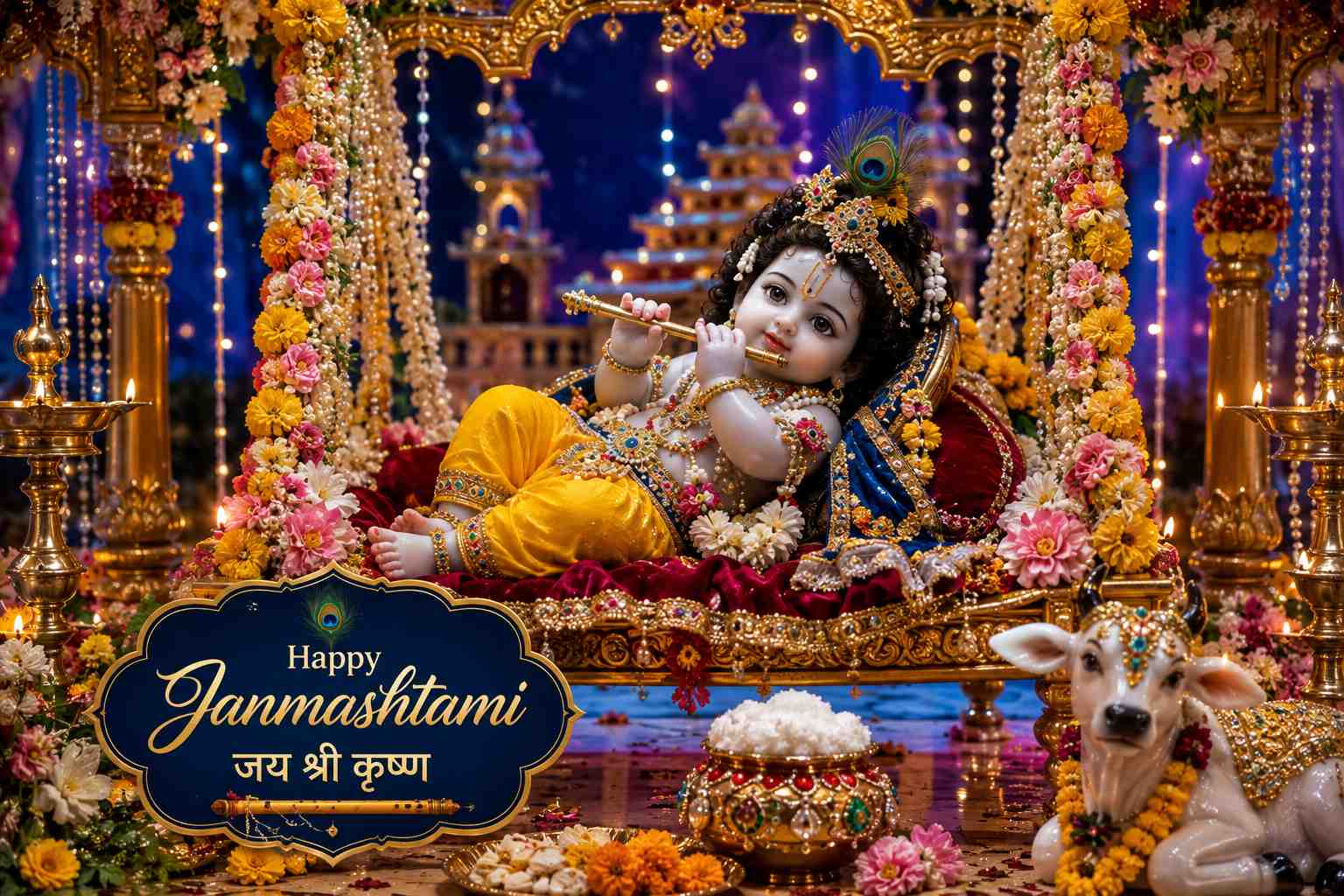
Step into any devout Hindu household on the divine night of Janmashtami, and your eyes will immediately be drawn to a beautifully decorated miniature swing (*Jhula*) at the center of the altar. Resting gracefully upon soft silk cushions inside is a tiny, smiling brass deity of **Ladoo Gopal** (Baby Krishna). Throughout the night, family members and visiting devotees take turns gently pulling the fragrant string of the swing, their eyes filled with tears of immense love and joy. But why is the simple act of swinging a deity so central to Janmashtami celebrations? Let's dive deep into the nectar of the *Jhula* and *Jhanki* tradition, exploring the unmatched sweetness of loving God as your own child.
Vatsalya Bhava: The Summit of Devotion
In the vast ocean of *Bhakti Yoga* (the path of devotion), there are several *Rasas* or mellows in which a soul can relate to the Supreme. You can revere Him in *Shanta Rasa* (neutrality), serve Him in *Dasya Rasa* (servitude), or bond with Him in *Sakhya Rasa* (friendship). But the devotees of Vrindavan revel in something far more intimate: **Vatsalya Bhava**—loving God exactly as a parent loves their child.
Mother Yashoda and Nanda Baba did not view Krishna as the almighty creator of the cosmos. To them, He was simply their hungry, mischievous, and entirely dependent little boy. When we place Ladoo Gopal in a Jhula on Janmashtami, we are humbly requesting the Lord to allow us a taste of Mother Yashoda's ecstatic love. * We forget His awe-inspiring majesty. * We offer Him tender, parental care, worried that He might be cold, hungry, or tired. * The rhythmic back-and-forth motion of the swing becomes a deep, moving meditation, symbolizing the soothing of our own restless minds at the lotus feet of the playful divine child.
The Joy and Meditation of Jhanki Building
Accompanying the Jhula is the beloved tradition of creating a **Jhanki** (a miniature village scene). In the days leading up to Janmashtami, homes turn into bustling art studios. Families gather using mud, colorful paper, cotton, small toys, and twinkling lights to lovingly recreate the rustic charm of Gokul, the majestic Govardhan Hill, or the sparkling Yamuna River.
> "Engaging the senses in the service of the Lord is the quickest way to spiritual absorption." This physical engagement is not mere decoration; it is a highly potent spiritual practice known as *Smaranam* (constant remembrance of the Lord). While a devotee’s hands are busy stringing fresh jasmine flowers for the swing, cutting tiny silken garments for Krishna, or arranging the cows in the Jhanki, their mind becomes completely and blissfully absorbed in Him. The Jhanki transforms spiritual practice from a rigid, dry ritual into a vibrant, immersive celebration of life and love.
Frequently asked questions
What is a Jhanki on Janmashtami?
A Jhanki is a highly detailed, decorative diorama created by devotees. It depicts beautiful scenes from Lord Krishna's childhood in Vrindavan, with the divine Jhula serving as its glowing centerpiece.