
Spiritual Practice & Mantras
108 Names of Lord Shiva and Their Powerful Meanings
Bhakti Voice · 10 min · Updated 2026-08-18
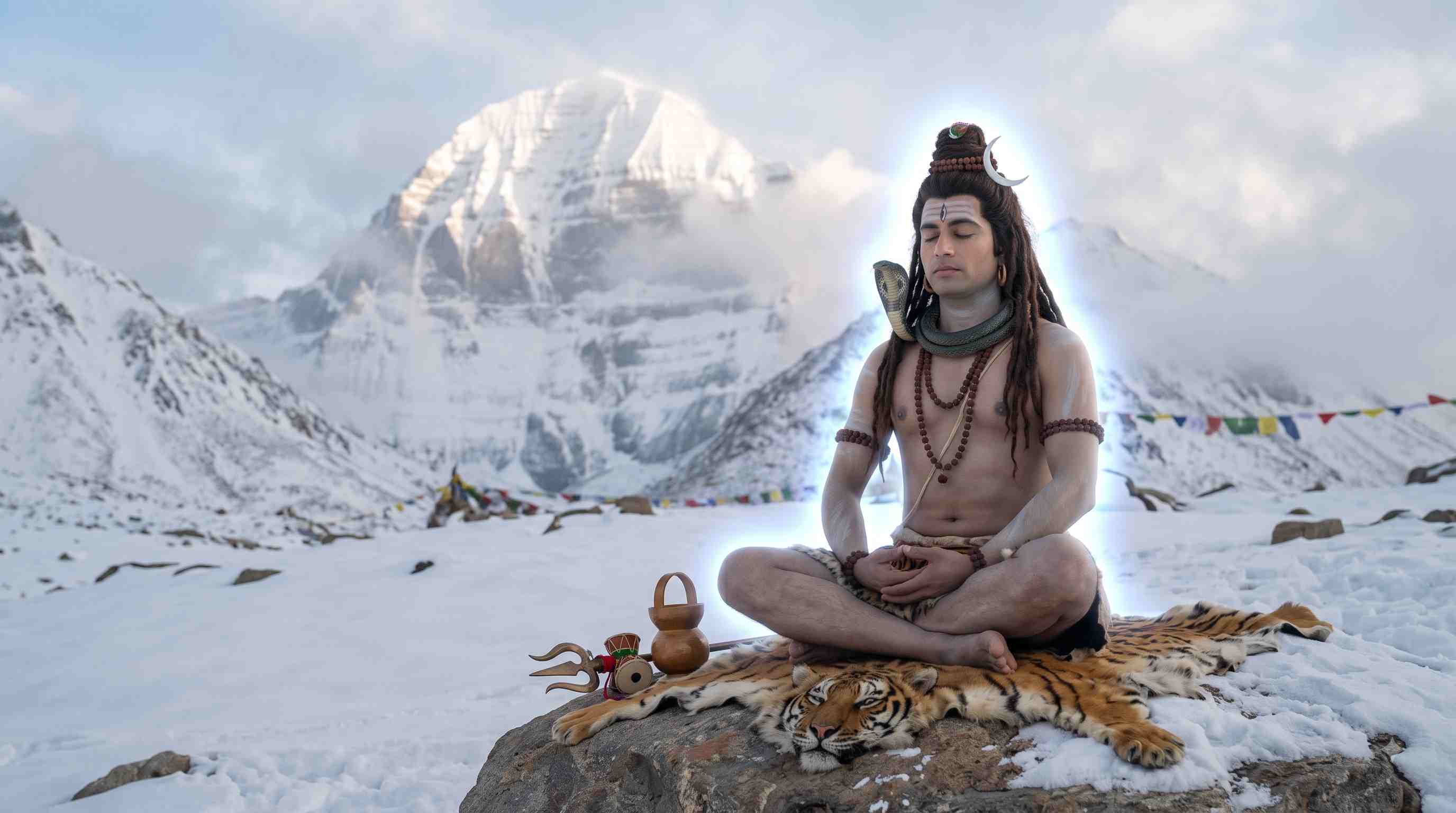
Lord Shiva, the Supreme Being in Shaivism, is a deity of infinite complexities and boundless compassion. He is the cosmic dancer who destroys the universe, yet he is also Bholenath, the innocent one who is easily pleased by a simple offering of water and Bilva leaves. To capture the endless facets of Mahadev, the ancient sages composed the 'Shiva Ashtottara Shatanamavali'—the 108 names of Lord Shiva. Each name is not merely a label; it is a powerful mantra, a concentrated seed of divine energy that describes a specific attribute, a mythological triumph, or a deep philosophical truth about the universe. Chanting these 108 names is one of the most potent spiritual practices in Hinduism, known to destroy negative karma, eliminate the fear of death, and bring ultimate peace to the restless mind. In this comprehensive guide, we will explore the profound meanings behind Mahadev's most powerful names and the spiritual science of chanting them.
The Cosmic Significance of the Number 108
Before delving into the names, it is essential to understand why there are exactly 108 names. In Hindu cosmology and Vedic mathematics, the number 108 is the ultimate number of spiritual completion. The distance between the Earth and the Sun is approximately 108 times the Sun's diameter, and the distance between the Earth and the Moon is 108 times the Moon's diameter. It is the cosmic code of creation.
Internally, the human body has 108 Nadis (energy channels) converging at the heart chakra. Therefore, chanting a mantra or a name 108 times using a Rudraksha mala ensures that the vibration of the divine name penetrates every energetic center of your being, aligning your soul with the rhythm of the universe.
The Most Powerful Names and Their Deep Meanings
While reciting all 108 names (the Ashtottara Shatanamavali) creates a powerful vibratory field, understanding the meanings behind his most prominent titles helps devotees connect with Mahadev on a deeply personal level. Let us explore some of the most potent names:
**1. Shiva (The Auspicious One):** The word Shiva literally means 'that which is not' or 'the auspicious one.' It represents the pure, unmanifested void from which all creation springs and into which it ultimately dissolves. He is the pure consciousness untouched by material flaws.
**2. Mahadeva (The Supreme Lord):** Meaning 'Great God.' Among the holy trinity (Brahma, Vishnu, Mahesh), Shiva is often revered as Mahadeva because he encompasses all aspects of creation, preservation, and destruction. He is the god of gods.
**3. Bholenath (The Innocent Lord):** Despite his terrifying power, Shiva is famously innocent, childlike, and easy to please. He does not require elaborate rituals or expensive offerings. A true tear of devotion or a single Bilva leaf is enough for Bholenath to grant the highest boons.
**4. Neelkanth (The Blue-Throated One):** During the Samudra Manthan (churning of the cosmic ocean), a lethal poison called Halahala emerged. To save the universe, Shiva drank the poison and held it in his throat, turning it blue. This name symbolizes his infinite compassion and willingness to absorb the world's negativity.
**5. Nataraja (The King of Dance):** This name represents Shiva as the cosmic dancer. His 'Tandava' dance symbolizes the continuous cycle of creation, preservation, and dissolution. As Nataraja, he teaches us that life is a dynamic flow and we must learn to dance gracefully amidst chaos.
**6. Pashupati (The Lord of All Beings):** 'Pashu' means animal or soul in bondage, and 'Pati' means lord. As Pashupatinath, Shiva is the protector of all living creatures, guiding ignorant souls (bound by animalistic instincts) towards ultimate liberation (Moksha).
**7. Gangadhara (The Bearer of the Ganges):** When the heavenly river Ganga descended to Earth, her sheer force would have shattered the planet. Shiva captured her in his matted locks (Jata) to soften her fall. It signifies his ability to control and channel immense, overwhelming energy into life-giving forces.
The Duality of Shiva: Ugra and Saumya Forms
The 108 names beautifully capture the paradoxical nature of Lord Shiva. On one hand, he is invoked through his 'Saumya' (gentle and peaceful) names like *Shankara* (The Giver of Joy), *Shambhu* (The Abode of Joy), and *Ashutosh* (One who is instantly pleased). In these forms, he is the meditating ascetic, calm and detached.
On the other hand, the Ashtottara includes his 'Ugra' (fierce and terrifying) names like *Rudra* (The Roarer or The Fierce One), *Bhairava* (The Formidable), and *Mahakala* (The Lord of Time and Death). These fierce forms are not to be feared by the righteous; they represent his ruthless destruction of ego, ignorance, and evil forces in the universe.
The Spiritual Benefits of Chanting the 108 Names
Regularly chanting the Shiva Ashtottara Shatanamavali is not just an act of piety; it is a transformative spiritual practice. When you utter these 108 frequencies, several profound changes occur in your life:
**Purification of Karma:** The intense vibrational energy of Shiva's names acts like fire, burning away the accumulated negative karmas of past lives, clearing the path for spiritual and material progress.
**Destruction of Ego:** Shiva is the ultimate destroyer of 'Ahamkara' (ego). Chanting his names grounds the devotee, replacing arrogance with humility and deep surrender.
**Freedom from Fear:** By repeatedly invoking Mrityunjaya and Mahakala, the deepest human fear—the fear of death and loss—is dissolved. The mind realizes its eternal, immortal nature.
**Mental Clarity and Peace:** Just as Shiva sits in absolute stillness on Mount Kailash, chanting his names brings immense focus, stillness, and unwavering peace to an anxious mind.
How to Incorporate the Practice into Daily Life
To experience the maximum benefit, it is recommended to chant the 108 names daily, or particularly on Mondays (Somvar), which is the day dedicated to Mahadev. The period of Pradosh Kaal (approximately 1.5 hours before and after sunset) is considered highly auspicious for Shiva worship.
Sit comfortably facing East or North. Light a ghee lamp or incense. Use a genuine Rudraksha mala, which carries Lord Shiva's own energetic signature, to count the 108 names. Begin with a deep breath and the chant 'Om Namah Shivaya', and then proceed with the Ashtottara, starting with 'Om Shivaya Namah'. Let each name wash over you, deeply absorbing the infinite grace of the Supreme Lord.
Frequently asked questions
What is the Shiva Ashtottara Shatanamavali?
The Shiva Ashtottara Shatanamavali is a sacred Hindu hymn comprising 108 unique names of Lord Shiva. Reciting it is a powerful form of worship that invokes his various divine qualities.
Why are there exactly 108 names?
The number 108 is highly sacred in Hinduism. It represents the universe's wholeness, the 108 Upanishads, the 108 marmas (vital points) in the body, and the 108 beads on a Japa mala used for counting mantras.
What is the best time to chant the 108 names of Shiva?
The best times to chant are during the Brahma Muhurta (early morning), during Pradosh Kaal (sunset), on Mondays, or especially on the auspicious night of Maha Shivaratri.